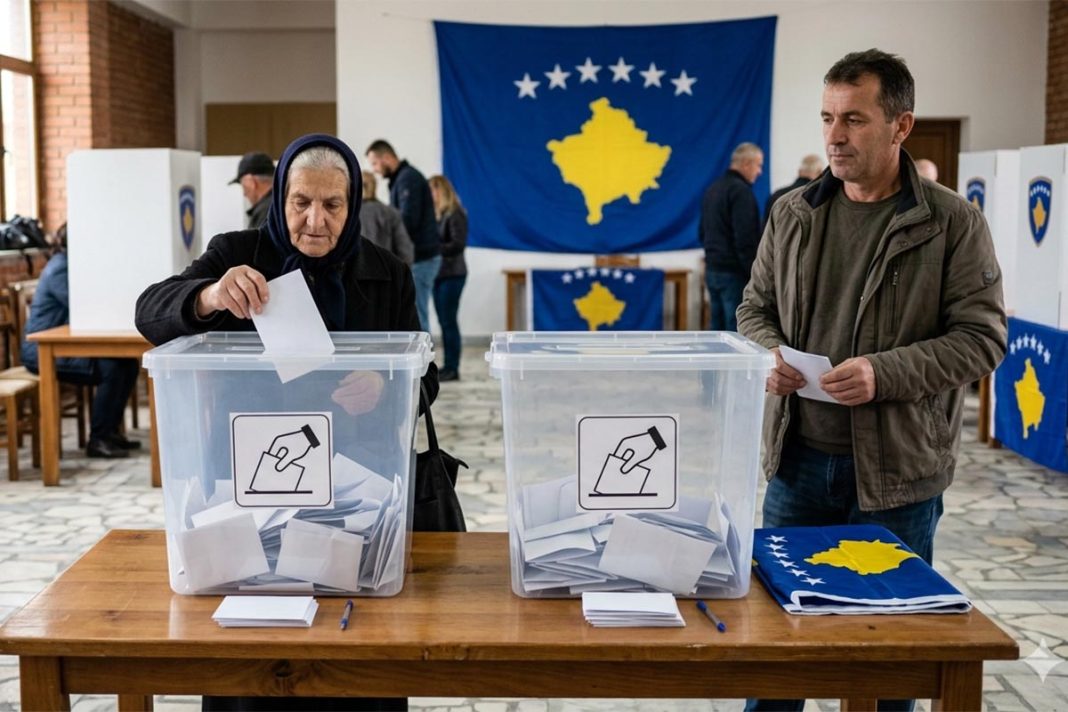
With more than 99% of ballots counted, Vetëvendosje secured around 43% of the vote, comfortably ahead of its main rivals, the Democratic Party of Kosovo (PDK) on roughly 21% and the Democratic League of Kosovo (LDK) on 18%. However, the result fell short of the majority needed for Albin Kurti to govern alone, meaning negotiations with other parties are now expected to begin.
The election was Kosovo*’s third parliamentary vote in just 18 months, called after months of institutional deadlock over the election of a new president and the formation of stable governing institutions. The prolonged political crisis has delayed reforms, slowed decision-making and complicated Kosovo*’s efforts to advance its European integration agenda.
Among minority parties, the Serbian List once again remained the dominant representative of Kosovo Serbs, winning the overwhelming majority of votes in Serb-majority areas and positioning itself to retain most of the ten parliamentary seats reserved for the Serbian community. Preliminary results showed the party receiving around 4% of the nationwide vote.
Despite celebrating another electoral victory, Kurti now faces the challenge of building a governing coalition capable of ending the political stalemate that has affected Kosovo* for much of the past year. European officials have repeatedly stressed the need for stable institutions and continued reforms, arguing that political compromise will be essential if Kosovo* is to maintain momentum on its path toward closer integration with the European Union.