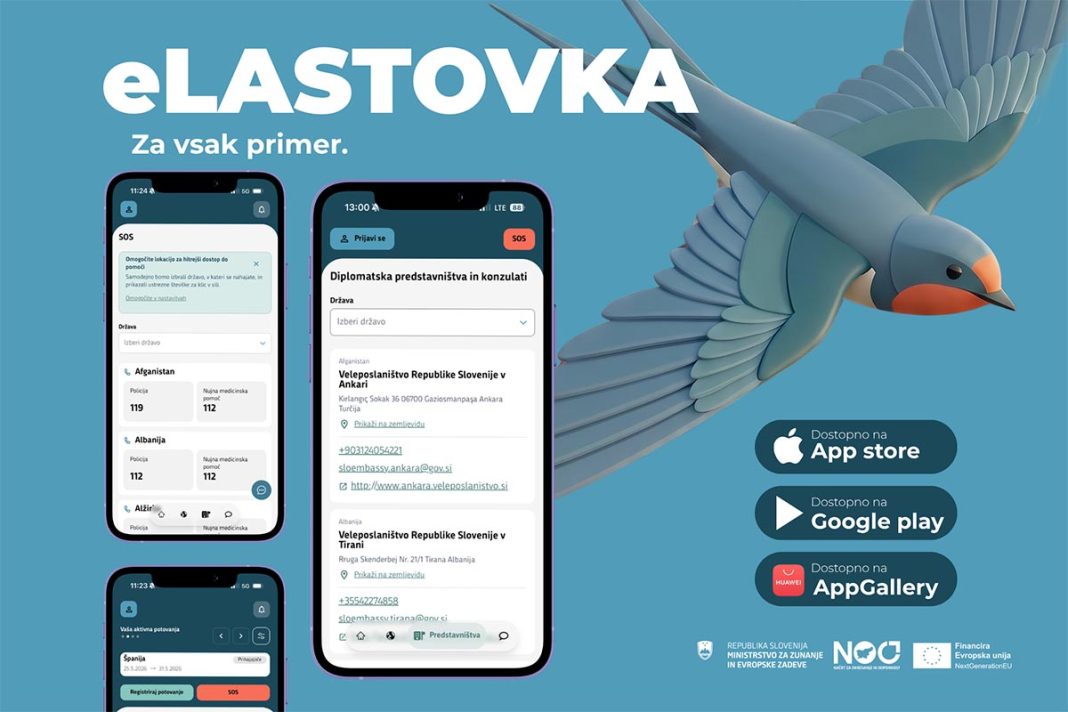
Developed by the Ministry of Foreign and European Affairs of Slovenia, the app enables users to receive push notifications in the event of natural disasters, armed conflicts, security incidents or other emergencies affecting the country or region where they are staying.
In addition to crisis alerts, eLastovka allows users to check the travel risk level for individual countries, quickly locate the nearest Slovenian embassy or consulate, and access contact details for local police, emergency services and other relevant authorities.
Presenting the platform, Foreign Minister Tone Kajzer described the app as “a new era of consular protection” that is faster, better connected and more efficient. The application’s name comes from the Slovenian word “lastovka” – a migratory bird chosen to symbolize speed, mobility and timely assistance.
A key feature of the app is its emphasis on privacy protection. It does not automatically track users’ locations; instead, travelers voluntarily register their current destination to receive location-specific alerts. The information is automatically deleted once the trip or stay abroad ends, while users can customize the types of notifications they wish to receive.
The project was developed using lessons learned from previous international crises, including the COVID-19 pandemic and the evacuation of Slovenian citizens from conflict zones. Officials say the application will allow the ministry to contact citizens in a specific city, country or region much more quickly during emergencies.
The initiative was co-financed through the European Union’s NextGenerationEU recovery programme and follows similar digital consular protection systems already introduced by several other EU member states.
As international travel continues to grow and global security risks become increasingly unpredictable, many governments are investing in digital tools that enable faster communication with their citizens abroad. Slovenia’s launch of eLastovka reflects a broader shift toward digital diplomacy and modern consular services, where technology plays an increasingly important role in protecting citizens wherever they travel.