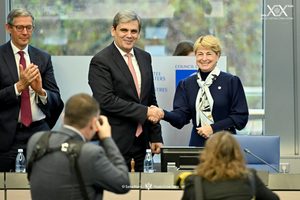

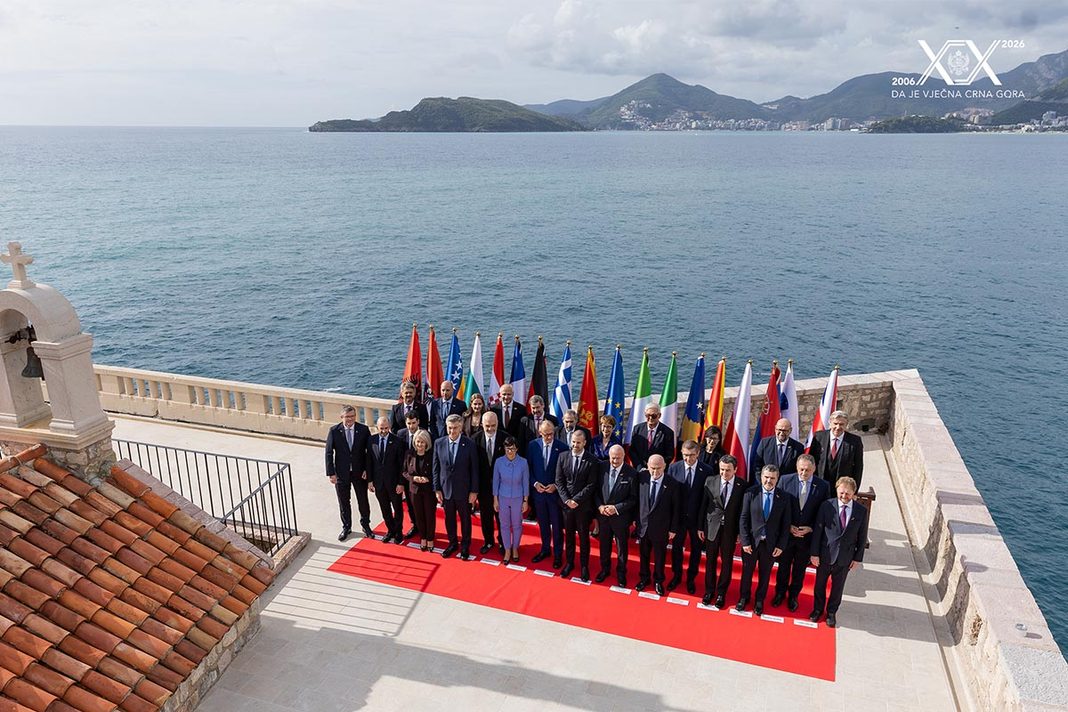
The Berlin Process Leaders’ Summit, held in Miločer, Montenegro, on 22 October, brought renewed emphasis to the European Union’s enlargement agenda, with German Chancellor Friedrich Merz describing the integration of the Western Balkans as a geopolitical imperative.
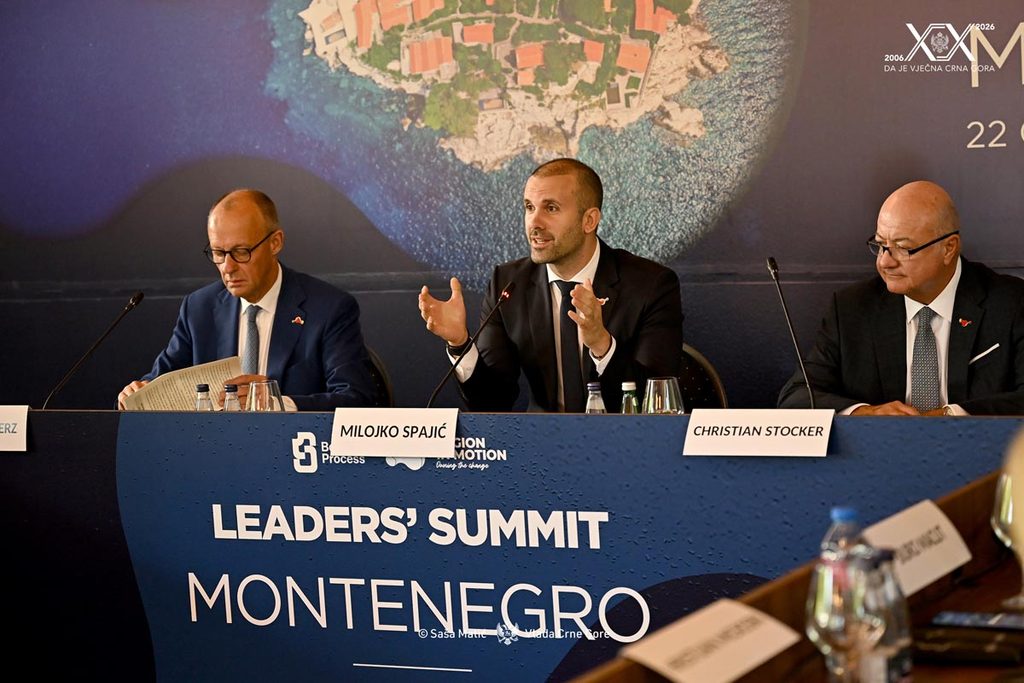
Speaking alongside Montenegrin Prime Minister Milojko Spajić and Austrian Chancellor Christian Stocker, Merz warned that the region must not become an arena for competition between major powers.
He stressed that the Western Balkans‘ path towards EU membership was essential not only for regional stability but also for Europe’s sovereignty and international influence.
Merz also highlighted proposals developed with French President Emmanuel Macron to accelerate gradual integration, allowing candidate countries to move closer to European structures before full membership.
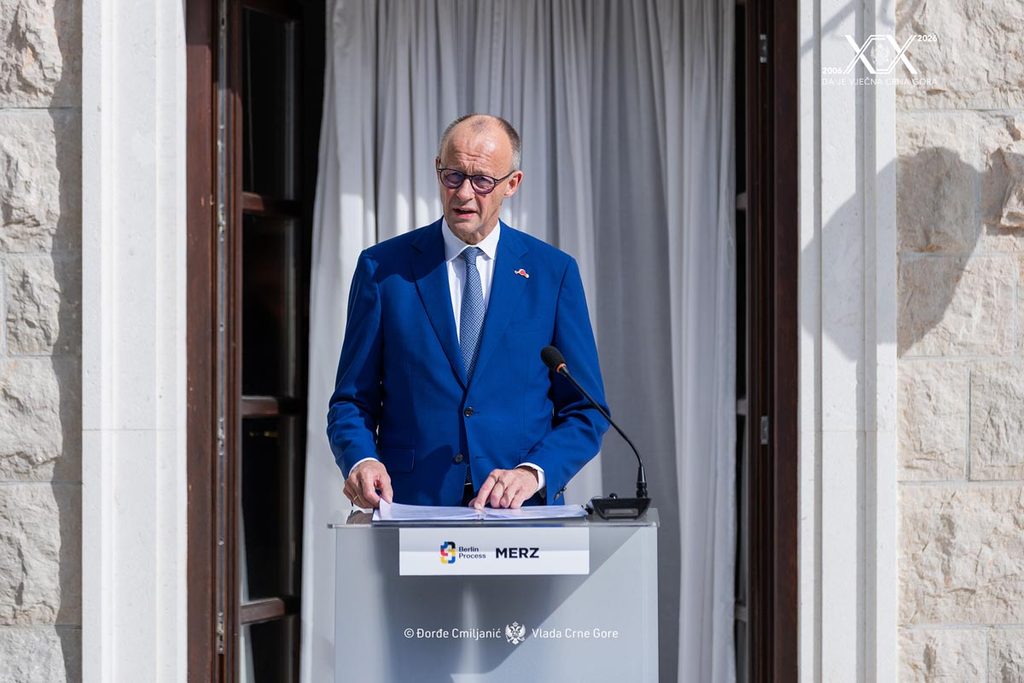
However, he emphasised that further progress would depend on credible reforms, particularly in the rule of law, which he described as essential for attracting European investment and creating predictable business conditions.
Austria Calls for Practical Integration
Austria, which will assume the Berlin Process presidency in 2027, outlined priorities focused on young people, reconciliation and regional cooperation.
Chancellor Stocker called for the Western Balkans to be included in the EU roaming area, arguing that citizens and businesses should benefit from cheaper communications before accession
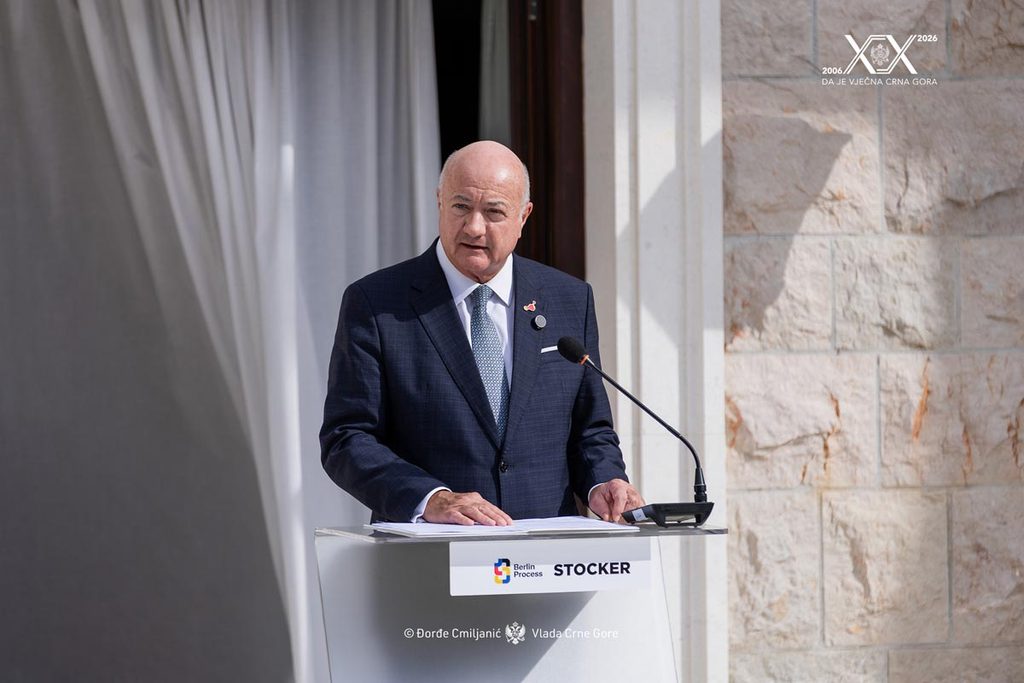
He also advocated extending participation in the Single Euro Payments Area (SEPA) to all six Western Balkan economies, enabling more efficient cross-border euro payments.
Stocker stressed that bilateral disputes should not be allowed to obstruct the accession process, while reaffirming Austria’s support for Montenegro’s European ambitions.
Montenegro Targets EU Membership in 2028
Hosting the summit, Prime Minister Spajić reiterated Montenegro’s objective of completing EU accession negotiations by the end of 2026, with the ambition of becoming the Union’s 28th member state in 2028.
He highlighted the country’s presidency of the Berlin Process, during which 26 events were organised, including 14 ministerial meetings, alongside expanded participation from businesses, academia, civil society and young people.
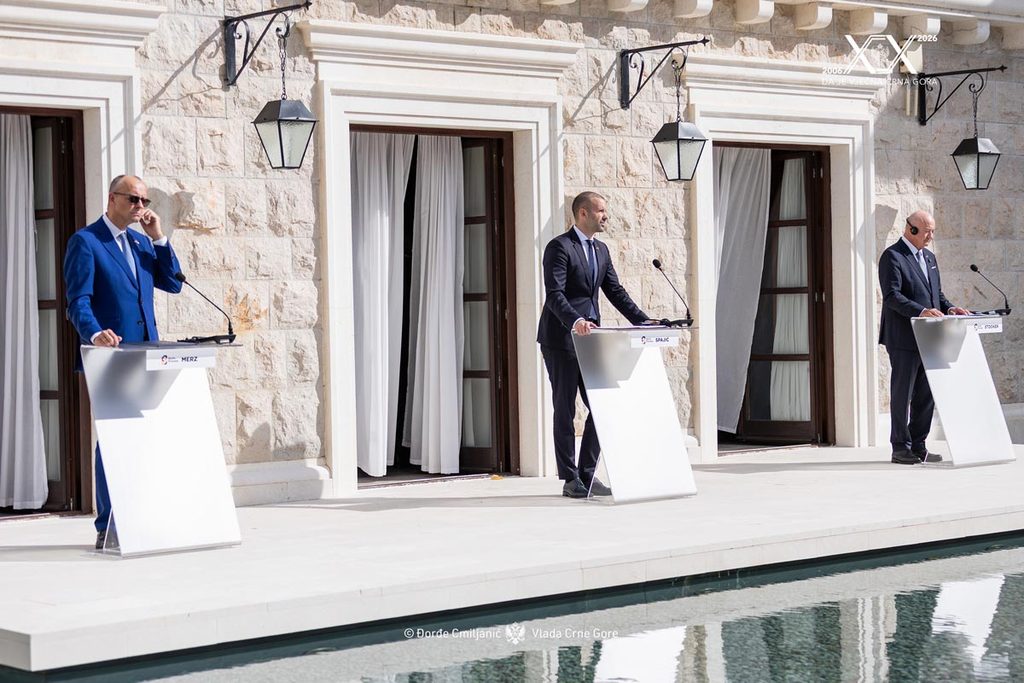
Merz and Stocker both acknowledged Montenegro’s progress towards membership, with the Austrian Chancellor describing its potential accession as an important signal for the credibility of EU enlargement.
Despite the renewed political momentum, Merz also acknowledged persistent regional challenges, including the stalled Belgrade–Pristina dialogue and political polarisation in Bosnia and Herzegovina.
The summit’s central message was that closer European integration has become increasingly urgent. The next test will be whether that political commitment produces measurable progress in economic cooperation, market access and regional connectivity.