

Chinese manufacturers Minth and AGIBOT have launched humanoid robot production in Šabac, opening a new chapter for Serbia’s industrial ambitions and raising an intriguing question about its place in the global robotics industry
UNTIL RECENTLY, THE IDEA OF HUMANOID robots emerging from a factory in Serbia might have sounded like science fiction. Today, it is industrial reality. In the western Serbian city of Šabac, Chinese automotive supplier Minth Group and robotics specialist AGIBOT have launched a production facility for machines designed to walk, handle objects and perform tasks once reserved for humans.
Opened on 29 August, the €20 million facility marks the beginning of what the companies describe as Europe’s first large-scale humanoid robot production operation. The first locally assembled robot has already received its serial number, while Serbian workers and engineers are participating in manufacturing, testing and quality control alongside Chinese specialists.
The ambitions extend considerably beyond this initial investment. A robotics industrial park is planned in Inđija, with the broader project valued at €200 million. Once fully developed, the operation is intended to reach an annual capacity of up to 20,000 humanoid robots and four-legged robotic machines, supplying European and international markets. That figure remains a future target, not the factory’s present output.
Behind the project are two companies bringing different strengths. Minth, which established its Serbian operations in 2018, already has an extensive manufacturing presence in the country, supplying components to the automotive industry. AGIBOT contributes the robotics technology, combining artificial intelligence, sophisticated sensors and mechanical systems that enable machines to interact with their surroundings.
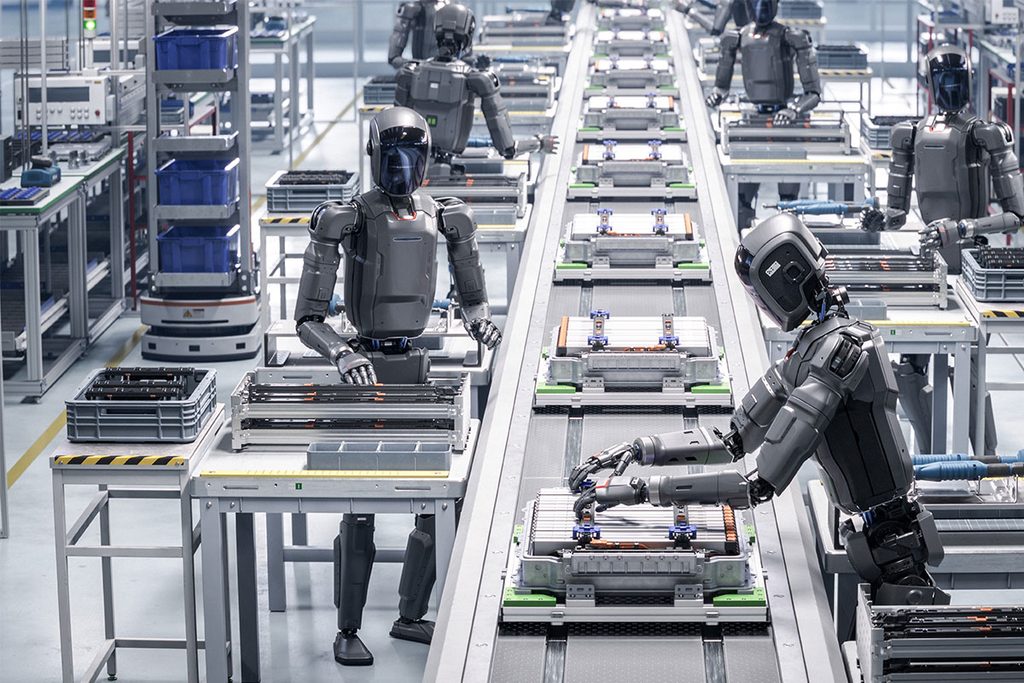
Unlike traditional industrial robots, which generally repeat programmed movements in controlled environments, humanoid machines are being developed to operate in spaces designed for people. Their potential applications range from handling materials and inspecting equipment to performing repetitive or hazardous tasks in factories.
The significance for Serbia lies not simply in assembling a new category of machinery, but in the possibility of acquiring expertise in one of the world’s most rapidly developing technologies. Local engineers are already receiving specialist training, and the project could create opportunities for suppliers, technical education and future research partnerships.
Yet an important distinction remains. The technology originates with Chinese companies, and manufacturing sophisticated robots is not the same as developing their artificial intelligence or owning the intellectual property behind it. Serbia’s longer-term opportunity will depend on whether production evolves into engineering, innovation and the creation of domestic expertise.
The commercial challenge is equally substantial. Humanoid robotics remains an emerging industry, with manufacturers still working to demonstrate reliability, practical usefulness and economic viability outside controlled settings. Large production targets alone cannot guarantee demand.
Nevertheless, something important has changed. A country traditionally associated with automotive components, agriculture and conventional manufacturing is now participating in the production of machines that may transform industrial work itself.
Whether Šabac eventually becomes a major European robotics centre remains to be seen. But the arrival of humanoid manufacturing in Serbia illustrates how quickly the geography of advanced industry can change — and how even relatively small economies can find a place in technologies once associated almost exclusively with the world’s largest innovation centres.