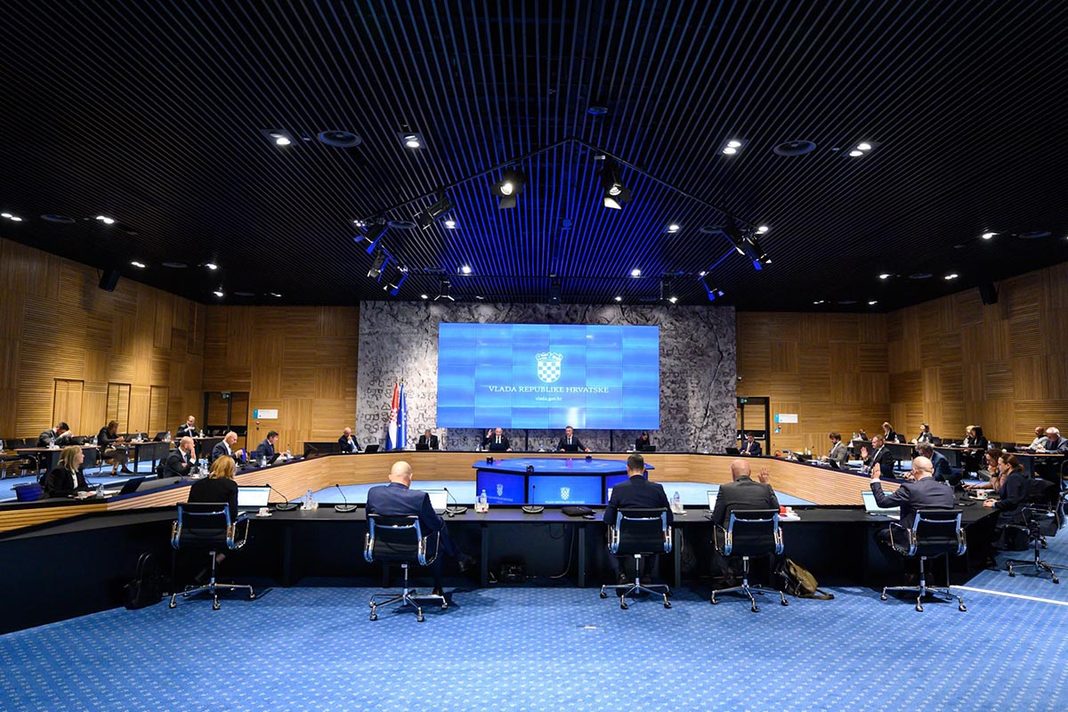
The Croatian Government has presented a proposed state budget of €41.5 billion for 2027, with increased allocations for pensions, defence, healthcare, education, housing and infrastructure.
Presenting the budget, Prime Minister Andrej Plenković said Croatia’s economy was expected to grow by 2.1% in 2027, followed by 2.2% in 2028 and 2.1% in 2029. Inflation is forecast to ease to approximately 2.7%, while the general government deficit is projected at 2.9% of GDP and public debt is expected to decline to 55.3% of GDP. The Government said the budget aims to preserve economic stability while supporting vulnerable groups and maintaining investment across the country.
Pensions represent one of the largest spending priorities, with almost €11 billion allocated to the pension system, an increase of €875 million compared with 2026. The Government plans to continue raising pensions through an improved adjustment formula and a higher annual pension supplement, while also abolishing income tax on pensions. Housing affordability is another focus, with €246 million earmarked for implementing the National Housing Policy Plan. The programme envisages the construction of up to 1,000 affordable apartments in 16 cities and municipalities. Funding for demographic revitalisation and family support is also set to exceed €1 billion.
Healthcare and education will receive substantial investment, including €237 million for the construction of the National Children’s Hospital in Zagreb. A further €220 million is allocated for building and equipping primary schools, supporting the transition to single-shift schooling, while €163 million will go towards kindergartens. Transport projects will include railway modernisation, new trains and vessels, and continued development of motorway and expressway networks. The Government has also earmarked €745 million over three years for water supply, sewage and wastewater treatment projects, alongside €250 million for flood protection.
Defence spending will see one of the most significant increases, with the Ministry of Defence budget rising from €1.64 billion to €2.05 billion, taking expenditure above 2% of GDP under NATO criteria. Modernisation plans include the acquisition of Leopard tanks, HIMARS and Chunmoo rocket systems, unmanned aerial vehicles and further improvements to Croatia’s Rafale fighter aircraft capabilities.
The Government also plans continued investment in energy security, including expanding capacity at the LNG terminal on the island of Krk, as well as strengthening agricultural and fisheries production. The proposed budget will now be considered by the Croatian Parliament, with debate expected later in November.