

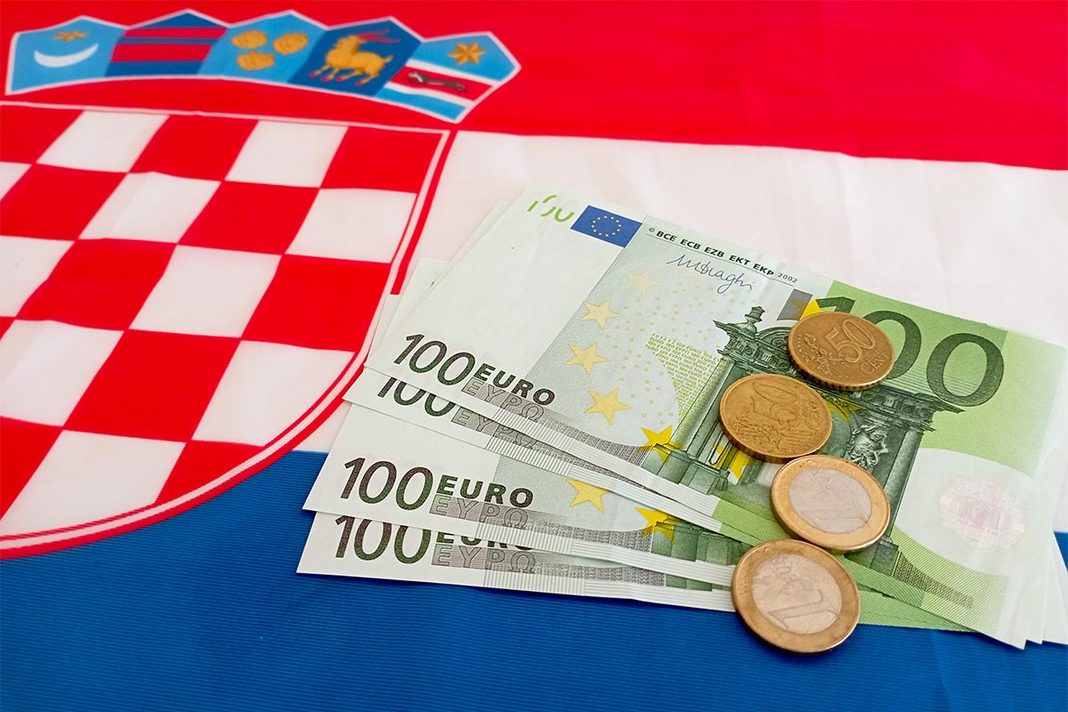
Croatia recorded the fourth-largest annual increase in tax and social contribution revenues among European Union member states in 2025, with collections rising by 9.3% compared with the previous year, according to the latest Eurostat data.
Tax and social contribution revenues increased by 10.5% in Romania, 10.4% in Bulgaria and 9.4% in Malta. Lithuania followed Croatia with an increase of 8.4%. Across the EU, total revenues rose by €401 billion to €7.686 trillion, with all member states recording nominal growth. The increase does not necessarily reflect higher tax rates, as revenue levels are also influenced by economic activity, employment, wages, consumption and inflation.
Croatia also stood out for the structure of its tax system. Revenue from taxes on production and imports accounted for 19% of GDP in 2025, the second-highest share in the EU after Sweden, at 20.8%. These taxes include indirect levies such as value-added tax (VAT), excise duties and customs duties. By contrast, revenue from taxes on income, profits and wealth represented just 7.8% of Croatia’s GDP, compared with the EU average of 13.2%. Only Romania, Bulgaria and Hungary recorded lower shares.
Despite its strong annual revenue growth, Croatia’s overall tax-to-GDP ratio remained below the EU average. Tax and social contributions amounted to 40.7% of EU GDP in 2025, up from 40.2% in 2024, while the euro area ratio increased from 40.7% to 41.3%. France recorded the highest ratio at 46%, followed by Belgium at 44.7% and Denmark at 44.3%. Croatia’s figures highlight its comparatively strong reliance on consumption-related taxation within the European Union.