GPS makes his journeys easier, and a smartphone helps him check his emails. Yet Krešimir Mišak remains deeply sceptical about the direction of technological change. The Na rubu znanosti host discusses attention, autonomy and AI — and explains why greater clarity has made the world more mystical to him.
You now use a smartphone, but not social media. How did you make that choice, and what do you think we gain or lose by using these technologies?
I haven’t made some decision or manifesto against using these technologies. I’m quite lazy and like my old habits. It took me a long time to replace one of my two Nokias with a smartphone. That happened because I lost it and was given another work phone. So I do have a smartphone, and I’m recording these answers on it.
It is almost impossible to be without one because everyone assumes you have one. Your bank assumes you can have an authentication token on your phone. Someone sending you a location assumes the same. For me, constantly travelling, GPS has made journeys easier. I no longer understand how I used to get everywhere.
I’m not on social media because I never felt the need. When my band, Hakuna Matata, released its third album, I opened a Facebook page and posted recordings. It soon became meaningless to me. What does praise from someone in Australia have to do with a gig in your neighbourhood?
It doesn’t bring people to concerts; it creates a false ego trip: supposedly someone is watching you, when actually nobody is.
The smartphone became useful. Social media is different: I don’t understand what I would post, then follow and read about what others are doing. That whole range of activities has always been meaningless in my life.
The point isn’t to sulk on the sidelines while the world moves on, but to play the game. What people have lost isn’t hard to see. Watch them on a tram. Instead of enjoying that “passenger trance” and watching the scenery go by, they constantly look at their phones. We lose contact with the outside world and the synchronicities that come through its events. Our minds fill with stimuli, and we need more and more of them. Peace of mind disappears. That, I think, is the greatest loss.
Looking at society today, do you feel the world has moved closer to Na rubu znanosti rather than the programme moving closer to the mainstream?
My impression is that the world has moved closer to the programme. Many subjects we covered years ago, which seemed completely “out there”, are now discussed everywhere. We did our first programme on transhumanism around 2005, then several more. Today, transhumanism is before us in all its glory. The lockdowns of 2020 and 2021 drew more people towards these subjects.
At some point, the programme also moved a little closer to what we might call the mainstream. There are interesting subjects within it that can be approached from a different angle.
In the 21st century, a paradigm shift is taking place: from the classical, materialist, linear view towards one that speaks of a fractal-holographic principle of the universe and views human history through the lens of behind-the-scenes manipulation. Subjects that were once practically absent have become everyday ones.
What concerns you most about the relationship between humans and AI? Where is the boundary between technology serving people and people beginning to serve technology?
Perhaps it would be excessive to say something concerns me, because things follow their own course. The fact that negative trends are pronounced today does not mean they aren’t symptoms of the wider collapse of a system that has manipulated human perception for thousands of years. It did so successfully while it was invisible. Once it becomes visible, its power to manipulate disappears.
I would say AI is a major turning point. The intention is not to stop at giving people access to a super-program that knows the answers to every question, but to make the human brain part of that AI network.
We need to remove the intermediary. That means returning to the oldest, original and natural channel of communication: human conversation
The darkest prospect would be the integration of humans and machines: not just metal limbs or prosthetics, but above all the merging of the human mind with a computer, with the aim of computers and programs exploiting and using the human mind, rather than the reverse. That, I would say, is the greatest single threat. If technology enters the human being, that is the end of the story. While it remains outside us, the system remains outside us, and we remain beyond its reach.
It is a big question how much technology actually helps us. There is a joke in which Steve Jobs supposedly introduces an application and says: “With our new app, you’ll be able to do even faster what you never had to do before.” This is about stealing attention and time. What was supposed to help you do things better and faster ends up consuming you.
For now, technology still serves people, but it also demands something from them.
If AI becomes better at a growing number of intellectual tasks, what remains fundamentally human?
Consciousness certainly remains human, because there is someone within us who experiences things. Creativity remains a specifically human domain: people can imagine something out of nothing because they have imagination. Intuition means access to the universe’s field of information, rather than a computer’s data field. So that, too, is a human characteristic.
But the principal quality that, I would say, distinguishes people from machines is humour. Humour is unpredictable and cannot be calculated. It must be both at a distance from reality and connected to it in a very particular way.
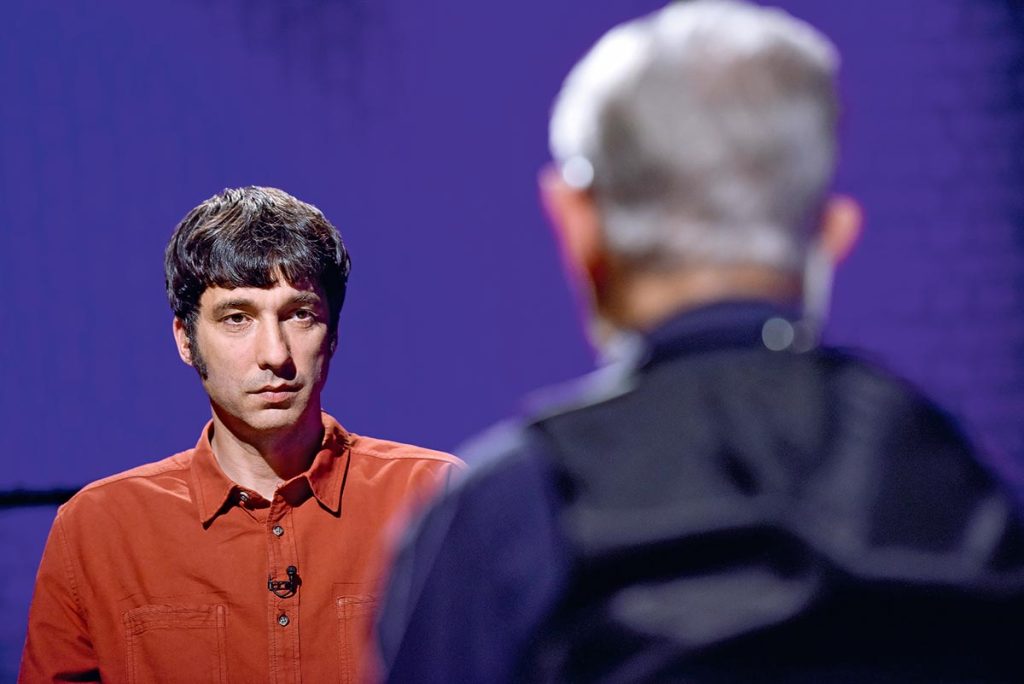
At best, we can expect AI to tell a joke. But a joke is not humour.
Spirituality is a word that can be misused in many ways. Transhumanism offers its own spirituality, too. If you have consciousness, if you yourself are spirit, you don’t need to spend so much time addressing spiritual questions. You can realise that they are already addressing you. You should ask: who are you? That question, I think, will remain inherently human.
In a world of fabricated content and competing versions of the truth, how can individuals decide what to believe?
It wasn’t like this in the early days of the internet. When it wasn’t so interconnected and integrated, when it was still somewhat wild and chaotic, there was a great deal of good content. Now you cannot even know what is real and what isn’t. You watch footage of an event: is it genuine or fake?
I think we should return to what we should never have left: looking at the world around us and knowing that what we see and experience is real. Everything else is second-hand goods.
Newspapers construct a picture of reality. You don’t actually know what is happening in the world. The heading says “World News”, but there is nothing from Colombia, Nigeria or India, or their individual cities. How could there be?
People can rely on what they see with their own eyes — unless we go so deep as to say that this world itself is a level of illusion. We need to remove the intermediary. That means returning to the oldest, original and natural channel of communication: human conversation.
Everything else coming to you is more propaganda than information.
Much of your work questions accepted explanations. But scepticism can become a trap: if we distrust institutions, experts and scientific consensus, almost any alternative explanation can seem plausible. Where do you draw the line between healthy scepticism and accepting an explanation simply because it is alternative?
Put this way, the question has much less to do with how I see things than might initially appear, because of that artificial division into real and unreal. Things come to you, and you have your own logic and reason. They have a certain persuasiveness, like arguments in court, and you can assess what makes sense and what doesn’t.
The idea of an alternative has lost its meaning because there are many false alternatives. If we look at the world as mainstream and alternative, I might position myself as an alternative to the alternative. This isn’t about outright rejection of one thing or another, but about sifting. That requires alert attention, time spent studying the subject and informing yourself, preferably through books rather than the internet. That is how you separate the wheat from the chaff.
The world we live in is nothing other than the fabric of our own beliefs. The only way to change it and influence it is to start with your own beliefs. They are within you, not on the wall or in the air
What is alternative today? For one person, bioenergy healing; for another, living in nature and producing their own food. I don’t regard David Icke as an alternative at all. For me, he tells a story and provides information you can think about, check and use to put together your own account.
The question is what is true and what isn’t. Something is artificially established as central and correct, and everything opposed to it is called alternative. That division is completely artificial and serves no purpose except to create more noise in the channel.
After more than two decades of research and your new book on UFOs, what can you say with greater certainty than when you began?
Paradoxically, I cannot say anything with greater certainty than when I started. Through the programmes and the book, I have collected more information, but when you put it all together, it is as though you haven’t moved forward.
What continues to emerge is that the phenomenon is real, frequent and present throughout human history, and that it behaves in ways that defy our understanding of physics. But everything else is what we don’t know: who, what, why, where from and what it is all for. As soon as we discuss the nature of UFOs, we enter the realm of conjecture.
That is why it has always been one of the best subjects for Na rubu znanosti: simultaneously incredibly real and incredibly fantastic. That combination could be a little path along the edge of the known and the unknown. Simply acknowledging UFOs is only a beginning, the tip of the tip of an iceberg we won’t understand for a long time.
When we meet again in 2030, which change might we look back on as the moment everything changed?
The greatest crossroads, almost a point at which people choose whether to go left or right, came when AI became ubiquitous. Two or three years ago, it became available to everyone online. Everyone used it, and it learned about people through every question someone asked.
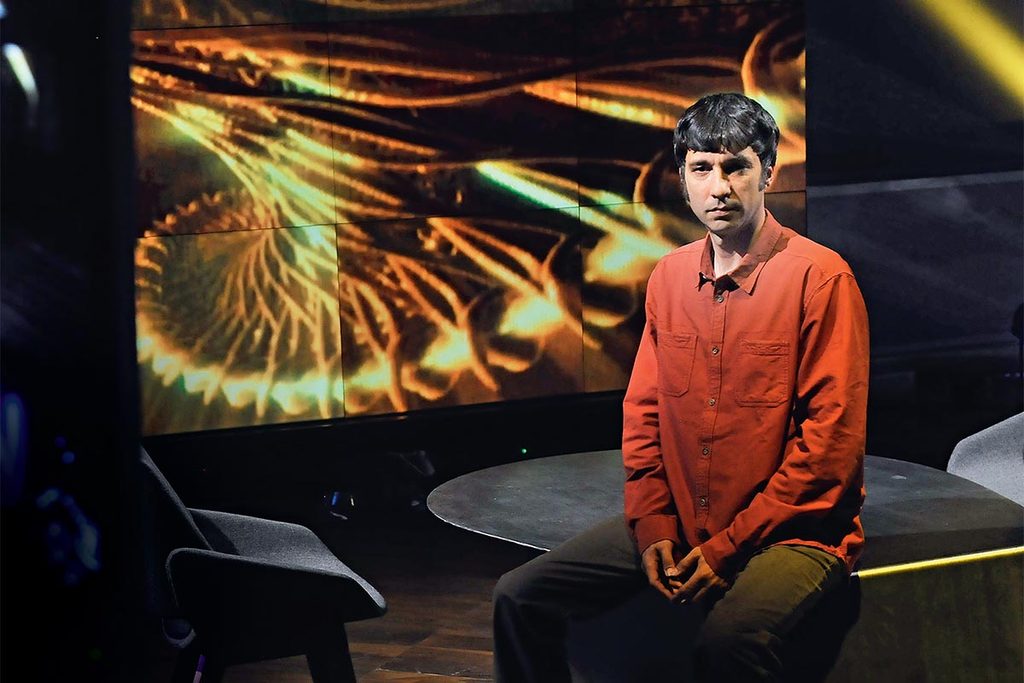
That could be the turning point, as in The Terminator: the moment an electronic “big boss” was installed that could take over the world algorithmically. I believe making programs of “apparent intelligence” available for people to use could be the main turning point after which everything changed.
After so many conversations and investigations, is the world clearer to you, or more mysterious?
This is actually the programme’s 25th season. I would say the world is much clearer to me: the patterns, what happens behind the scenes, the principles of how things unfold and what is wanted from you.
But it is no less mysterious. As it becomes clearer, it becomes more deeply mystical. Mystical doesn’t necessarily mean mysterious. This is not a secret to solve, but a reality to live and experience.
The mystery is the one looking out through your eyes. There is no greater mystery than that. If we are talking about the mystery of life, then it is certainly more mystical.
When we talk about social manipulation and how our idea that the world is made of matter is managed, we might describe it as a “conspiracy of the solid state”. Our starting point is that the world is material. What if it isn’t? Then everything changes.
Once that information enters a person, they can engage with it, question their beliefs and gradually change them. The world we live in is nothing other than the fabric of our own beliefs. The only way to change it and influence it is to start with your own beliefs. They are within you, not on the wall or in the air.
So: clearer and more mystical.