
High above the Bosnian town of Livno, hundreds of horses roam a landscape of limestone, grass and unforgiving winters. Their ancestors once pulled ploughs and carried loads for local farmers. Then the machines arrived, the horses were released, and an extraordinary new chapter began
There is something wonderfully improbable about the horses of Livno. They inhabit a mountain plateau where winter can bury the grass beneath snow, summer can turn water into a precious commodity, and the nearest human settlement offers no guarantee of food or shelter. Yet they are there in their hundreds, moving across the highlands beneath Mount Cincar as though the landscape has always belonged to them.
It hasn’t. Or, more precisely, they haven’t always belonged to it.
Not so long ago, the ancestors of these animals lived an entirely different existence. They worked fields, pulled carts and carried the burdens of rural households. Their days were shaped by human needs, their movements directed by reins, their survival secured by owners who depended on them. Today, their descendants roam without harnesses, forming their own social groups and travelling across the Kruzi plateau in search of grass and water.
The transformation sounds almost like a fable. Animals that spent generations serving people were made redundant by machines and, instead of disappearing, established a life of their own.
But this is no fairy tale about freedom without consequences. It is a story of adaptation, survival and an uneasy new relationship between people and animals they once considered indispensable.
THE ANIMALS THAT PROGRESS LEFT BEHIND
For generations, horses were woven into the everyday economy of the Livno countryside. They ploughed fields, transported agricultural produce and carried people across terrain where roads were limited and motor vehicles were scarce. A reliable horse represented labour, mobility and security. Its strength could determine how much land a family cultivated or how efficiently it brought goods to market.
Then, during the second half of the twentieth century, the agricultural world began to change.
Tractors replaced animal labour. Mechanisation transformed farming, and horses that had once been essential became increasingly expensive to maintain. A machine could perform work that previously required an animal, while the animal continued to need food, care and shelter even when there was no work to do.
Some horses were sold. Others were released onto the mountain pastures above Livno. The political and economic upheavals of the 1990s further disrupted rural life, leaving more animals without the households that had once cared for them.
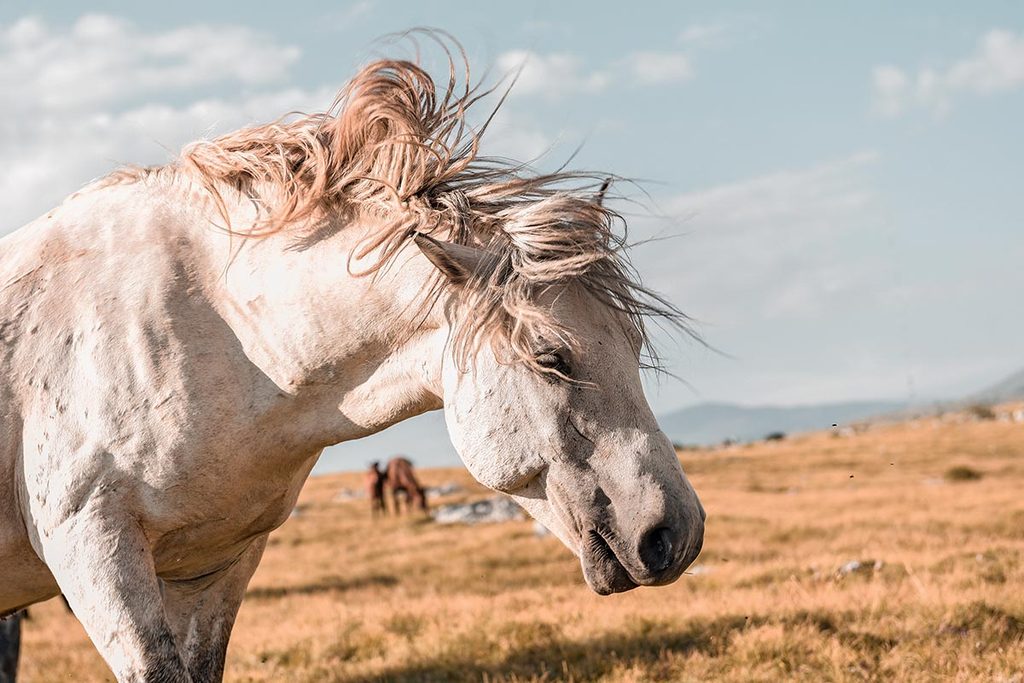
What happened next was neither planned nor particularly romantic.
The horses had to survive.
The Kruzi plateau offered grazing land and space, but not the security of a stable. Animals accustomed to human care now faced seasonal shortages, severe weather and the daily necessity of finding their own resources. Not all would have survived. Those that did reproduced, and their offspring were born into a world in which a person holding a rope was no longer an ordinary part of life.
Over time, a free-roaming population emerged.
These are often described as wild horses, although scientists would more precisely call them feral: descendants of domesticated animals living without routine human management. They are not a surviving population of prehistoric wild horses, nor do they represent a separate wild species. Their ancestors were ordinary working animals.
That is precisely what makes their history so unusual.
The disappearance of one way of life had unexpectedly created another.
A LANDSCAPE THAT MAKES ITS OWN RULES
The horses’ new home is an extraordinary piece of geography. The Kruzi plateau lies above Livno, surrounded by the rugged mountains of the Dinaric Alps. Mount Cincar rises to 2,006 metres, while the highland pastures below stretch across an open landscape of grass, limestone and scattered rocky formations.
In photographs, the plateau can appear almost limitless. There are long horizons, great sweeps of grassland and mountains that seem to emerge directly from the earth. Under a clear summer sky, it is easy to imagine the horses living in a permanent state of abundance.
The reality changes dramatically with the seasons.
Spring brings fresh vegetation and improved grazing. Summer offers long days but can also bring prolonged dry periods.
Autumn alters the quality and availability of pasture. Winter transforms the plateau into a landscape where every calorie matters.
Horses are remarkably capable grazers. Their digestive systems allow them to extract nourishment from fibrous grasses and other plants. They can spend much of the day feeding, moving gradually across the terrain in search of suitable pasture.
But the ability to survive on rough vegetation does not make them immune to hunger.
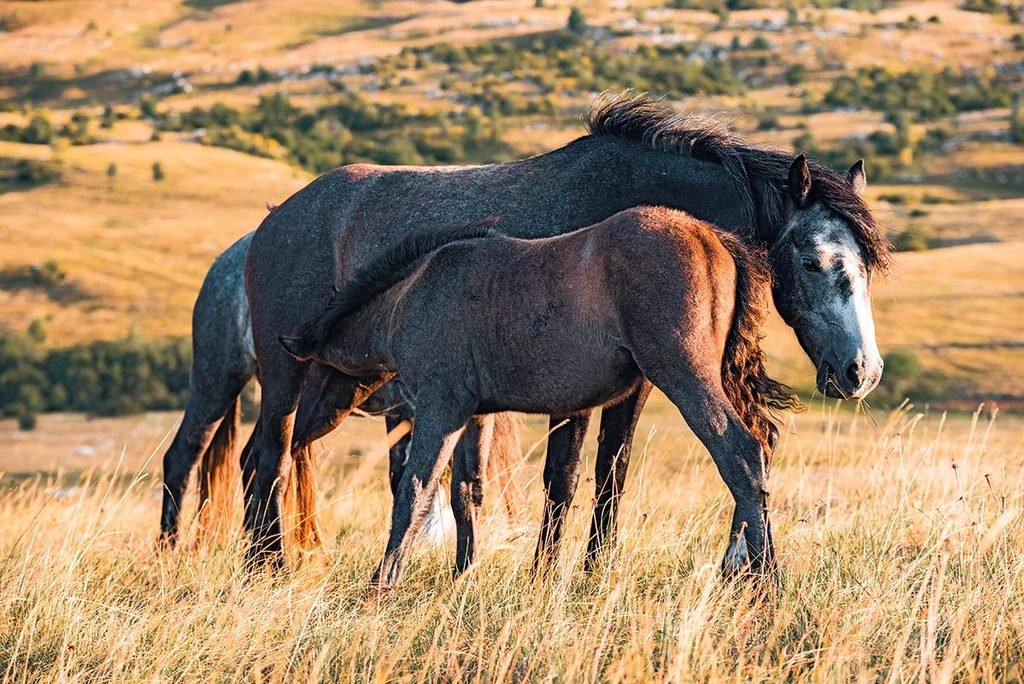
When snow covers the ground, finding food becomes harder. Strong mountain winds sometimes clear exposed patches of grass, offering temporary access to vegetation beneath the snow. During prolonged periods of severe weather, however, such opportunities may be insufficient, particularly for younger, older or weakened animals.
Water can be equally challenging.
The limestone geology of the Dinaric region creates a landscape in which water frequently disappears underground, making seasonal watering places particularly important.
The summer of 2026 offered a reminder of how fragile that balance can be. By mid-August, prolonged dry weather had reduced some of the plateau’s watering pools to just 20–30 per cent of their capacity. Local observers reported that sufficient water remained available, while additional supplies were being delivered when necessary.
The episode revealed an important truth about these apparently independent animals: their survival is still connected to the people living around them.
The horses respond to changing conditions through movement. Their world is not organised around a permanent home, but around a shifting network of grazing areas, water sources and places offering protection from the weather.
Their freedom, in other words, is not simply the absence of fences.
It is the ability to keep moving.
THE SECRET LIFE OF THE HERD
A photograph of a hundred horses galloping across a mountainside can create the impression of a single enormous herd acting with one purpose. Equine society, however, is far more complicated than that.
Free-roaming horses generally live in smaller social groups, often comprising mares, their offspring and one or more adult stallions. Young males may eventually leave their natal groups and join bachelor bands, sometimes spending years together before establishing breeding groups of their own.
Several groups may gather in the same grazing area, creating the spectacular concentrations of horses that have made Livno famous. But proximity does not necessarily mean that every animal belongs to the same social unit.
Within their groups, horses maintain relationships that can endure for years.
They recognise familiar companions and communicate through a remarkably subtle language of posture and movement. A horse does not need to neigh to make its intentions understood. The position of its ears, the direction of its gaze or a change in body tension may be enough to signal curiosity, irritation or alarm.
Mutual grooming reinforces social bonds. Standing close to familiar companions can provide reassurance. When resting, horses benefit from the vigilance of others, reducing the need for every animal to remain constantly alert.
Although stallions are the most visually dramatic members of many groups, equine social life is not simply a contest between powerful males. Research into free-ranging horse populations has shown that experienced mares can play important roles in group movement and social stability.
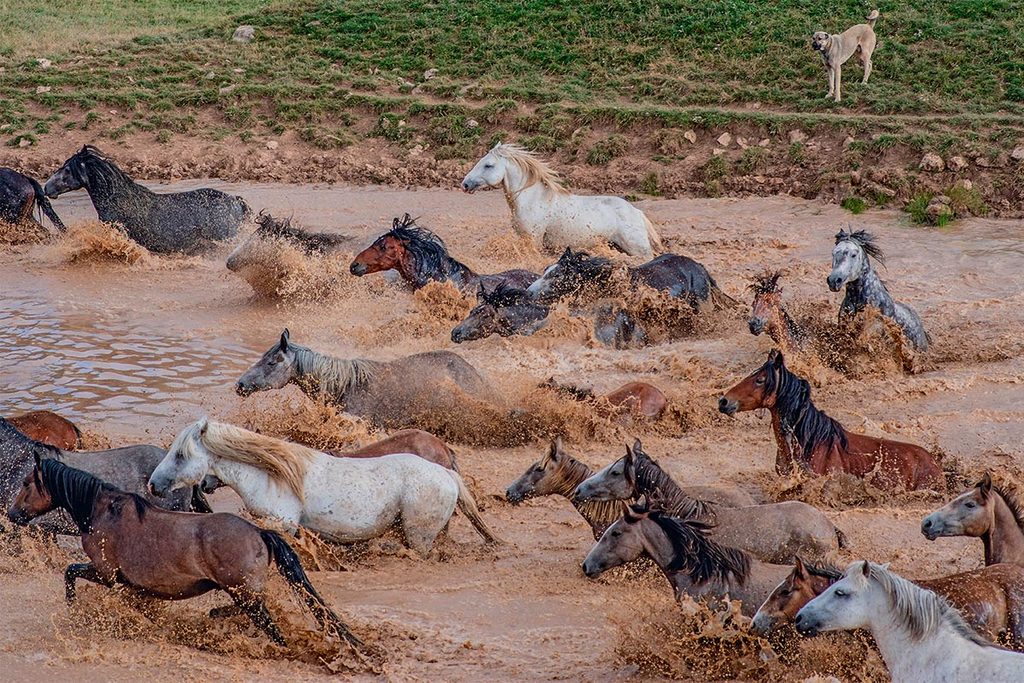
For the horses of Livno, much remains to be learned about the precise organisation of their social groups. Their population offers an opportunity to examine how animals descended from domestic stock establish relationships and organise themselves in a relatively independent environment.
Perhaps the most revealing members of this society are the youngest.
A foal enters the world with very little time to remain helpless. Healthy newborn horses can usually stand within hours of birth and soon begin following their mothers. During their first months, they learn far more than how to walk, run and feed.
They discover the social rules of the herd.
Playful chasing, sudden changes of direction and mock confrontations help develop coordination and social awareness. Encounters with older animals teach them when to approach, when to retreat and how to interpret the signals of others.
What appears to a visitor as an idyllic scene of young horses playing in the grass is also preparation for a demanding life.
There is no formal instruction, of course. No older horse gathers the youngsters together to explain how to survive a Bosnian winter.
They learn by living among those that already have.
FREEDOM HAS A PRICE
The temptation to romanticise the horses of Livno is considerable. They possess almost everything humans associate with freedom: open horizons, unrestricted movement, companionship and a life seemingly untouched by schedules or obligations.
But a horse does not experience freedom as a philosophical ideal. It experiences the availability of grass, the absence of danger, the comfort of familiar companions and the need to find water before thirst becomes a problem.
There are no guarantees on the plateau.
An injured animal cannot count on immediate veterinary treatment. A weakened foal may struggle to survive its first winter. An ageing horse must continue searching for resources long after its strength has begun to decline.
Yet some of their greatest dangers come not from nature, but from the world their ancestors once served.
Roads cross parts of the horses’ range, creating dangerous encounters between animals and vehicles. Around the Borova Glava mountain pass, horses have
been known to approach roads, sometimes attracted by salt used during winter maintenance or left by people hoping to help them.
For an animal searching for minerals, a road can offer an unexpected reward. For a motorist travelling through mountainous terrain, the sudden appearance of a horse can be disastrous.
Collisions have caused animal deaths and endangered drivers, prompting local organisations to warn visitors against feeding horses or leaving salt near traffic.
It is an uncomfortable paradox. The same human affection that has helped turn the horses into a regional attraction can also put them in danger.
There are other questions, too. How many horses can the plateau support? What happens when growing herds compete with livestock for pasture? How should local communities respond when animals move beyond the areas where people expect to find them?
These are reminders that freedom exists within an ecological landscape, not outside it. A growing population can be a conservation success and a management challenge at the same time.
THE UNEXPECTED CELEBRITIES OF LIVNO
For decades, the horses were largely a local phenomenon, familiar to people living around Livno but relatively unknown beyond the region. That has changed.
Photographs of horses galloping across the plateau began attracting visitors, and what was once an unusual consequence of agricultural mechanisation gradually became one of Bosnia and Herzegovina’s most distinctive wildlife experiences.
There are plenty of places where visitors can ride horses, photograph them in fields or watch them in organised equestrian displays. Livno offers something different. The animals are not waiting for an audience. They have no reason to appear at a particular hour, remain conveniently positioned for a photograph or acknowledge the people who have travelled to see them.
Finding them can require patience and local knowledge.
Guided excursions now take visitors onto the plateau, where the horses may be seen grazing, resting, moving between pastures or gathering near water. The experience has created opportunities for local tourism businesses, guides and photographers, while drawing attention to a mountainous region that rarely receives the international recognition enjoyed by Bosnia and Herzegovina’s better-known destinations.
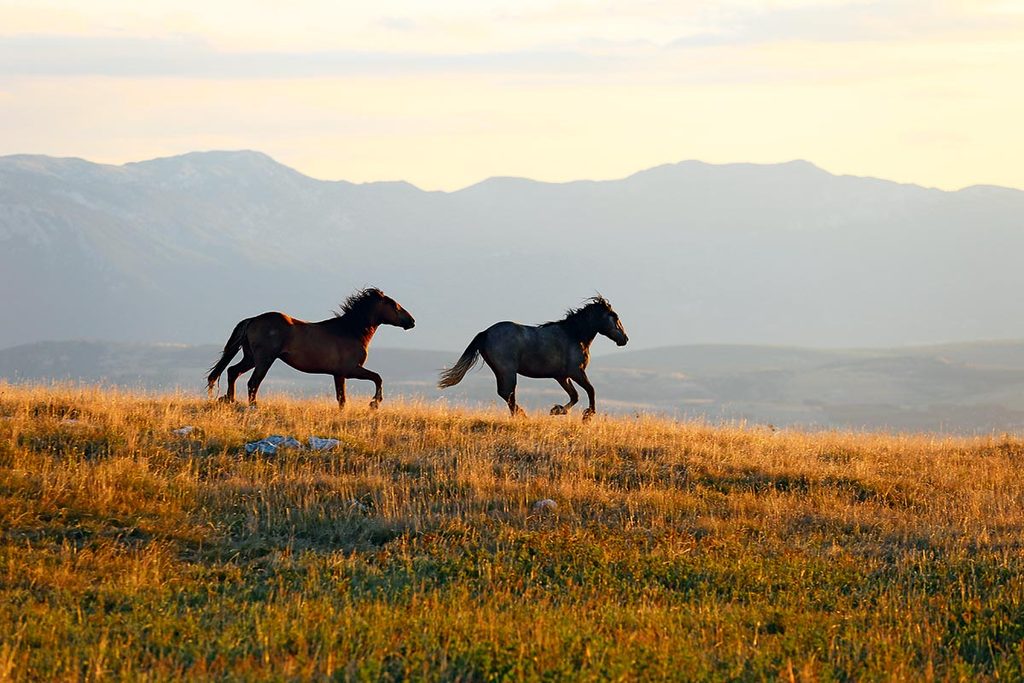
Against the broad horizons of the Dinaric highlands, the horses appear almost elemental: dark silhouettes beneath an immense sky, small groups scattered across the grasslands or entire herds moving through a landscape with few visible signs of human habitation.
Yet photography also creates a peculiar illusion.
An image freezes a moment of movement and makes it appear effortless. It cannot show the hours spent grazing, the search for water or the long winter days when survival requires more endurance than speed.
As interest grows, responsible tourism becomes increasingly important. Vehicles can damage sensitive terrain, while visitors who approach too closely may disrupt resting, feeding or interactions between mares and foals.
The horses’ greatest attraction is their independence. Preserving that independence means accepting that the best encounter may be one in which the animals pay no attention to their admirers.
The visitor receives an extraordinary memory.
The horse simply continues being a horse.
LEARNING TO LIVE TOGETHER AGAIN
In late February 2026, a team from the University of Split‘s Faculty of Mediterranean Agriculture began scientific fieldwork on the Kruzi plateau, following an agreement signed with the authorities of Canton 10 in November 2025.
During the first monitoring operation, three horses were fitted with GPS collars, allowing researchers to collect information about their movements, habitat use and daily and seasonal activities.
The technology offers researchers something that even the most dedicated field observer cannot easily obtain: a record of where animals travel over extended periods, including when nobody is watching.
Which areas do the horses use most frequently? How far do they travel between grazing and watering places? Do their movements change between summer and winter? Where do their routes intersect with roads or agricultural land?
The answers could have immediate practical consequences.
Knowing where horses cross roads could help identify locations requiring safety measures. Understanding seasonal movements could improve habitat management, while more reliable population data could help authorities assess the relationship between herd numbers and available resources.
Preliminary findings were presented in Livno on 23 September 2026, with researchers highlighting the need for systematic population monitoring, habitat protection and measures to reduce the risk of horses entering roads.
The scientific work represents an important change in the way the horses are understood.
For years, their story has largely been told through photographs, visitor experiences and the recollections of local residents. These remain valuable, but they cannot replace detailed knowledge of the population’s ecology.
The GPS collars are a small intervention in the lives of a few animals, yet the information they provide may help preserve the freedom of many more.
There is something fitting about that.
The horses were once valued for the work they performed for people. Today, people are beginning to invest effort in understanding what the horses need.
It is a reversal of an old relationship.
WHAT THE HORSES REMEMBER
Horses have no understanding of agricultural mechanisation. They do not know that tractors replaced their ancestors or that the upheavals of the twentieth century helped shape their present existence.
The plateau is not a symbol of liberation to them. It is simply home.
And yet their history remains written into the landscape.
The horses grazing beneath Mount Cincar are descendants of animals that once belonged to local families. Their ancestors carried loads along rural tracks, worked the surrounding fields and depended on people for food and shelter. The generations that followed learned to live differently.
They have not become a new species. They have not returned to some untouched prehistoric state. Their existence is more interesting than either of those romantic possibilities.
They have adapted.
In doing so, they have become an unexpected part of Bosnia and Herzegovina’s natural heritage, a living connection between the agricultural past and a future in which the value of an animal need not be measured by the work it performs.
Their continued presence is not guaranteed. It will depend on the health of the plateau, the availability of resources and the willingness of people to accommodate animals that no longer fit neatly into the categories of livestock or conventional wildlife.
But perhaps the most remarkable thing about the horses of Livno is how ordinary their freedom has become.
A foal born on the Kruzi plateau does not know that its ancestors wore harnesses. It learns to stand, follows its mother, discovers the other horses and gradually becomes familiar with the vast landscape around it.
One day, it may run across the grasslands with the rest of its group, beneath the same mountains where its ancestors once worked for human owners.
There will be no moment of revelation, no awareness of a remarkable historical transformation.
For the horse, there is nothing extraordinary about it.
And that may be the most extraordinary thing of all.