The Croatian entrepreneur built a global reputation by challenging the automotive establishment. Now, with Porsche departing, BMW adopting his technology and autonomous taxis operating in Zagreb, he faces the far less glamorous business of turning extraordinary inventions into lasting industrial success.
Mate Rimac has spent much of his career defying the expectations of an industry that rarely welcomes outsiders. He began experimenting with electric propulsion in Croatia, a country with little automotive manufacturing tradition, and went on to develop record-breaking hypercars, attract investment from Porsche and take control of Bugatti, one of the most prestigious names in motoring. It is the kind of entrepreneurial story that tends to be told as a triumph of individual determination, and with good reason. But nearly two decades after founding his company, Rimac finds himself at a stage where the qualities that made him successful may no longer be sufficient to secure its future.
In September 2026, Porsche completed the sale of its interests in Rimac Group and Bugatti Rimac to an international consortium led by New York-based HOF Capital, receiving approximately €1 billion. The transaction ended an eight-year relationship that had provided Rimac with much more than financial backing. Porsche had brought industrial credibility, access to established automotive networks and the endorsement of a manufacturer whose engineering reputation was beyond dispute. Its departure leaves Rimac with new investors, a different set of expectations and an increasingly complicated collection of businesses operating in markets that have remarkably little in common.
At one end is Bugatti, producing some of the world’s most exclusive and expensive automobiles. At another is Rimac Technology, developing components for established manufacturers, including BMW. Then there is Verne, the autonomous mobility venture attempting to turn driverless transport into a commercial service. Each business presents its own opportunities, but each also requires a different approach to investment, management and profitability. Rimac’s challenge is no longer simply to persuade the automotive world that his engineers can do extraordinary things. It is to demonstrate that the organisations built around those achievements can compete, grow and generate lasting economic value.
FROM OUTSIDER TO INSIDER
When Porsche made its first investment in Rimac in 2018, the significance extended well beyond the capital involved. For a company operating outside Europe’s established automotive centres, the endorsement of one of Germany’s most respected manufacturers provided something money alone could not buy: industrial credibility. Porsche’s involvement helped open doors, strengthened confidence in Rimac’s engineering capabilities and established the Croatian company as a serious participant in an industry notoriously difficult for newcomers to enter. The partnership also illustrated how rapidly Rimac’s position was changing. He was no longer simply an entrepreneur developing electric vehicles in a market dominated by established manufacturers; he was becoming a partner to some of the industry’s most influential names.
The relationship reached its most remarkable moment in 2021, when Rimac Group became the majority shareholder in the newly established Bugatti Rimac, holding 55%, with Porsche retaining 45%. The arrangement brought one of Europe’s most prestigious automotive marques under the control of a relatively young Croatian technology group. It was an extraordinary reversal of expectations, particularly given that Croatia lacked the automotive manufacturing heritage and industrial ecosystem associated with countries such as Germany, Italy or France. For Rimac, the transaction represented international recognition on a scale that would have been difficult to imagine when he founded his company.
Five years later, the ownership structure has changed again. The HOF Capital-led consortium acquired Porsche’s 45% stake in Bugatti Rimac and its approximately 20.6% holding in Rimac Group. Rimac Group retains its 55% majority interest in Bugatti Rimac, while HOF Capital holds 23.5% of the parent group. The transaction reflects Porsche’s wider reassessment of its business priorities, but its consequences for Rimac are more complex than the departure of a familiar shareholder. The German manufacturer had provided industrial expertise, established relationships and a powerful endorsement of Rimac’s technology. The new investors bring a different perspective, with greater emphasis likely to fall on growth, capital allocation and financial returns.
It is worth distinguishing the scale of the transaction from its immediate financial implications. The approximately €1 billion received by Porsche represents the sale of existing equity holdings, not an equivalent injection of fresh capital into Rimac’s operating businesses. What has changed is the ownership structure and the interests of those who will influence the group’s future direction. For Rimac, the challenge is to preserve the engineering ambition that made his companies distinctive while developing the financial and organisational discipline required to manage an increasingly diversified industrial group.
THE BMW THAT MAY MATTER MORE THAN BUGATTI
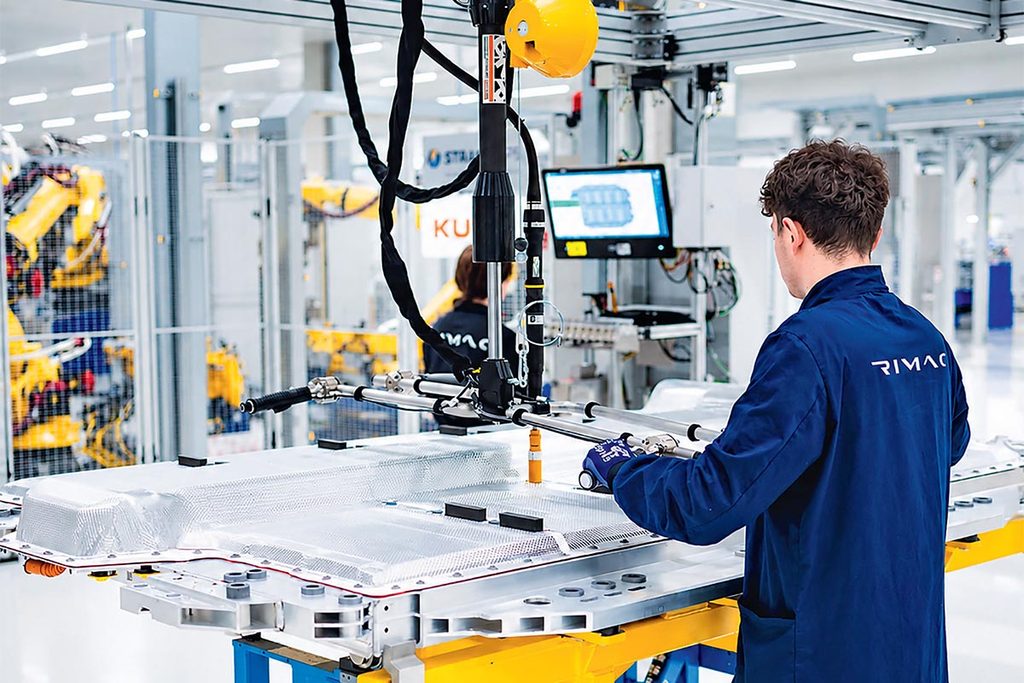
The most consequential Rimac-related automotive development of 2026 may not involve a spectacular hypercar at all. It involves a BMW luxury saloon and a battery system manufactured near Zagreb. In April, BMW and Rimac Technology unveiled a jointly developed high-voltage battery system for the new all-electric BMW i7, produced at the Rimac Campus and delivered to BMW’s manufacturing facility in Dingolfing, Germany. The system combines BMW’s sixth-generation cylindrical battery cells with a module-based architecture, bringing together the engineering capabilities of the Croatian company and the industrial requirements of one of the world’s leading premium automotive manufacturers.
The distinction between developing a hypercar and supplying a major manufacturer is fundamental. A limited-production performance vehicle demonstrates what engineers can achieve when technological ambition takes precedence over cost and production volume. Supplying BMW demands a different kind of excellence, based on consistent quality, dependable logistics, manufacturing efficiency and the ability to deliver complex components to precise specifications. A hypercar may generate international attention and establish a company’s reputation, but successful industrial supply relationships are more likely to determine whether that reputation can be translated into a sustainable business.
The BMW programme required Rimac Technology to establish two production lines and develop an integrated supply chain. It is a significant step towards the more demanding world of series automotive production, where even small deviations in quality or delivery schedules can have substantial consequences. For Rimac, the opportunity is considerable, but so is the responsibility. The company must demonstrate that the engineering capabilities developed through specialised, high-performance projects can be applied consistently to the requirements of a global manufacturer.
The entrepreneur who became famous for challenging the established automotive industry now faces a challenge familiar to the very companies he once disrupted.
For Croatia and the wider Adria region, this may be the most important aspect of Rimac’s story. Southeast European economies have spent decades seeking foreign investment that creates skilled employment, develops local suppliers and connects domestic industries to international markets. Much of that investment has involved production facilities established by foreign companies, with the most valuable research and development functions remaining elsewhere. Rimac represents a different possibility: a locally founded company developing sophisticated technology and supplying it directly to established international manufacturers.
The distinction should not be exaggerated. One major automotive programme does not guarantee long-term profitability or establish Rimac Technology as a competitor to the world’s largest automotive suppliers. Building a durable industrial business will require additional customers, new contracts, investment in manufacturing capabilities and the ability to maintain quality as production expands. Nevertheless, the BMW relationship demonstrates that advanced engineering developed in Croatia can become part of a global manufacturing system. That achievement may ultimately prove more important to the country’s industrial future than any acceleration record established by a Rimac hypercar.
ZAGREB BECOMES A LABORATORY FOR THE FUTURE
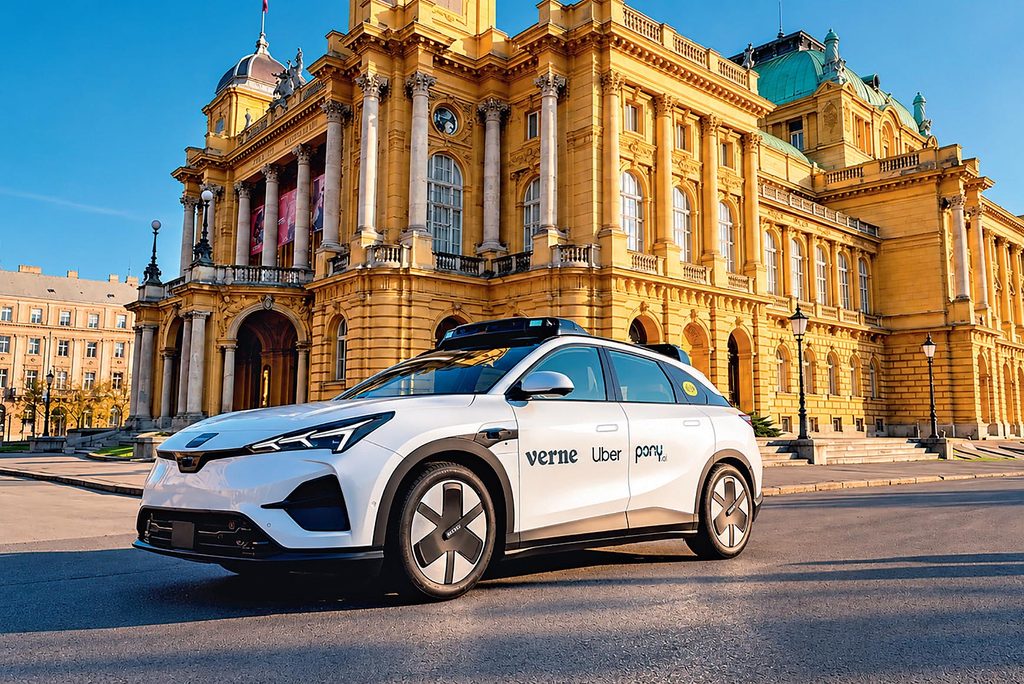
While Rimac Technology moves towards conventional industrial production, another of the entrepreneur’s ventures is pursuing a business model whose commercial future remains far less certain. Verne, the autonomous mobility company co-founded by Rimac, is attempting to turn driverless transport into an everyday urban service, beginning in Zagreb. The company launched commercial robotaxi operations in the Croatian capital in April 2026, initially allowing passengers to book rides through its own application. In August, the service expanded to Uber‘s platform through a partnership involving Verne, Uber and Chinese autonomous-driving specialist Pony.ai.
The arrangement combines three distinct capabilities. Pony.ai supplies the autonomous-driving technology, Verne manages the fleet and mobility operations, while Uber provides access to an established international customer network. For Zagreb, the initiative is significant because it places a relatively small European capital within a technological experiment more commonly associated with major American and Chinese cities. For Rimac, however, the project introduces a different set of commercial challenges from those associated with manufacturing high-performance vehicles or supplying automotive components.
Autonomous mobility is an industry in which technological progress does not necessarily translate into financial success. Vehicles must operate safely and predictably in complex urban environments, comply with regulatory requirements and gain the confidence of passengers who may be reluctant to travel without a human driver. Operators must also manage the substantial costs associated with vehicles, sensors, maintenance, software development and fleet operations. Even if the technology performs reliably, the business must eventually demonstrate that it can provide transport at a cost passengers are willing to pay and investors can justify.
The initial Zagreb service operated with licensed safety personnel on board. In September, Verne and Pony.ai began limited fully driverless passenger testing along a 22-kilometre route connecting the company’s headquarters with Zagreb Airport. The development represented meaningful technical progress, although it did not establish unrestricted driverless commercial operation throughout the city. Verne is also developing its own purpose-built autonomous vehicle without conventional driving controls, while the initial service uses vehicles incorporating Pony.ai technology.
This approach raises questions about Verne’s eventual position in the autonomous mobility industry. Its long-term competitive advantage could lie in vehicle manufacturing, fleet operations, the passenger experience or its ability to integrate technologies developed by different partners. Each possibility offers different opportunities, but also exposes the company to competitors with substantial technological and financial resources. Uber’s involvement as an investor and strategic partner provides an important endorsement, although the financial terms of its investment have not been publicly disclosed.
Verne also occupies a different position within Rimac’s wider business interests. Rimac Group is a significant minority investor rather than the majority owner, a distinction that matters when assessing the group’s exposure to the venture and its influence over strategic decisions. For Rimac personally, however, Verne is another ambitious attempt to challenge established assumptions about mobility. Whether it becomes a sustainable transport business will depend not simply on the sophistication of its vehicles, but on its ability to operate safely, attract passengers and eventually establish a commercially viable service.
THE CONTRADICTION CALLED BUGATTI
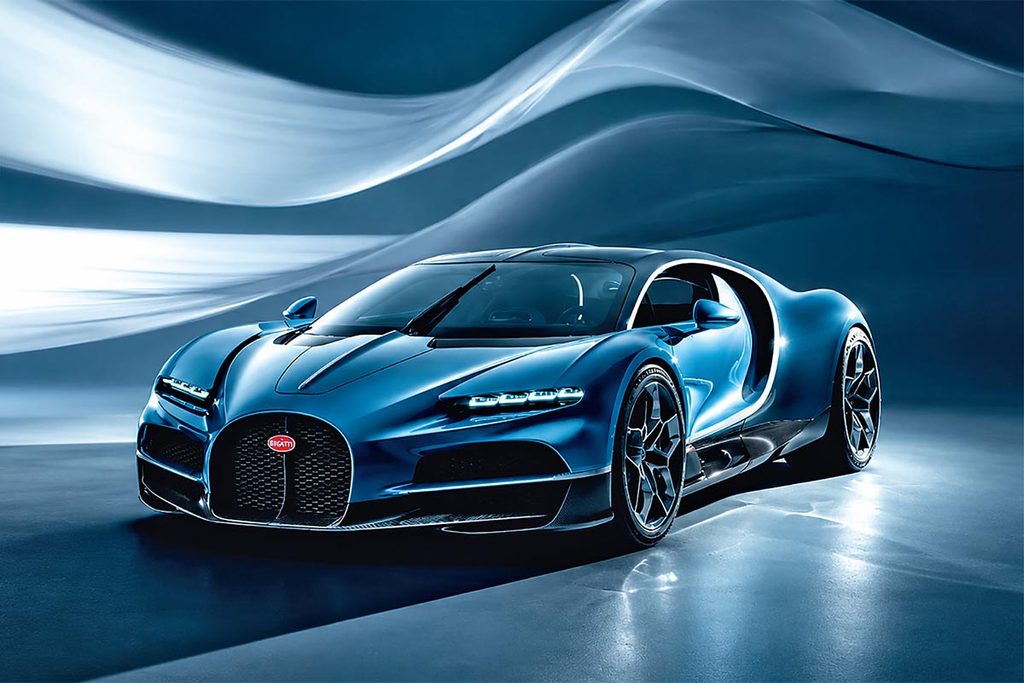
There is an intriguing contradiction at the centre of Rimac’s automotive interests. The entrepreneur who became internationally famous for championing electric propulsion also leads a company whose newest flagship celebrates one of the most elaborate combustion engines ever developed for a production automobile. The Bugatti Tourbillon, unveiled in 2024, combines a newly developed V16 petrol engine with electric technology. Limited to 250 examples, with an announced starting price of €3.8 million before taxes, it represents a philosophy almost entirely removed from the practical considerations governing mass-market electric vehicles or autonomous urban transport.
The apparent contradiction reveals how far Rimac has moved beyond his original identity as an electric-vehicle innovator. He is now involved in businesses whose value depends on very different ideas of what an automobile should represent. For Bugatti, exclusivity, heritage, craftsmanship and emotional appeal are central to the product. Its customers are purchasing more than transportation or performance; they are acquiring an object whose value is inseparable from its rarity, engineering sophistication and place within automotive history.
Rimac Technology operates according to a different commercial logic. Its industrial customers are concerned with technical performance, but also with cost, reliability, integration and delivery schedules. Verne, meanwhile, is attempting to establish a service in which convenience, safety and operating efficiency matter far more than exclusivity. The challenge is not simply that these businesses serve different customers. They require different management cultures, investment horizons and definitions of success. A luxury marque must preserve scarcity, while a technology supplier must pursue repeatability and scale. An autonomous mobility operator must make sophisticated technology accessible and economically practical.
The September restructuring, which also saw Rimac assume the presidency of Bugatti Automobiles while remaining CEO of Bugatti Rimac, has further increased the demands on his leadership. Managing a collection of businesses with such different priorities requires more than the instinctive engineering judgement that helped establish his reputation. It demands experienced management teams, effective organisational structures and the ability to allocate capital without allowing the ambitions of one business to undermine the needs of another.
WHAT RIMAC’S SUCCESS REALLY MEANS
Rimac’s achievements have acquired a symbolic importance that extends beyond the companies bearing his name. For Croatia, he has become evidence that an internationally competitive technology business can emerge without the industrial advantages traditionally associated with the world’s automotive powers. For the wider Adria region, his story challenges a familiar economic assumption: that local companies must remain suppliers, subcontractors or regional representatives of businesses headquartered elsewhere. His success suggests that technological expertise, entrepreneurial ambition and access to international capital can allow companies from smaller economies to participate in industries traditionally dominated by much larger countries.
Yet exceptional entrepreneurs can also create misleading expectations. The emergence of one internationally successful company does not automatically transform a national innovation ecosystem. Building an enduring technology industry requires universities capable of producing specialised talent, access to patient investment capital, sophisticated suppliers, effective institutions and opportunities for new businesses to develop around established successes. Without these foundations, even a remarkable company may remain an isolated achievement rather than the beginning of a broader industrial transformation.
The wider question, therefore, is not simply whether Rimac’s companies will continue to grow. It is whether their growth will generate capabilities that extend beyond the founder and his immediate organisations. Will specialised suppliers emerge around the Rimac Campus? Will engineers and managers acquire experience that enables them to establish new businesses? Will investment in research, manufacturing and technical expertise create lasting economic value within Croatia? These questions are particularly relevant to a region that has often struggled to retain skilled professionals and develop internationally competitive companies.
They also explain why the BMW relationship deserves at least as much attention as Bugatti’s spectacular vehicles. Industrial partnerships have the potential to create sustained demand for specialised skills, develop supplier networks and strengthen the relationship between engineering expertise and commercial production. Their significance lies not only in the revenue they may generate for an individual company, but also in the capabilities they can help establish within the wider economy.
There is another challenge that accompanies Rimac’s increasing prominence. As a founder becomes closely identified with a company’s achievements, the organisation must gradually develop the ability to succeed without relying on that individual’s constant intervention. The skills required to imagine a new technology, attract investors and persuade sceptical partners are not necessarily the same as those required to manage complex operations, establish effective management structures and deliver predictable financial performance. Many successful entrepreneurs eventually discover that building a company capable of functioning independently of its founder is a more demanding task than creating the business in the first place.
Rimac now faces precisely that transition. His investors will expect growth and financial discipline. BMW and other industrial customers will demand consistent quality and dependable delivery. Bugatti’s clients will expect uncompromising craftsmanship and exclusivity, while Verne must convince regulators and passengers that autonomous transport can become a safe, reliable and commercially viable service. These expectations cannot be satisfied by reputation alone, however impressive the technological achievements that established it.
The next phase of his career will consequently be judged by results that are less immediately visible than the performance of a hypercar: profitable contracts, reliable manufacturing, successful product launches, sound capital allocation and management teams capable of making complex businesses work. None of these achievements is likely to attract the same attention as a record-breaking electric vehicle, but together they will determine whether Rimac’s industrial ambitions can be sustained over the long term.