Serbia’s Student List has received congratulations from European leaders, neighbouring governments and international officials following its victory in the parliamentary elections on 25 October, a result that marks the end of the Serbian Progressive Party’s 14-year dominance of the country’s government. While Brussels has emphasised democratic reforms and Serbia’s European future, reactions from Washington, Kyiv and Moscow reflect the wider diplomatic implications of the political transition.
European Commission President Ursula von der Leyen congratulated the Student List and pledged the European Union’s support for reforms concerning the rule of law, media freedom, the fight against corruption and the strengthening of democratic institutions. European Commissioner for Enlargement Marta Kos welcomed the exceptionally high voter turnout, describing the result as an opportunity for a new chapter in relations between Serbia and the EU. European Council President António Costa and European Parliament President Roberta Metsola also congratulated the movement, with Metsola reaffirming the Parliament’s commitment to supporting Serbia’s reform process and European integration.
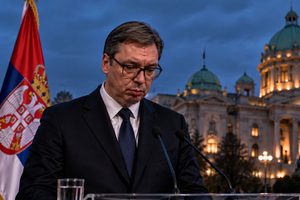
Alain Berset, Secretary General of the Council of Europe, welcomed the result and Aleksandar Vučić’s acceptance of defeat, stressing the importance of a peaceful democratic transition. He expressed the organisation’s readiness to work with Serbia’s democratically elected leadership to strengthen human rights, democracy and the rule of law.
The response from neighbouring countries has been particularly significant. Montenegrin Prime Minister Milojko Spajić welcomed the election outcome as an expression of the democratic will of Serbian citizens, arguing that relations between Serbia and Montenegro should be measured by concrete results of cooperation rather than diplomatic disagreements. Montenegrin President Jakov Milatović similarly expressed hope that the result would open a new chapter in bilateral relations, based on friendship, sincere dialogue and a shared European future.
Croatian Prime Minister Andrej Plenković congratulated the Student List and expressed readiness to improve relations between Zagreb and Belgrade, including through dialogue on unresolved bilateral issues. Hungarian Prime Minister Péter Magyar said he had spoken directly with representatives of the victorious movement and assured them of Hungary’s support. He also noted that his own movement’s electoral victory in Hungary in April had encouraged Serbian students during their prolonged campaign.
From Bosnia and Herzegovina, Presidency member Željka Cvijanović congratulated the Student List and expressed hope that Serbia would continue its development and prosperity. Republika Srpska President Siniša Karan also offered congratulations, while Milorad Dodik emphasised the importance of maintaining cooperation between Serbia and Republika Srpska. The regional responses have raised expectations of renewed diplomatic engagement, although the direction of future relations will depend on the policies pursued by Serbia’s next government.
Beyond the region, Ukrainian President Volodymyr Zelenskyy welcomed the outcome as an opportunity for a new chapter in bilateral relations and signalled interest in expanding cooperation. In the United States, Republican congressman Joe Wilson congratulated Serbian citizens and students, expressing hope for renewed relations between Washington and Belgrade. His statement represented a congressional response rather than an official position announced by the US administration.
Moscow’s reaction was more cautious. Kremlin spokesman Dmitry Peskov acknowledged the election result while praising Aleksandar Vučić’s contribution to Russian–Serbian relations and expressing hope that he would continue to support those ties from opposition. Unlike the European leaders who congratulated the Student List, the Kremlin did not issue a direct congratulatory message to the movement. The differing responses from Brussels, Kyiv and Moscow illustrate the diplomatic challenges awaiting Serbia’s next government, particularly in balancing its European aspirations with longstanding relationships beyond the EU.
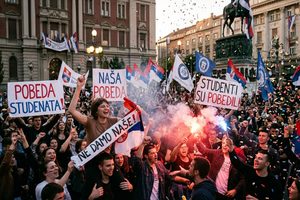
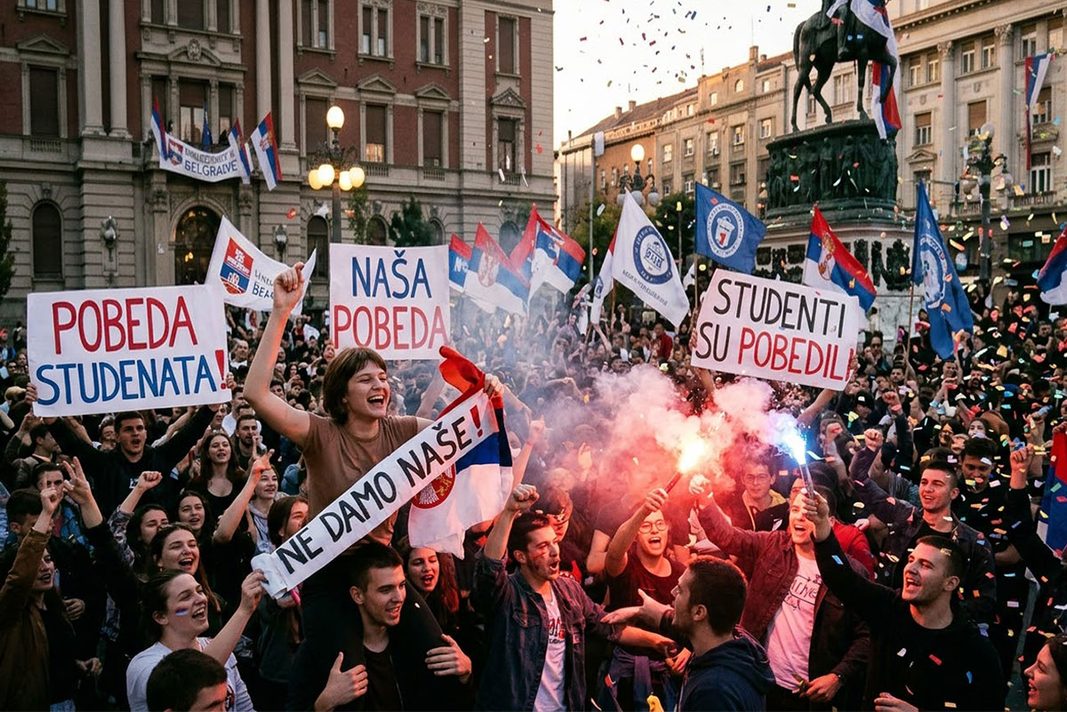
The election followed almost two years of student-led protests triggered by the collapse of a railway station canopy in Novi Sad in November 2024, which killed 16 people. What began as demands for accountability developed into a nationwide movement calling for action against corruption, greater institutional independence and political change. According to preliminary figures released by Serbia’s Republic Electoral Commission on 26 October, based on 8,135 polling stations, the Student List secured 52.65% of the vote, compared with 39.22% for the Aleksandar Vučić–United Serbia coalition. Turnout was reported at 68.78%, reflecting exceptionally high public participation.
Vučić acknowledged the defeat of his political camp, while projections by election monitors indicated that the Student List would secure an outright majority in Serbia’s 250-member National Assembly. The Socialist Party of Serbia, which received approximately 2.17% of the vote, is expected to remain outside parliament, having fallen below the electoral threshold. The final distribution of parliamentary seats remains subject to the completion of the official electoral process.
The immediate challenge for the Student List will be to translate its electoral mandate into a functioning government capable of delivering institutional reforms while managing economic priorities and international relationships. A separate presidential election, required following Vučić’s resignation in September, will provide another important political milestone before the end of the year.
For Serbia, the election represents more than a change of parliamentary majority. It has created expectations of institutional renewal at home and opened new possibilities for diplomatic engagement abroad. International congratulations signal a willingness to work with the country’s emerging leadership, but the direction of Serbia’s political transition will ultimately depend on the decisions of its next government and the reforms it delivers.