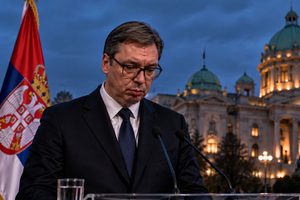
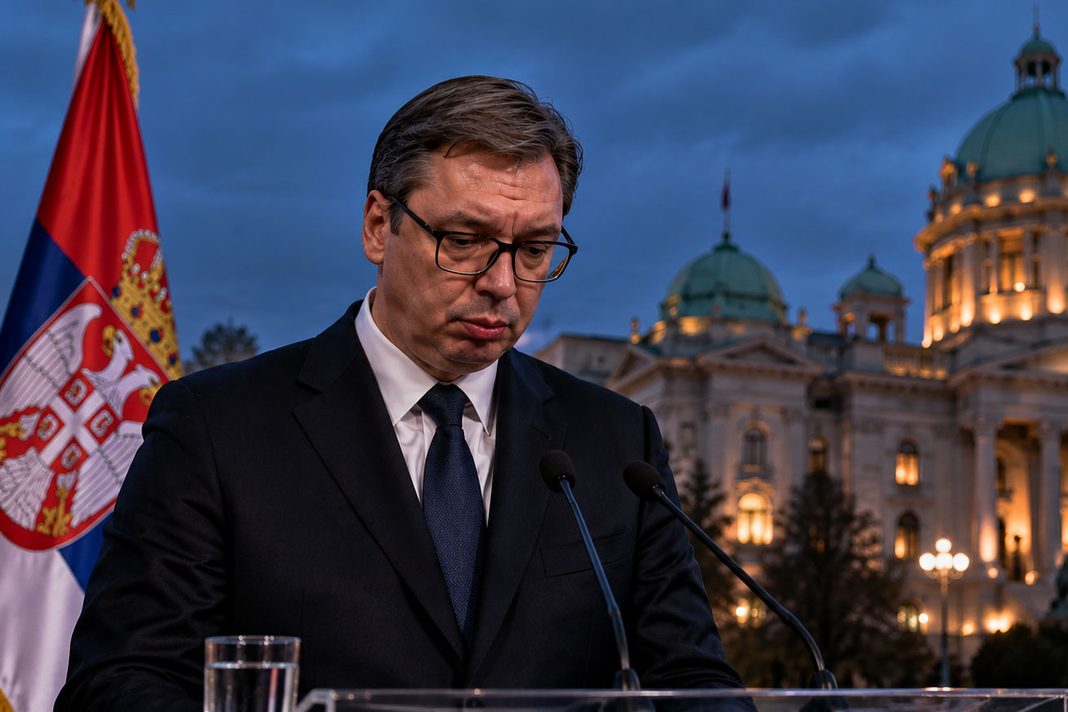
Aleksandar Vučić has conceded defeat in Serbia’s snap parliamentary elections held on Sunday, 25 October, acknowledging that the student-backed opposition movement has secured victory in a vote that could fundamentally reshape the country’s political landscape.
Speaking after polling stations closed, Vučić said preliminary projections indicated that the Students’ List would win between 135 and 140 seats in Serbia’s 250-member National Assembly, compared with approximately 105 seats for his political camp. The estimates would give the student-backed movement a parliamentary majority without the need for coalition partners.
“We still do not have final results,” Vučić said, acknowledging that the available sample nevertheless pointed to a clear defeat for his electoral list.
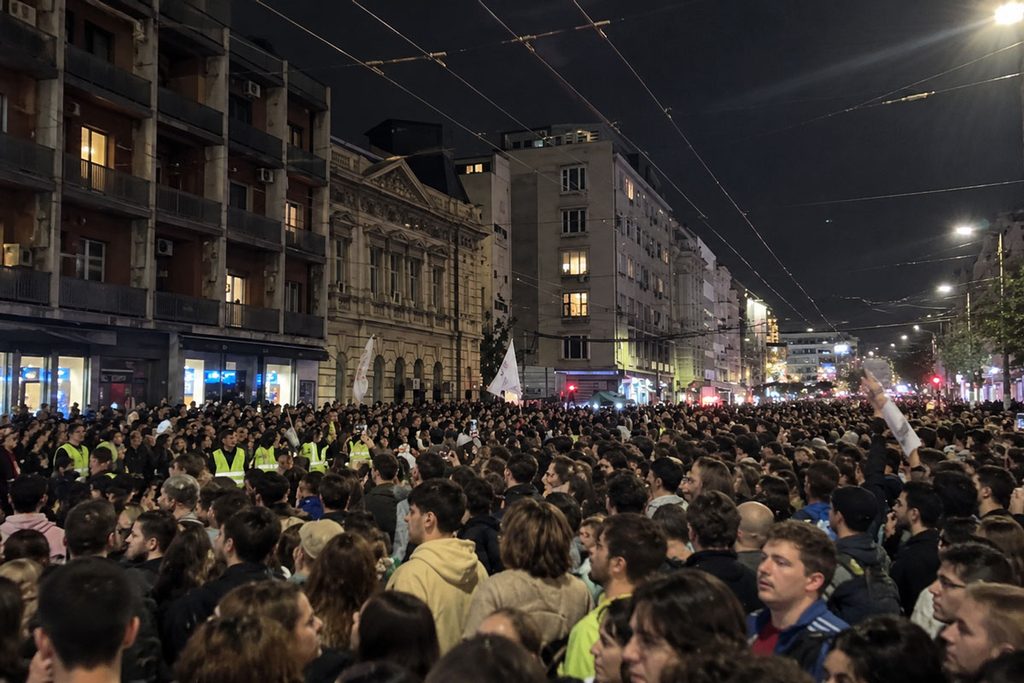
The concession represents a major political setback for Vučić, whose Serbian Progressive Party (SNS) and its allies have dominated Serbian politics since 2012. Although the official vote count remains incomplete, the projected outcome raises the prospect of the country’s first major transfer of governing power in more than a decade.
Sunday’s election followed almost two years of student-led demonstrations that began after the collapse of a railway station canopy in Novi Sad in November 2024, which killed 16 people. The tragedy triggered nationwide protests over corruption, institutional accountability and the functioning of Serbia’s public institutions.
What began as a university protest movement gradually developed into a broader political challenge, attracting support from different generations and professional groups. The Students’ List brought together candidates from outside the established party structures, campaigning on institutional reform, accountability and changes to the country’s political system.
The election was marked by exceptionally high turnout, with participation reported to be approaching 70%, alongside allegations of voting irregularities and intimidation documented by election observers.
The immediate question is whether the projected parliamentary majority will be confirmed by the Republic Electoral Commission. A majority requires at least 126 seats, and the student-backed movement’s projected result would allow it to elect a government independently.
The implications extend beyond domestic politics. Serbia is the largest economy in the Western Balkans and an EU candidate country whose relationships with Brussels, Moscow and Beijing have played a central role in regional diplomacy. A change of government would raise important questions about the direction of economic policy, institutional reform and Serbia’s European integration.
Official results and the final distribution of parliamentary seats are expected to become clearer as counting continues.
The Region will update this report as official election results become available.