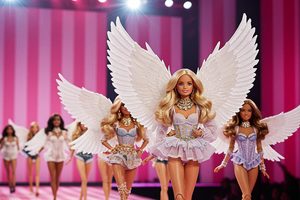
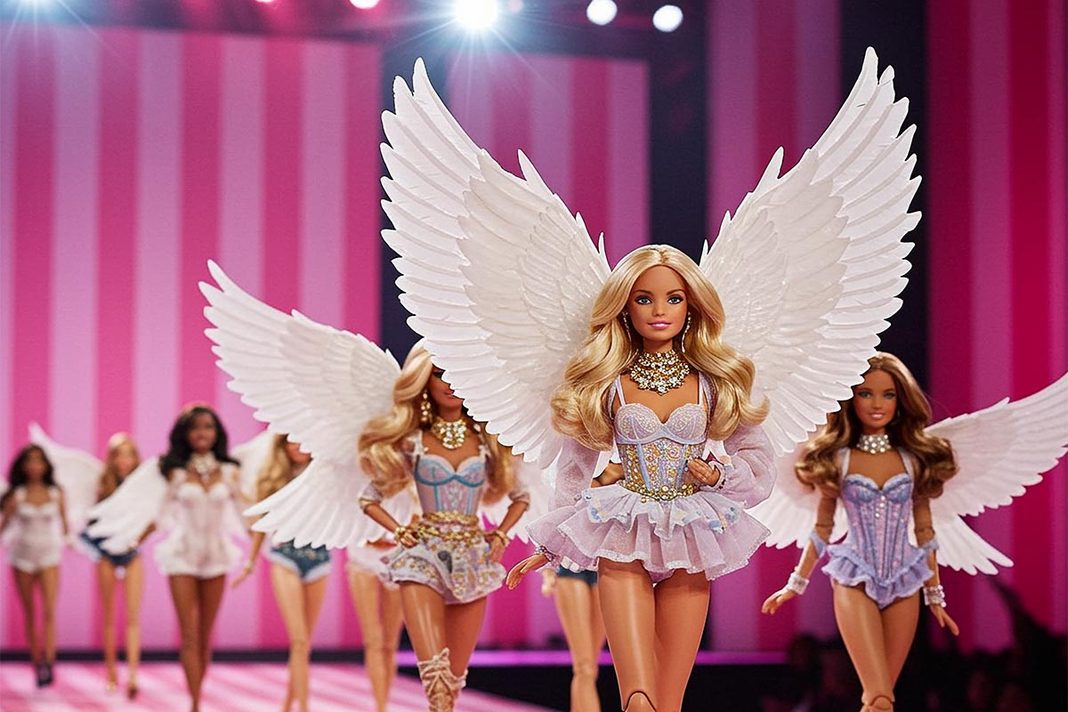
But it also became a symbol of unrealistic beauty standards, intense pressure to remain thin and a narrow definition of what a desirable woman should look like. After mounting criticism and declining viewership, the show was cancelled in 2019 and remained absent from the runway until its return in 2024. Now, following its latest edition on 18 October 2026, the central question is whether Victoria’s Secret has genuinely evolved or simply found a new way to sell its old fantasy.
The brand has made a visible effort to reinvent itself. Its newer shows have featured a broader range of body types and backgrounds, including plus-size models such as Ashley Graham, alongside familiar Victoria’s Secret Angels. The casting of Kylie Jenner in this year’s show, where she wore the brand’s $50 million Fantasy Bra, also demonstrated how celebrity culture has become part of the spectacle. At the same time, the brand’s reported efforts to open the door to aspiring models beyond traditional agency routes suggest an attempt to make an industry that has long relied on exclusivity appear more accessible. Yet this creates an interesting contradiction: Victoria’s Secret wants to be more inclusive without losing the sense of fantasy that made it famous.
The strongest debate, however, has emerged around motherhood and the pressure placed on women’s bodies. Barbara Palvin returned to the runway just six weeks after giving birth, while Elsa Hosk also appeared in the show after becoming a mother. For some viewers, their appearances are a celebration of women who can embrace motherhood while continuing to pursue demanding careers. For others, the images risk reinforcing the expectation that women should recover their pre-pregnancy figures almost immediately, as though a rapid physical transformation were a measure of success.
The concern is not that these women should be discouraged from working, but that their individual experiences could become another benchmark against which ordinary women judge their own bodies. Pregnancy, recovery and postpartum life differ from one person to another, and a model’s appearance on a runway cannot tell the whole story of her health.
The inclusion of plus-size models such as Ashley Graham raises a similar question about the meaning of representation. Supporters argue that a runway featuring women with different body types sends a healthier message, particularly to young girls growing up surrounded by digitally altered images and narrow beauty ideals.
But there is another argument worth considering: the Victoria’s Secret Fashion Show is not intended to represent every woman in the way an everyday clothing catalogue might.
It is a highly curated fashion spectacle, and modelling at that level is an exceptionally competitive profession. Just as playing for Real Madrid represents the pinnacle of football for many players, walking for Victoria’s Secret has long been an ambition for models around the world. Recognising that exclusivity does not require endorsing unhealthy standards, nor does inclusivity mean that every person must be considered suitable for every modelling job.
Ultimately, perhaps the real mistake is treating this debate as a choice between celebrating beauty and promoting body positivity. Victoria’s Secret built its reputation on fantasy: the wings, the elaborate lingerie, the famous Angels and the promise that wearing its products could make a woman feel glamorous, confident and desirable.
Removing that sense of aspiration entirely would risk removing what makes the brand distinctive. Yet aspiration becomes damaging when it suggests that there is only one acceptable way to look, or that a woman’s value depends on how closely she resembles a runway model. The challenge for Victoria’s Secret is not to abandon exclusivity, but to redefine it without making extreme thinness the price of entry.
The 2026 show suggests that the brand is still trying to find that balance. Its open casting initiative, which offered an aspiring model the opportunity to win a runway place and an exclusive contract with IMG Models, created a new route into an industry traditionally shaped by agencies and established connections. Meanwhile, the return of iconic elements such as the Fantasy Bra shows that Victoria’s Secret has no intention of abandoning its signature glamour.
Whether this represents genuine progress will depend on more than the size of the models on stage or the number of celebrities in the front row. It will depend on whether the brand can celebrate ambition, beauty and professional excellence while making clear that no woman needs to damage her health to meet an ideal. Perhaps that is the middle ground: preserve the fantasy, but stop pretending that it should be the standard by which every woman measures herself.