
To better understand the significance of the newly launched Strategic Dialogue between Serbia and the United States and what it could mean for the future of bilateral relations, Petar Ivić of the Pupin Initiative, a Belgrade-based think tank dedicated to strengthening Serbian-American relations, explained the importance of this development.
According to Ivić, the Strategic Dialogue is far more than a series of diplomatic meetings. It is an institutional framework designed to make cooperation between the two countries more structured, predictable and sustainable over the long term. The mechanism typically brings together senior government officials, most often at the ministerial level, every six months to coordinate priorities in strategically important areas, while working groups turn those priorities into concrete projects between meetings.
“With the launch of the Strategic Dialogue, Serbia has finally found itself at the negotiating table rather than on it. It is a strong signal that Serbia has been recognized as a partner on which the world’s leading power can rely and as a key regional actor whose inclusion is essential for shaping policy in the Western Balkans.”

He emphasizes that the dialogue should not be viewed as the beginning of Serbian-American cooperation, but rather as the formal institutionalization of a relationship that has been steadily deepening for years.
“The Strategic Dialogue is not starting from scratch. It builds on already well-developed relations in areas such as the economy, energy, defence, infrastructure, technology and education. Much of this cooperation existed long before, but it remained largely invisible to the broader public.”
Among the strongest examples of this cooperation, Ivić points to the United States as Serbia’s largest individual export market for IT services, worth nearly $6 billion, as well as extensive defence cooperation, joint military exercises, American support for the development of Serbia’s future 5G network, the construction of the Morava Corridor as the country’s first digital motorway, and cooperation on the strategic Đerdap 3 hydropower project.
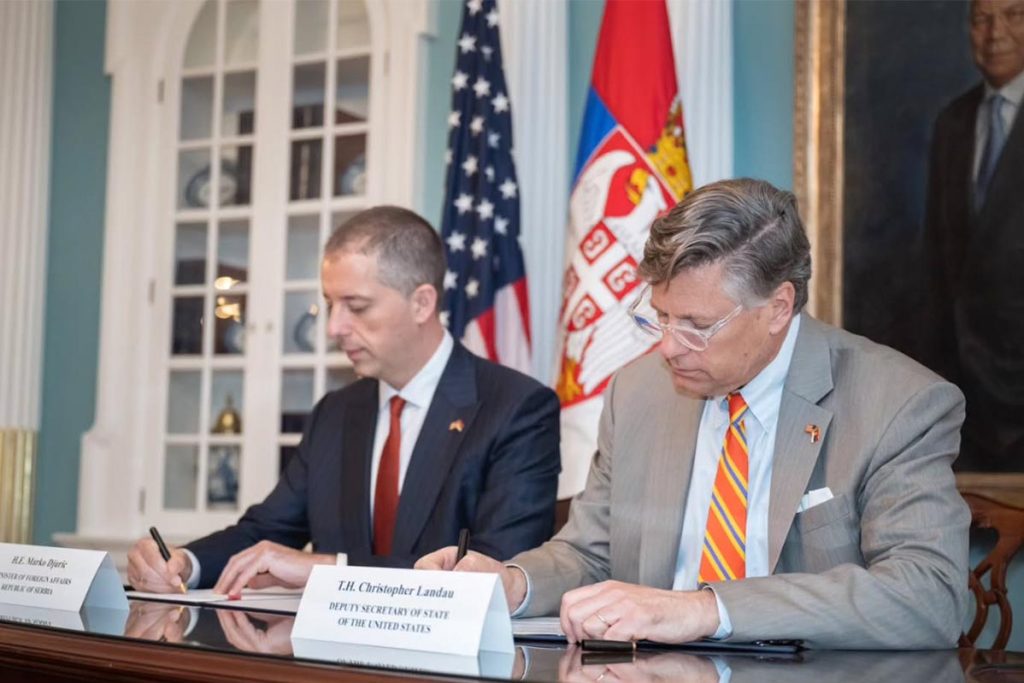
He also believes that the launch of the Strategic Dialogue represents a major diplomatic milestone, bringing years of gradual progress into the public spotlight.
“The NATO intervention in 1999 cast a long shadow over relations that once flourished during the era of Mihajlo Pupin and Nikola Tesla. Yet beneath the surface, cooperation continued to grow, particularly in economic relations, energy, defence, infrastructure and technology. The Strategic Dialogue finally makes that progress visible and provides a catalyst for even closer cooperation.”
According to Ivić, the breakthrough is also the result of Serbia’s intensified diplomatic engagement in Washington in recent years, particularly following the appointment of Marko Đurić as Serbia’s ambassador to the United States and later as Minister of Foreign Affairs. He argues that continuity in diplomatic leadership has helped create additional momentum for bilateral relations.
At the same time, organizations such as the Pupin Initiative have worked since 2024 to complement official diplomacy by advocating closer cooperation through research, policy recommendations and public engagement.
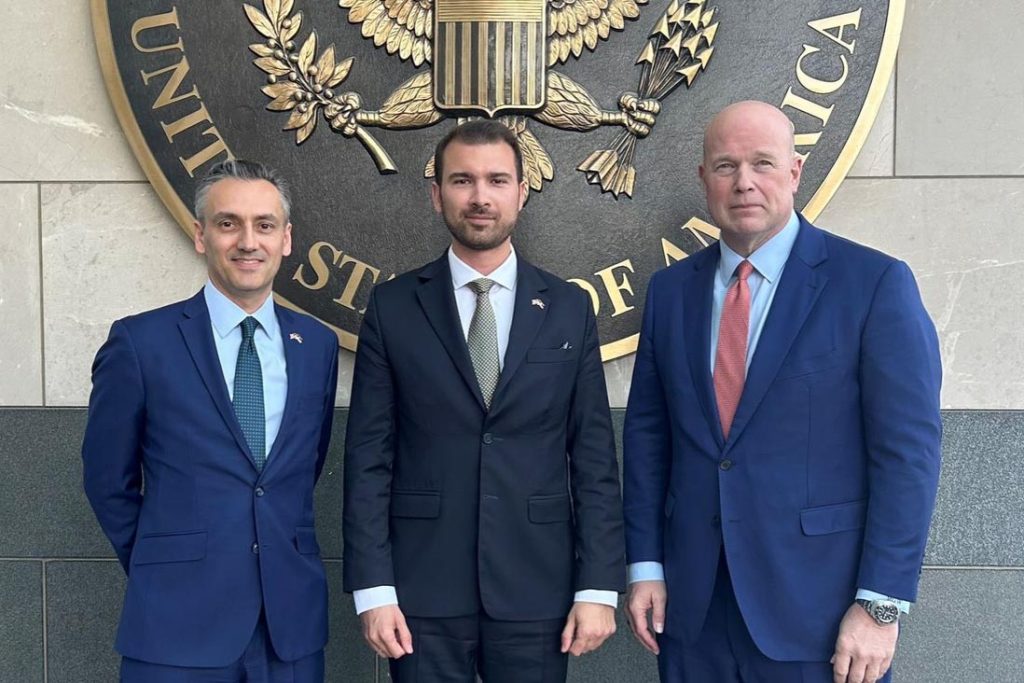
The first tangible outcomes of the dialogue, he notes, are already becoming visible. These include the expansion of the Fulbright academic exchange programme, cooperation on the Đerdap 3 hydropower project, Serbia’s accession to the Artemis Accords, stronger scientific cooperation, and closer collaboration in the fields of energy and technology.
He also points to political developments surrounding Washington’s regional approach, as well as progress in bilateral trade relations, as early indicators that the dialogue is beginning to produce concrete results.
Looking ahead, many observers have asked whether the Strategic Dialogue could eventually evolve into a formal strategic partnership between Serbia and the United States. While Ivić believes the new mechanism significantly strengthens bilateral ties, he cautions against viewing such a partnership as an automatic next step.
“There is no established roadmap from a Strategic Dialogue to a strategic partnership with the United States. The dialogue itself does not guarantee such an outcome. However, if this institutional framework continues to produce concrete results and cooperation keeps expanding, the path towards a strategic partnership becomes increasingly clear.”
For Serbia, the Strategic Dialogue represents not only a diplomatic achievement but also a sign of its growing international relevance. As both countries seek to deepen cooperation in areas ranging from energy security and digital transformation to defence, education and innovation, the newly established framework is expected to provide greater continuity, transparency and strategic direction to one of the region’s most closely watched bilateral relationships.