

At Western Balkans 2030, government, labour and education leaders outlined how reskilling, lifelong learning and new approaches to employment could help Montenegro unlock its workforce potential and prepare for the jobs of tomorrow
Budva, 5 November 2026 – Montenegro has an opportunity to strengthen its labour market by bringing more people into employment, investing in new skills and preparing workers for the technological changes reshaping businesses across Europe. With approximately 190,000 economically inactive residents and growing demand for qualified employees, better connections between education, employers and public institutions could become an important driver of the country’s future economic development.
That was a central message of “The New Human Capital”, the third panel at the Western Balkans 2030 conference in Budva, organised by regional media platform The Region in institutional partnership with the Montenegrin Foreign Investors Council (MFIC).
The discussion brought together Naida Nišić, Montenegro’s Minister of Labour, Employment and Social Dialogue; Nina Krgović, National Coordinator of the International Labour Organization (ILO) for Central and Eastern Europe; and Sara Ivanović Božović, Country Director of General Assembly. The panel was moderated by Arijana Nikolić Vučinić, Executive Director of MFIC.
The speakers explored how governments, businesses and workers can share responsibility for developing new skills, improving access to employment and adapting to artificial intelligence and other technological advances.
From Qualifications to Lifelong Learning
Minister Naida Nišić emphasised that formal education remains important, but that professional success increasingly depends on continuous learning and the ability to adapt.
“A formal education alone is no longer enough. A diploma will no longer be a benchmark or a guarantee that someone can enter the world of work without additional education, retraining and, ultimately, adapting to global trends that are reaching our doorstep,” Nišić said.
Montenegro’s labour market is already undergoing significant changes. According to figures presented by the minister, the country recorded approximately 250,000 employed citizens and 100,000 foreign workers last year, alongside an unemployment rate of 7.54%.
However, regional disparities remain pronounced, particularly in the north, while employers are seeking qualified workers in sectors including information technology, construction, tourism, hospitality, trade, agriculture, healthcare and social services.
Nišić highlighted efforts to help people who face barriers to employment, including the long-term unemployed, people with disabilities and recipients of social assistance.
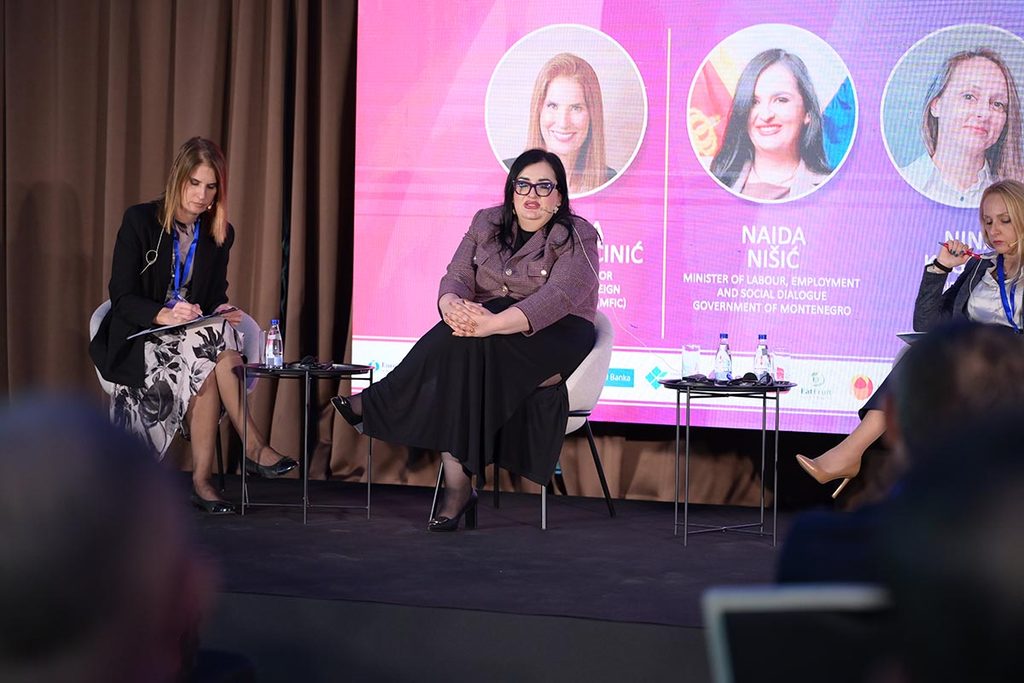
One initiative, developed in cooperation with the European Commission, allows social assistance recipients to undertake training and retraining for a year without losing their primary benefits.
“Investment in human capital is the most important investment of all,” Nišić said.
She also pointed to Montenegro’s Youth Guarantee programme, designed to provide people aged 15 to 29 with access to employment, further education or training within four months of leaving formal education or becoming unemployed.
As Montenegro moves towards EU membership, the government is also working to align qualifications and professional certifications with European standards. Nišić said the country could, according to current expectations, join the European Employment Services network, EURES, in 2028, providing citizens with easier access to employment opportunities across Europe.
She stressed that artificial intelligence should be used to support employees, increase productivity and free up time for work requiring human judgement and expertise.
An Untapped Workforce of 190,000 People
Nina Krgović, National Coordinator of the ILO for Central and Eastern Europe, drew attention to an important dimension of Montenegro’s labour market: the number of people who are currently economically inactive.
According to the figures she presented, approximately 190,000 residents are outside the active labour force, including young people, women and people over 50. Some could enter employment through appropriately designed training and support programmes.
“Before we say we have an absolute labour shortage, let’s look at the resources we already have,” Krgović said.
She argued that employment policies must be more closely aligned with the actual needs of businesses, with employers playing a greater role in shaping training programmes.
Krgović also highlighted the obstacles facing women who want to return to work, particularly those with childcare or elderly care responsibilities. Employer-supported childcare facilities were among the practical solutions she identified.
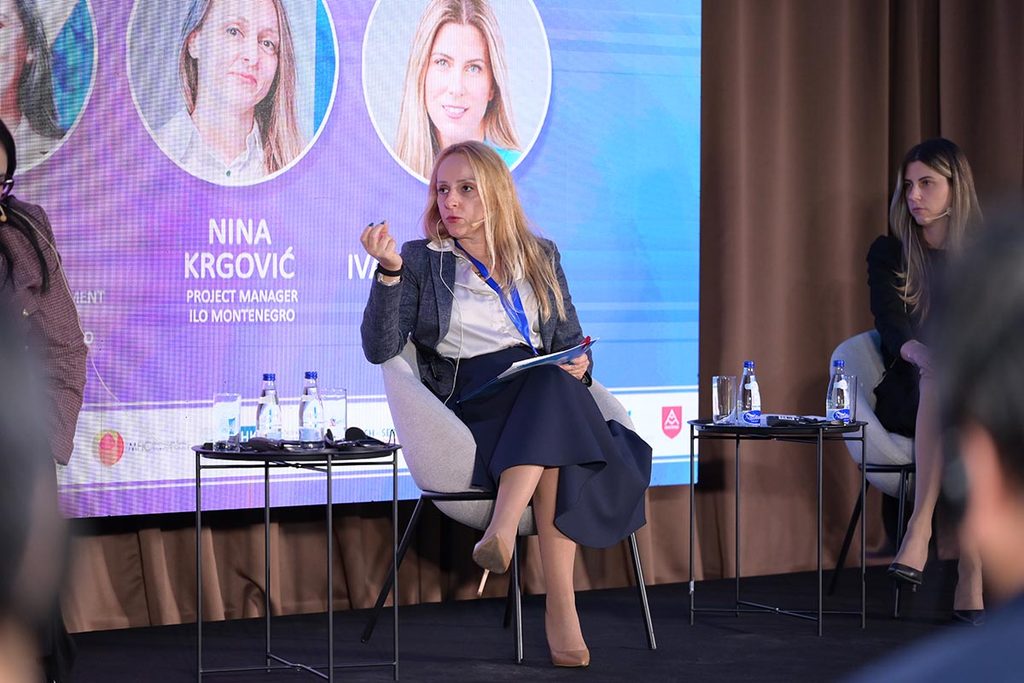
Drawing on international experience, she described three approaches that could inform Montenegro’s future policies: Denmark’s model of subsidised training and temporary worker replacement, Germany’s focus on anticipating future skills requirements and retraining employees while they remain in work, and Singapore’s system of lifelong learning supported by government and employers.
The common principle, she explained, is to anticipate changes in demand for skills rather than respond only after shortages emerge.
“We have to move away completely from the idea that the job we start doing is the job we will do for our entire lives,” Krgović said.
She also referred to ILO research suggesting that around a quarter of jobs could be exposed to changes associated with generative artificial intelligence. That does not necessarily mean those jobs will disappear, but that the tasks and skills they require may change substantially.
Beyond digital capabilities, she stressed the growing importance of communication, teamwork and problem-solving.
“Digital skills are not everything needed for the future of work. Soft skills – communication, collaboration, teamwork and problem-solving – will become increasingly important to employers,” she said.
Training That Leads to Real Jobs
Sara Ivanović Božović, Country Director of General Assembly, focused on how practical education can help people move into new professions or strengthen their capabilities within existing roles.
General Assembly provides adult education and professional training, including programmes that help workers transition into technology-related occupations.
“Both approaches – retraining and upskilling within existing sectors – require a willingness to learn, openness to change and continuous personal development,” Ivanović Božović said.
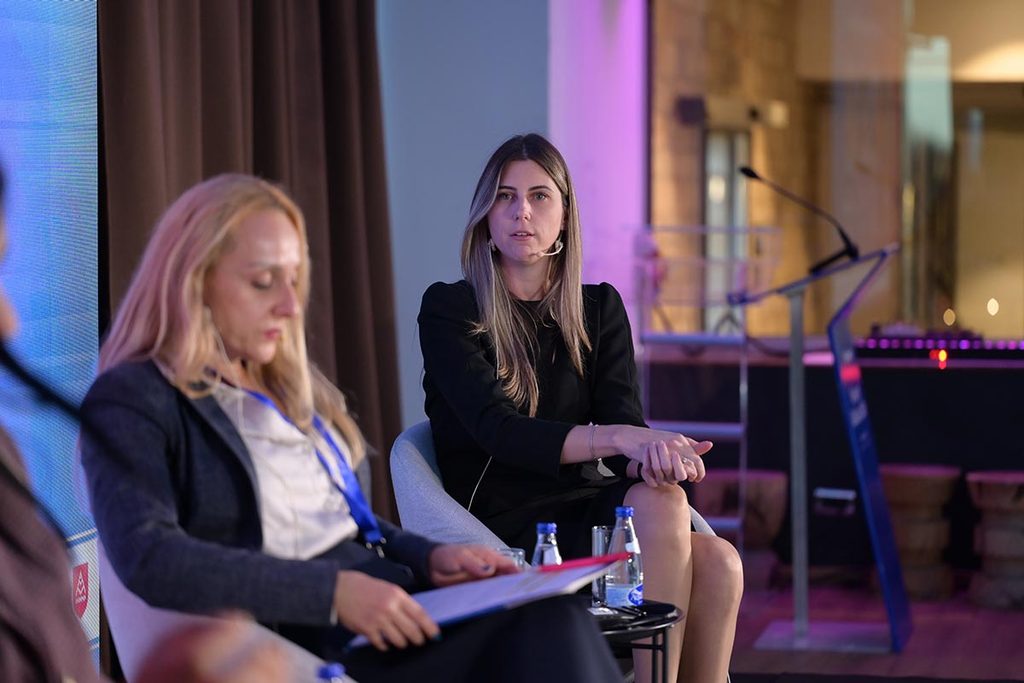
She highlighted a programme delivered last year in cooperation with Montenegro’s Employment Agency, in which General Assembly was one of the training providers.
Participants from different professional backgrounds completed an intensive three-month IT course involving eight hours of training per day, with a strong emphasis on practical projects and job-ready skills.
According to Ivanović Božović, most participants subsequently found opportunities in companies, freelance work or entrepreneurship. Some established start-ups, while others took part in a hackathon and won second place.
The experience, she argued, demonstrates that well-designed training can create new professional opportunities for people previously registered as unemployed.
She also emphasised the importance of employers creating environments in which newly acquired skills can be applied.
“Fear of making mistakes slows innovation,” she said, adding that organisations need to encourage experimentation, problem-solving and the testing of new ideas.
For employees with ten, fifteen or twenty years of professional experience, returning to structured learning can be particularly challenging. However, she argued that changing this mindset is essential as careers become less linear and technology reshapes existing occupations.
Ivanović Božović also noted that professional advancement is increasingly being measured through results, adaptability and the ability to solve problems, rather than simply years of service or the volume of work completed.
Preparing for the Jobs of Tomorrow
The discussion highlighted the importance of a coordinated approach to workforce development, bringing together public institutions, employers, education providers and employees.
For Montenegro, the opportunity extends beyond filling current vacancies. Activating economically inactive residents, improving access to retraining, retaining skilled professionals and developing capabilities relevant to emerging industries could strengthen both business competitiveness and individual career prospects.
As artificial intelligence and digital technologies transform the workplace, the panel’s central message was that investing in people will be essential to ensuring that economic development creates opportunities across generations and regions.
