At the opening of Western Balkans 2030 in Budva, business and financial leaders argued that the region’s progress will depend on stronger institutions, predictable business conditions and companies capable of competing in the European market
Budva, 5 November 2026 – Banks have the capital and willingness to finance economic development, but Montenegro’s ability to benefit from European integration will depend on business competitiveness, investment-ready projects and a predictable regulatory environment. Across the Western Balkans, progress towards 2030 will also be judged by the reliability of institutions, legal certainty and tangible improvements in people’s lives.
These were the central messages from the opening of Western Balkans 2030, organised in Budva by regional media platform The Region, in institutional partnership with the Montenegrin Foreign Investors Council (MFIC).
The conference brought together representatives of international financial institutions, commercial banks, businesses and policymakers to examine investment opportunities, European integration and the region’s economic prospects.
Progress Must Extend Beyond Economic Indicators
Opening the conference, Neda Lukić, Director of Communications at The Region, argued that the Western Balkans’ success by 2030 should be assessed through more than growth figures, investment inflows and progress towards EU membership.
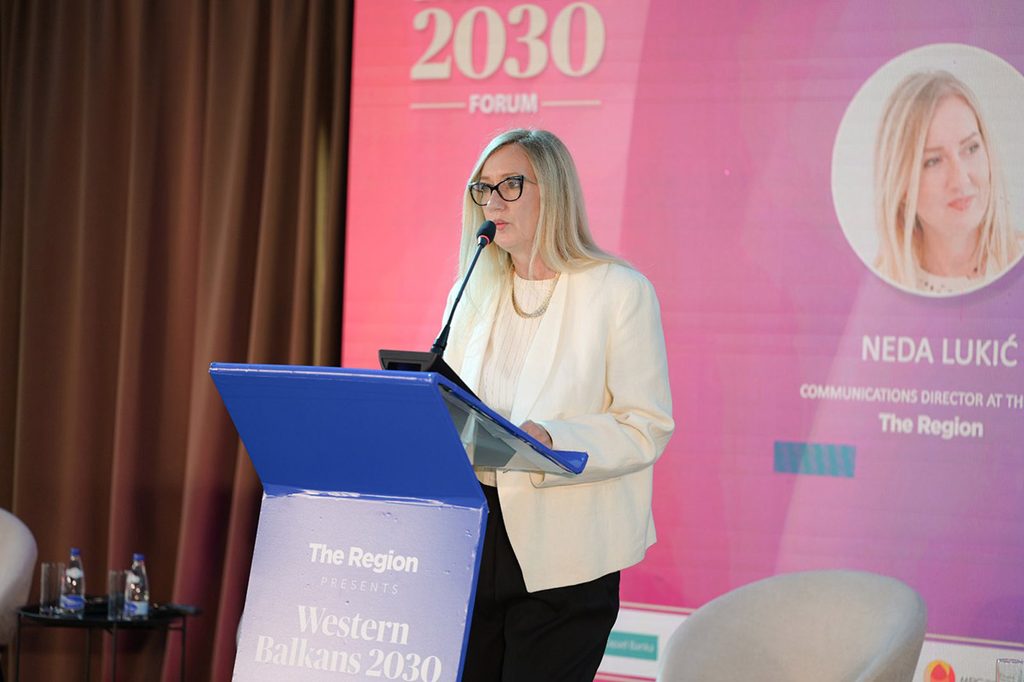
The more consequential questions, she suggested, concern whether institutions have become more reliable, business rules more predictable and young people more willing to build their futures in the region.
“Economies do not develop independently of the societies in which they operate,” Lukić said, reflecting on how much time the Western Balkans has spent waiting for political agreements, reforms, European decisions and more favourable circumstances.
She emphasised that EU integration must go hand in hand with improvements that citizens and businesses can experience well before accession.
Lukić also highlighted the role of regional journalism in improving understanding and cooperation across borders. She noted that The Region focuses exclusively on the Adria Region, with a digital platform available in all its languages to make business stories, ideas and different perspectives accessible across national boundaries.
Looking ahead to 2030, she expressed the hope that the region would have fewer reasons to talk about its potential and far more concrete achievements to demonstrate.
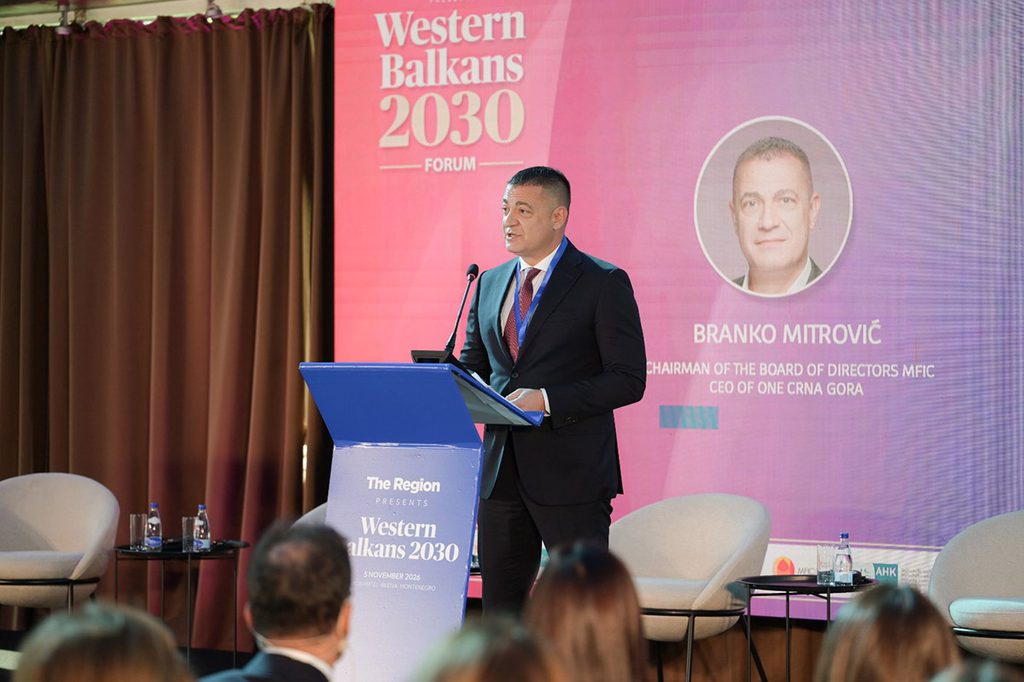
Branko Mitrović, Chairman of the MFIC Board of Directors and CEO of ONE Montenegro, emphasised the importance of dialogue as the country approaches EU membership.
Events such as Western Balkans 2030, he said, provide an opportunity for businesses, institutions and international partners to exchange perspectives and better understand the decisions shaping Montenegro’s future.
“The ability to listen to and respect different opinions, even when we disagree with them, is one of the values on which the European community is founded, and which Montenegro aspires to join,” Mitrović said.
Banks Have Capital. Businesses Need Investment-Ready Projects
The conference’s first panel, Financing the Future of the Adria Region, examined whether the financial sector, domestic businesses and public institutions are prepared for the opportunities and competitive pressures associated with European integration.
Moderated by Mirza Mulešković, Executive Director of Inteligencija MNE, the discussion brought together representatives of the European Bank for Reconstruction and Development (EBRD) and three commercial banks.
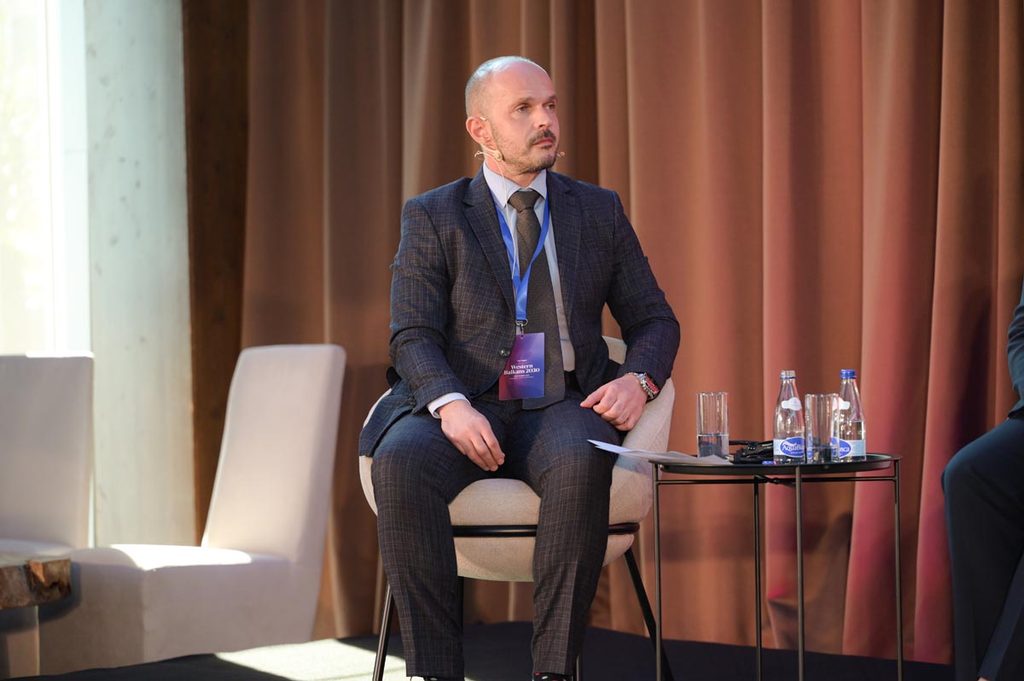
A central conclusion emerged: access to finance is important, but capital alone cannot deliver economic transformation without stronger business capabilities, credible projects and a stable investment environment.
Lesia Vykhodtseva, President of the Board of Directors of Zapad Banka, said Montenegro’s banking system was well positioned to support investment.
“The banking sector is ready, stable, well capitalised and highly liquid,” she said.
However, she stressed that investors place considerable weight on the predictability of business conditions.
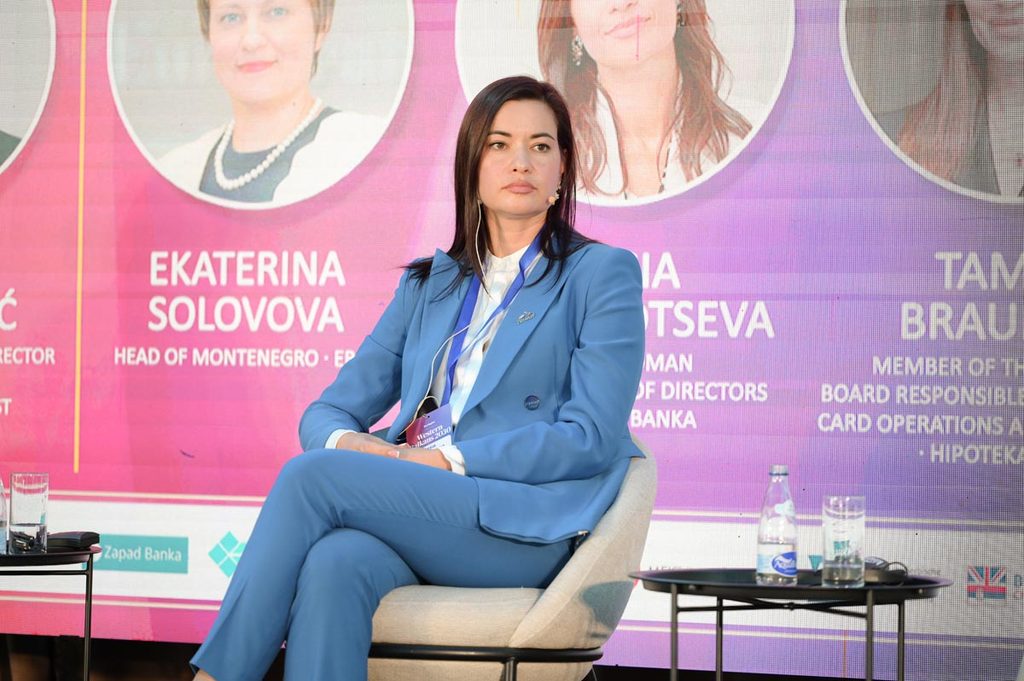
“When an investor decides to enter a market, they can assess the risks and factor them into the cost of the investment. The problem arises when the rules change along the way. Predictability is essential, and it is something we must all work on together,” Vykhodtseva said.
She also raised concerns about the potential effects of announced economic reforms, calling for detailed impact assessments and transparent consultation with businesses before major changes are introduced.
As an example of the practical benefits of European integration, she pointed to Montenegro’s participation in the Single Euro Payments Area (SEPA), citing savings of €9 million for citizens and businesses.
EU Funding Requires Expertise as Well as Investment
Ekaterina Solovova, Head of the EBRD’s Montenegro office, said the bank would continue supporting small and medium-sized enterprises through financing, technical assistance and advisory services.
Particular attention will be given to women entrepreneurs, young business founders, the green transition and helping companies develop the capabilities needed to access European funding.
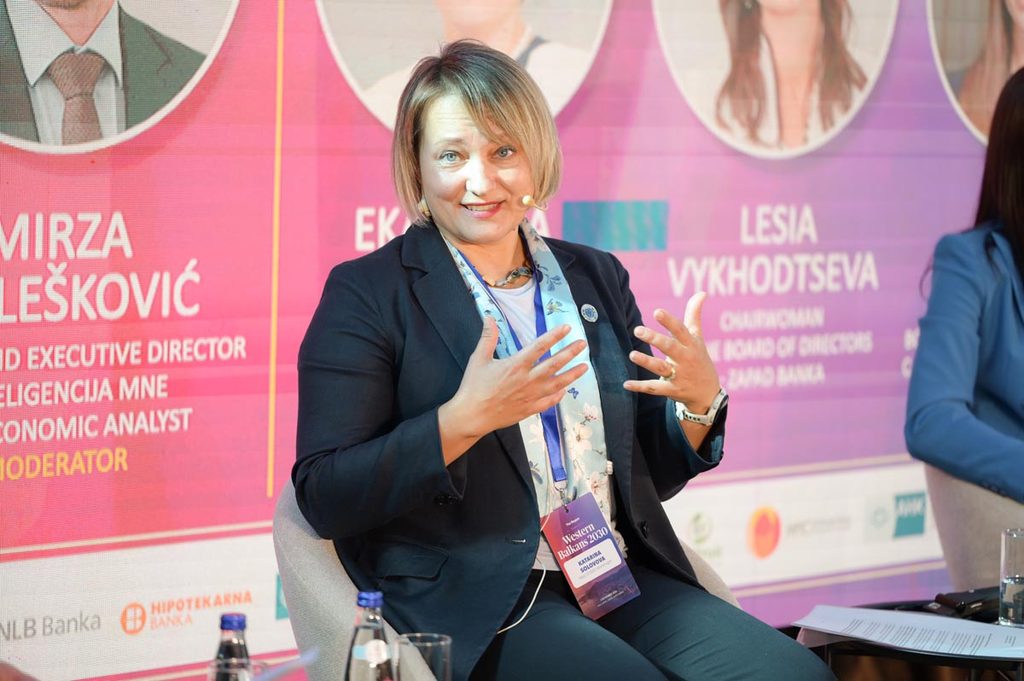
“EU membership could mean access to the single market, creating new opportunities for exporters. At the same time, it could present challenges for domestic producers and companies facing stronger competition,” Solovova said.
She explained that the EBRD works with six partner financial institutions in Montenegro, collectively representing approximately 80 per cent of the banking market.
This approach enables the institution to reach smaller businesses while combining finance with technical expertise and targeted support.
Solovova also highlighted the importance of preparing companies to participate in EU-funded projects, including understanding procurement procedures, international standards and the requirements associated with European structural funds.
Experience gained through cooperation with international financial institutions, she argued, can help build the skills Montenegro will need as it moves towards membership.
Bogdan Podlesnik, Adviser to the Board of Directors of NLB Banka, said Montenegrin companies would need to improve their quality and competitiveness to take full advantage of the European market.
He identified healthy food production, sustainable tourism, renewable energy and energy-efficient construction as areas where Montenegro could develop distinctive competitive advantages.
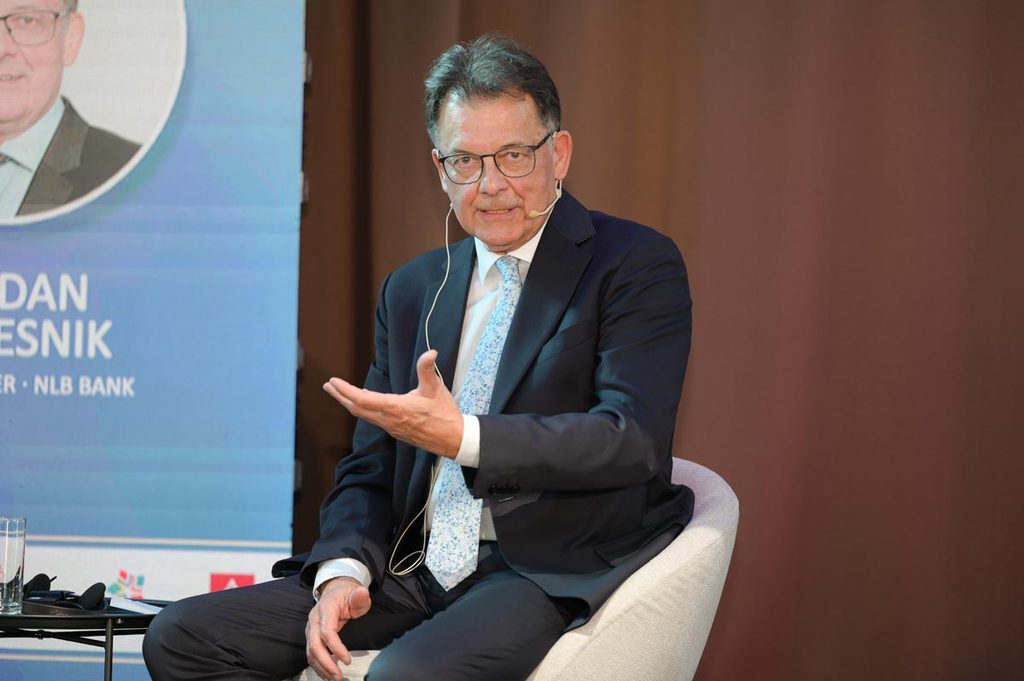
“Financial resources are currently sufficient. What matters greatly is that when you receive financing or direct investment, you also gain know-how alongside the capital,” Podlesnik said.
He referred to approximately €3.5 billion in potential European funding opportunities, while emphasising that accessing such resources would require qualified experts and well-prepared projects.
“Investors are ready to invest in Montenegro, but we must be ready,” he said.
European Standards Are Already Transforming Banking
Tamara Braunović, Member of the Management Board responsible for Retail Banking, Card Operations and Payment Services at Hipotekarna Banka, said Montenegro’s banking sector was already operating largely in line with European standards.
“EU accession opens opportunities for Montenegro, its market, its economy and its citizens through greater competition, more affordable loans, stronger legal certainty and better services,” Braunović said.
She praised the progress made in aligning domestic banking regulation with EU requirements and highlighted the growing adoption of digital financial services.
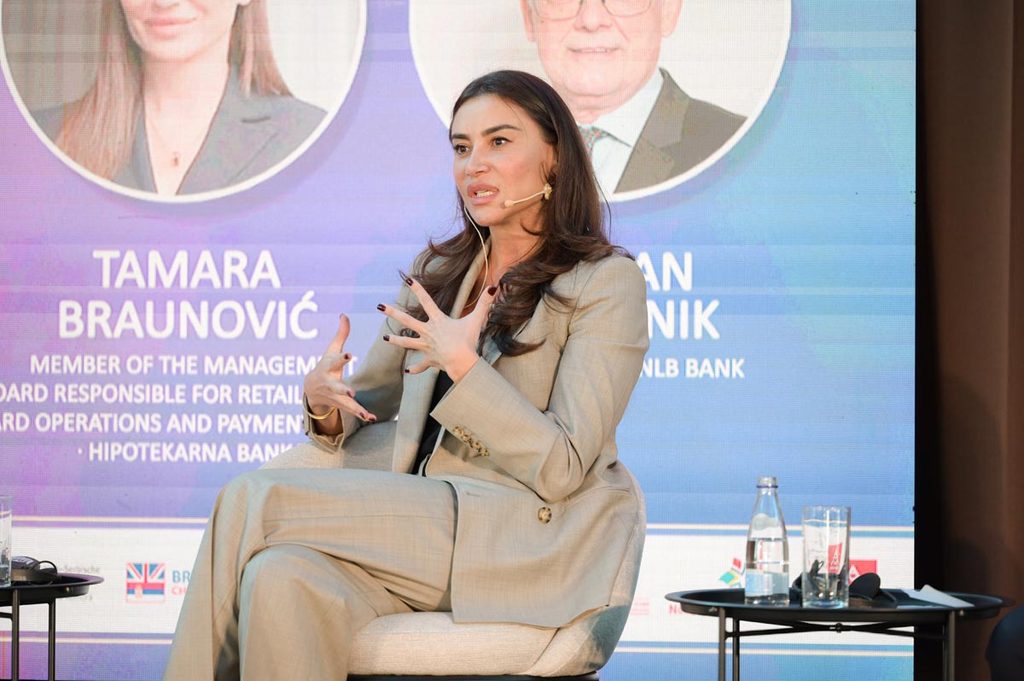
At Hipotekarna Banka, she noted, 70 per cent of international payment transactions are now conducted through digital channels, illustrating how rapidly customer expectations and banking practices are evolving.
Braunović also emphasised the importance of cooperation with the EBRD, improvements in mortgage lending and continued investment in financial education and consumer protection.
She argued that increased competition following EU accession could bring more favourable financial products, better customer services and a healthier business environment.
Turning Potential into Results
The opening addresses and first panel pointed towards a common challenge for Montenegro and the wider Western Balkans: financial resources and European opportunities are increasingly available, but their economic impact will depend on how effectively governments, businesses and financial institutions put them to work.
For Montenegro, the prospect of EU membership makes the need to strengthen domestic companies particularly urgent. Banks are signalling their readiness to finance growth, while international institutions are offering expertise and support to help businesses meet European standards.
The real measure of success will be whether these opportunities translate into productive investment, stronger businesses, better jobs and more reliable institutions.
By 2030, those outcomes will provide a far clearer assessment of the region’s progress than its ambitions alone.
