
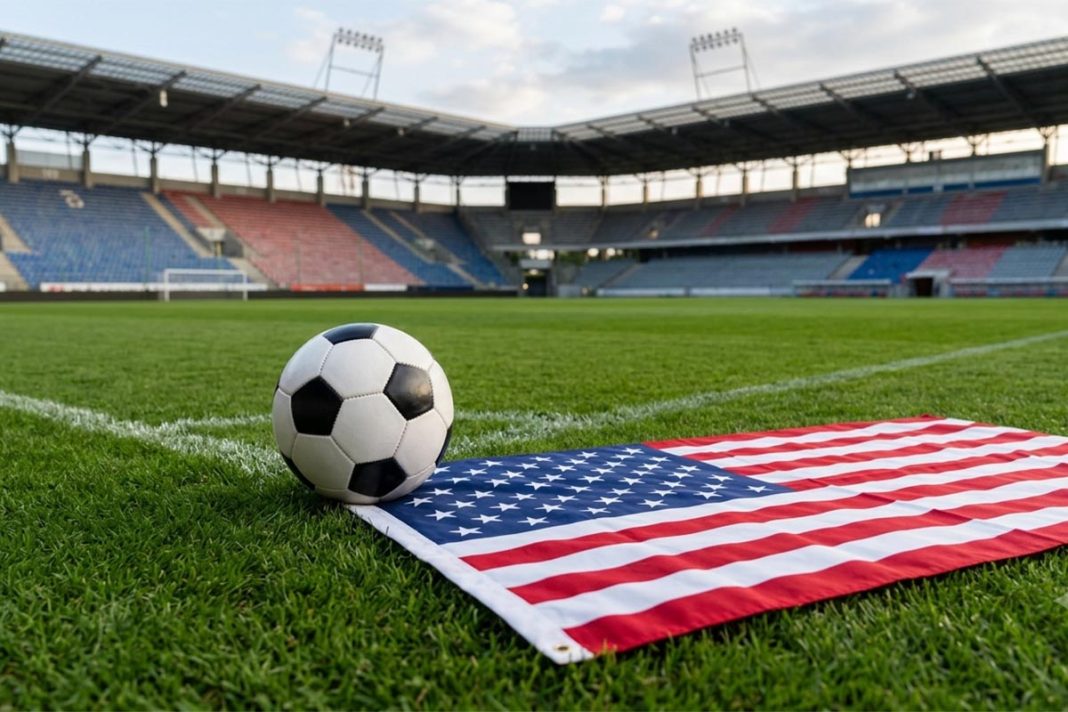
Football, or soccer as it is commonly known in North America, was introduced by European immigrants in the late 19th century, particularly by British communities who brought the game with them as they settled across the continent. While the sport gained an early following, it struggled to compete with established domestic leagues in American football, baseball, basketball and ice hockey, all of which became deeply embedded in North American culture throughout the 20th century.
One reason Americans call the sport “soccer” dates back to England itself. The word originated as a shortened version of “association football,” distinguishing it from rugby football. Although most of the world eventually adopted the term “football,” the United States retained “soccer” to avoid confusion with American football, the country’s most popular spectator sport.
The modern growth of the sport began with the 1994 FIFA World Cup, hosted by the United States. As part of FIFA’s hosting requirements, the country launched Major League Soccer in 1996. The league faced significant financial difficulties in its early years, with low attendances and limited public interest. Its fortunes began to change dramatically in 2007, when David Beckham joined the LA Galaxy. Beckham’s arrival transformed the league’s global profile, attracted international stars and paved the way for rapid expansion.
Today, MLS is one of the fastest-growing football leagues in the world, with rising attendance, expanding television audiences and growing investment in youth development. The arrival of Lionel Messi at Inter Miami CF in 2023 accelerated that momentum even further, bringing unprecedented international attention to the competition and significantly boosting ticket sales, sponsorships and global viewership.
Despite this growth, soccer is not yet North America’s most popular sport. In the United States, National Football League remains the clear leader, followed by basketball, baseball and ice hockey. Individual sports such as tennis, gymnastics and figure skating also enjoy strong followings, particularly during major international competitions like the Olympics. Soccer has traditionally ranked behind these sports, but surveys increasingly show it is among the fastest-growing, especially among younger generations and multicultural communities.
With the FIFA World Cup 2026 bringing the tournament to North America for the first time since 1994- and across three host nations rather than one- the event is expected to mark another turning point. For many observers, it represents not only football’s biggest showcase, but also an opportunity for the sport to cement its place in a region where it has steadily evolved from a niche pastime into a mainstream attraction.