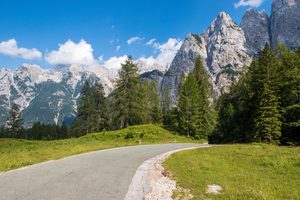
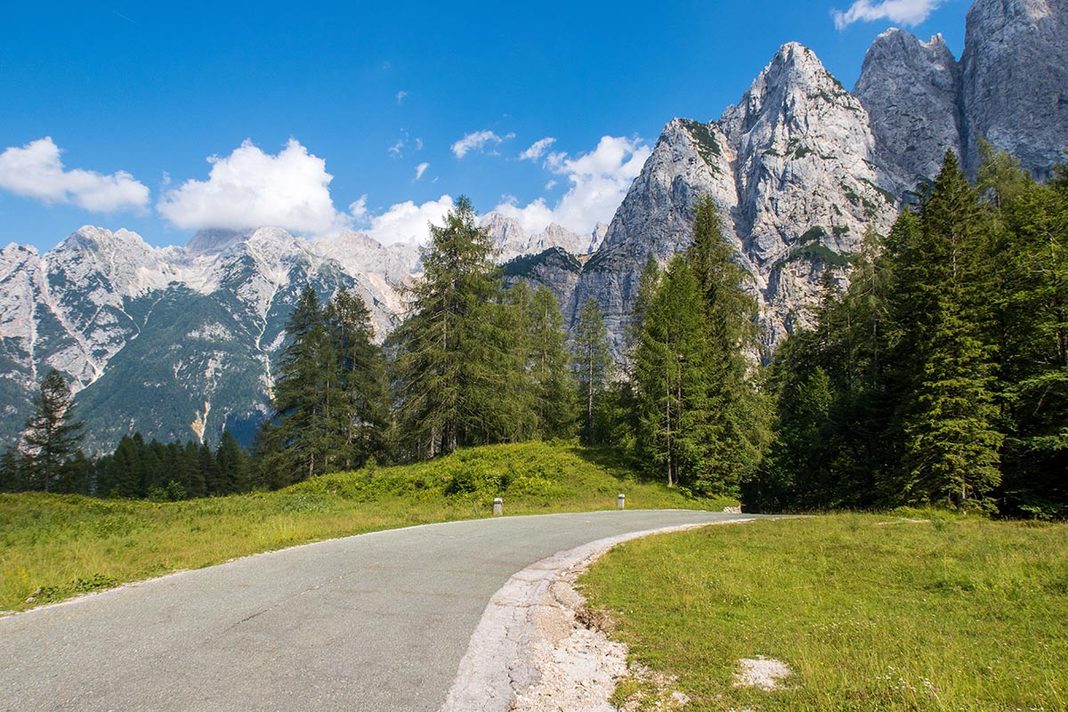
However, capacity has been reduced to just 80 car spaces, three for people with disabilities, two for buses and 24 for motorbikes, roughly one-third of the previous capacity. Parking will remain free until the end of 2026, while a parking fee is planned for the future.
Authorities abandoned an earlier proposal to link parking charges to the time spent travelling between Kranjska Gora and Trenta, following opposition from locals, hikers and mountain-hut operators. Under the revised system, only visitors parking at the top will eventually pay, while drivers simply crossing the pass or using designated spaces further down will be able to stay without a time limit.
Barrier gates have been installed at both ends of the road, although they are not yet fully operational. Drivers intending to stop at the top will use one lane, while those simply passing through will use another. Authorities acknowledge that the system will not be perfect, particularly as drivers will not be able to see available spaces at other designated parking areas.
The changes reflect growing pressure on the Julian Alps and Triglav National Park, which have seen increasing numbers of domestic and foreign visitors. During the summer ban on parking, many motorists ignored restrictions, requiring police and traffic wardens to intervene. “Vršič needs this,” said Aleš Zdešar of Triglav National Park, stressing the need to balance tourism with the protection of the mountain environment.