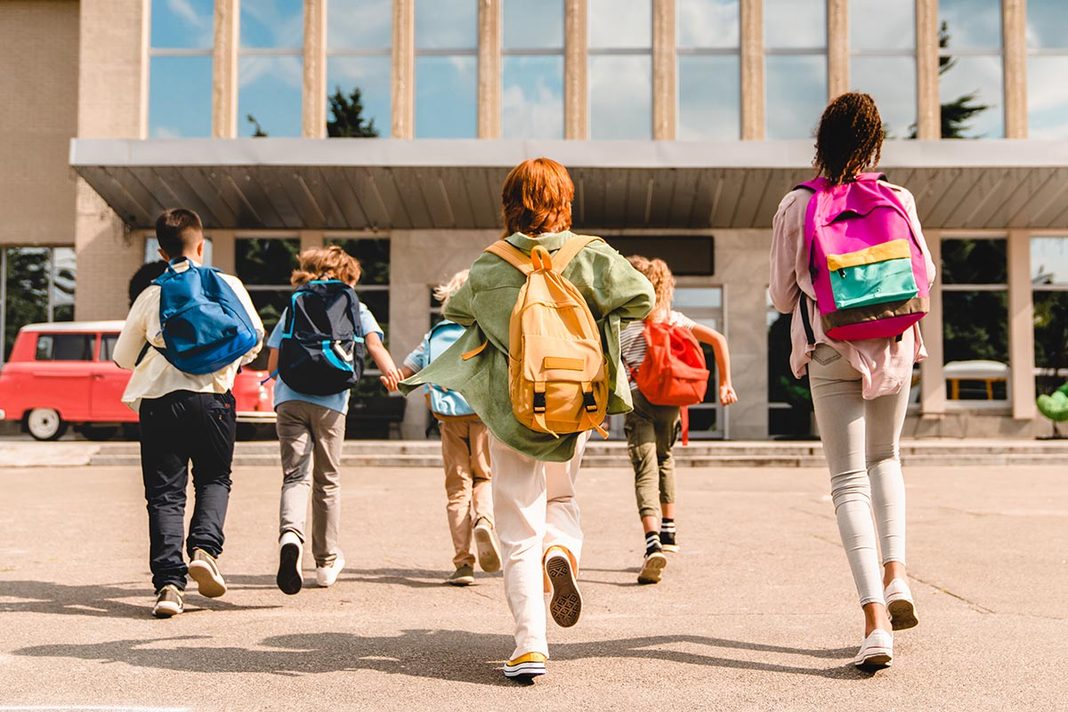
The start of the school year has increasingly become a season of shopping rather than simply a return to the classroom. New notebooks, pencil cases, backpacks, clothes, sneakers and countless other items fill shopping lists, while social media and advertising constantly create the impression that children need something new, better or more expensive every September. But does a child really need a different pencil for every occasion, or would one pencil, one pen, an eraser and the basics be perfectly enough?
For parents, however, the question is rarely that simple. Buying school supplies can come with a different kind of pressure: not only What does my child need?, but also Will it be good enough? A child may have perfectly functional sneakers or a backpack, but if their classmates are wearing a particular brand, owning something cheaper can suddenly become a source of embarrassment or even ridicule. The same can happen with clothes, phones, accessories and other things that have little to do with education but can become surprisingly important in a child’s social world.
This raises the question of whether schools should encourage a certain minimum standard. Could every child be expected to have the basic equipment needed to participate equally, without turning the classroom into a competition over who has the most expensive or impressive supplies? At the same time, it is difficult to regulate what families buy for their children.
Having more than the minimum is not inherently a problem, and a child should not be made to feel guilty simply because their parents can afford something extra.
Uniforms are often presented as one possible solution. If everyone wears the same clothes, visible economic differences become less obvious, at least during school hours. But uniforms cannot eliminate those differences completely. Children will still notice whose shoes, backpack, phone or weekend clothes are more expensive. More importantly, perhaps the real goal should not be to make every child look the same, but to teach them that material possessions should not determine someone’s value.
The same responsibility therefore falls on parents, teachers and children themselves. Parents should not have to approach every shopping trip with the fear that the wrong brand will make their child unpopular, while children should gradually learn that friendship and acceptance should not depend on what someone is wearing or carrying. Schools can help by creating an environment where differences are acknowledged without becoming a reason for exclusion or ridicule.
Ultimately, the back-to-school season does not have to be about having the newest, biggest or most expensive version of everything. A school bag full of unnecessary things cannot make a child a better student, just as a branded pair of sneakers cannot make someone a better friend. Perhaps the real challenge is not figuring out how to make every child own the same things, but teaching them that having different things does not make people different in value.