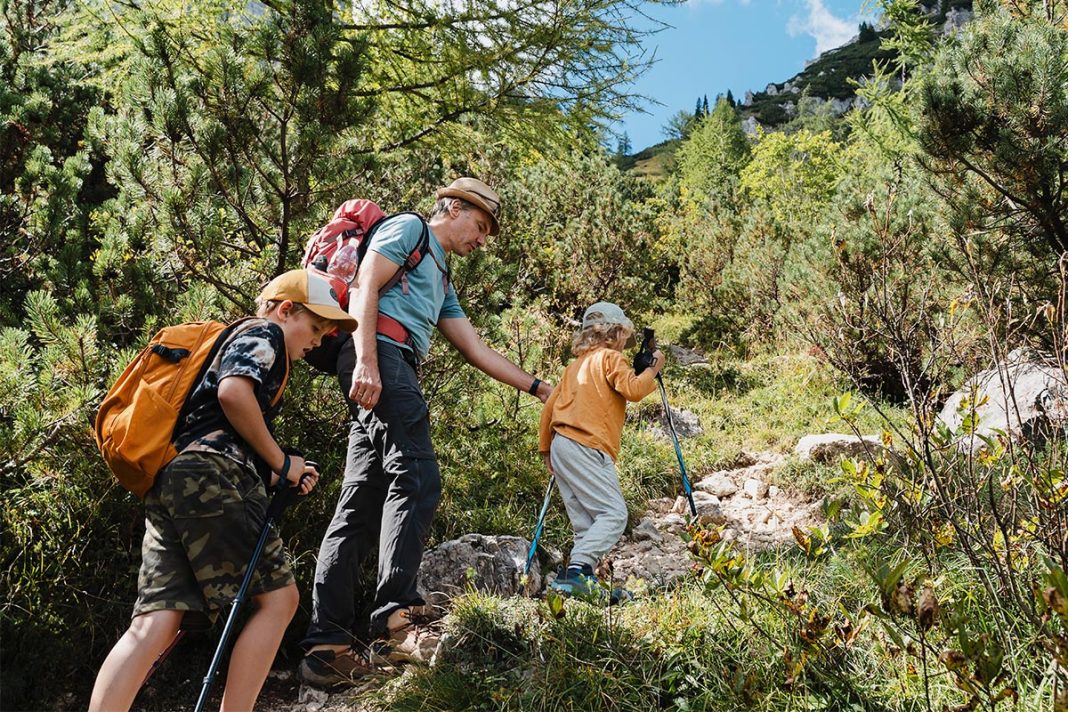
With much of Slovenia covered by hills and mountains, hiking has long been far more than a leisure activity. The country has now formally recognised both hiking and mountaineering as elements of its intangible cultural heritage, placing them alongside other traditions that form part of Slovenia’s living cultural identity.
The heritage designation covers not only the activities themselves, but also the knowledge, customs and values passed down through generations. It includes mountain clubs, youth programmes, guided excursions, mountain camps, trail maintenance, mountain huts and the transmission of mountaineering knowledge.
Slovenia has developed an extensive network of marked mountain trails and huts across the Julian Alps, Kamnik-Savinja Alps and Karavanke, much of which has been maintained by volunteers. Around 1,000 volunteers continue to help maintain the country’s hiking trails, including those marked with the distinctive Knafelc blaze.
Organised hiking in Slovenia dates back to 1893, when the Slovenian Mountaineering Society was established. Its activities helped develop mountain infrastructure while also strengthening the use of Slovenian language and place names in the Alps. Mountaineering has been recognised separately as a tradition based on technical knowledge, mentorship, responsibility and respect for the mountain environment. Slovenian climbers have developed an international reputation, particularly through expeditions to the Himalayas, contributing to the country’s global sporting and cultural profile.
The designation also highlights the so-called Slovenian mountaineering school, through which experienced climbers pass technical skills, ethical principles and decision-making abilities to younger generations through climbing schools, mentorship and expeditions. The tradition is closely connected to other areas of Slovenian society, including mountain rescue, scientific research, literature, photography and documentary filmmaking.
For a country of Slovenia’s size, the recognition underlines just how deeply the mountains are woven into its national identity. Hiking and mountaineering are not simply ways of exploring Slovenia’s landscape – they have become a form of cultural heritage connecting generations and helping shape the country’s distinctive relationship with its Alpine environment.