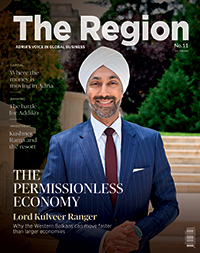
Lord Kulveer Ranger on AI, talent, investment and why the Western Balkans must stop trying to compete on everyone else’s terms
Artificial intelligence is transforming industries, redrawing competitive advantages and forcing governments to rethink how economies grow. At the same time, geopolitical tensions, shifting trade relationships and the race for talent are reshaping the global business landscape.
For smaller economies, the challenge is particularly acute. How do they remain relevant in a world increasingly dominated by technological superpowers? And can regions such as the Western Balkans build prosperity without simply trying to replicate models developed elsewhere?
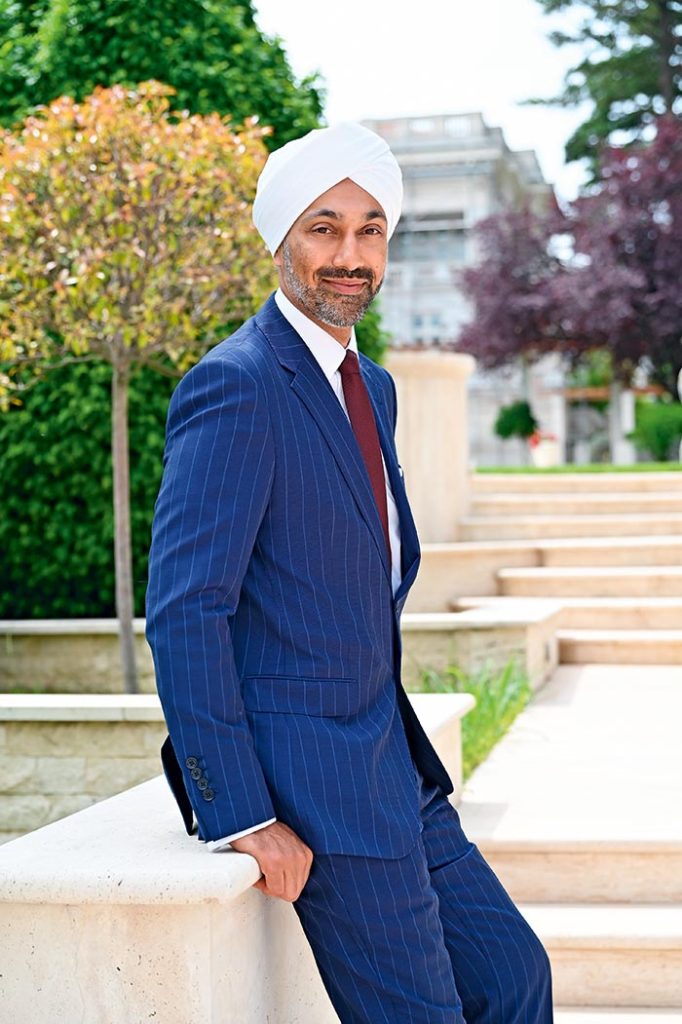
Few people are better positioned to reflect on those questions than Lord Kulveer Ranger. A Member of the UK House of Lords, technology strategist, investor and Chairman of the British-Serbian Chamber of Commerce, Ranger has spent much of his career working at the intersection of technology, policy and business. He played a key role in shaping London’s digital agenda during the emergence of the city’s technology ecosystem and today advises companies, institutions and governments on innovation, digital transformation and the future economy.
We met in Belgrade during the UK–Western Balkans Technology Trade Mission, which brought together British companies, investors and policymakers with business leaders from across the region. While the mission focused on technology and trade, the conversation quickly expanded into broader questions about competitiveness, artificial intelligence, talent, investment and the choices facing the Western Balkans in the decade ahead.
His central message was clear: the region should stop measuring itself against larger economies and start building on its own strengths.
In an era defined by rapid technological change, Ranger argues that success will not belong to those who try to imitate Silicon Valley, but to those who understand their advantages, invest in talent and develop a clear sense of purpose.
The challenge, he suggests, is no longer catching up. It is deciding where to lead.
As artificial intelligence reshapes industries and nations compete for talent, investment and influence, smaller economies face a critical question: how do they remain relevant in a world increasingly dominated by technological superpowers?
Lord Kulveer Ranger believes the answer is not to imitate larger economies, but to identify and develop unique strengths. Speaking to The Region during the UK–Western Balkans Technology Trade Mission in Belgrade, the Member of the UK House of Lords, technology strategist and President of the British-Serbian Chamber of Commerce discusses competitiveness, innovation, talent, investment and the future role of the Western Balkans in a rapidly changing world.
The UK–Western Balkans Technology Trade Mission brings together technology companies, investors, policymakers and business leaders to explore new partnerships across the region. At a time when technology, artificial intelligence and competitiveness are reshaping economies everywhere, why does the relationship between the UK and the Western Balkans matter more now than it did five or ten years ago?
The world has changed dramatically over the past decade. We have seen Brexit, disruption to globalisation, rising geopolitical tensions and, regrettably, war. These developments have made relationships between nation-states more important, both economically and politically.
The Western Balkans occupies a strategically important position between East and West. That gives the region influence, but it also means it is influenced by developments on both sides. Economic relationships, trade and investment therefore matter more than ever.

Serbia is looking westward, but trade, business and investment are essential catalysts for that journey. The UK recognised that when it signed a Free Trade Agreement with Serbia, and we are already seeing growing commercial engagement between our two countries.
For the UK, strengthening ties with Serbia and the wider region is not simply about increasing trade volumes. It is about building long-term partnerships in sectors that will shape future growth. Technology is one of those sectors, and there is enormous potential to bring together innovation and expertise from both sides.
Europe is increasingly concerned about falling behind the United States and China in technology. Is that concern justified?
It is probably a bit of both. From a UK perspective, however, I do not see it purely as a European question. I see it as a question of competitiveness.
The UK is smaller than the United States or China, yet it has often managed to punch above its weight. The same principle applies to Serbia and the Western Balkans. The challenge is not to match the scale of larger economies, but to leverage what you have and compete intelligently.
The Western Balkans does not have to compete on the same terms as larger economies. It needs to leverage its uniqueness and its talent
There will always be concern when larger economies move faster, attract investment earlier and capture the first wave of value created by new technologies. The response, however, should not simply be to build barriers.
At this critical moment, as we lay the foundations for an AI-driven economy that could shape the next twenty years, we need the right balance between enabling innovation and regulating it. The EU AI Act, for example, has prompted debate about whether regulation may unintentionally affect investment and innovation. We should be focused on creating environments that attract entrepreneurs, capital and new ideas while ensuring that innovation develops responsibly.
AI is creating enormous opportunities, but also widening the gap between economies that build technology and those that simply use it. Do you see the Western Balkans becoming a creator of technology or primarily a consumer of technologies developed elsewhere?
I think that is a false choice. Of course, we will all be consumers of technology, but we can also be creators.
The question is not whether we can replicate what larger economies are doing. The question is where we can create value ourselves.
We do not have to create like the bigger nations. Instead, we should identify areas where we have genuine strengths, focus on specific sectors and specialisations, leverage our uniqueness and leverage our talent.
That requires industrial strategies, investment strategies and education systems that support those choices. Governments also need to listen carefully to industry and investors because they are often thinking several years ahead. Policymakers need to understand what they can do to facilitate investment and help industries grow rather than seeing opportunities move elsewhere.
Many countries in the region speak about becoming innovation hubs. What separates those that will succeed from those that will simply continue talking about it?
Leadership and execution.
I was fortunate to help establish London’s first digital office at a time when the city’s technology ecosystem was beginning to take shape. We created policies that supported entrepreneurs, helped businesses scale, attracted investment and encouraged major companies to become part of the ecosystem.
What followed was not simply growth in London. Across the UK we saw technology clusters emerge in places such as Manchester, Newcastle, the West Midlands and Yorkshire. These ecosystems developed because policymakers, entrepreneurs, investors and industry worked together.
Innovation ecosystems do not emerge by accident. Clusters can become powerful engines of growth, but only when they are deliberately built and continuously supported. When that happens, you create jobs, investment, ideas and innovation.
The Western Balkans has produced remarkable engineering and entrepreneurial talent, yet many of its brightest people still leave. What needs to change for this region to become a place where talent chooses to build, scale and stay?
People often assume that talent follows money alone. In my experience, that is not true.
There will always be opportunities elsewhere and the grass can often appear greener somewhere else. But quality of life matters. Infrastructure matters. Healthcare matters. Education matters. Housing matters.
There is also something important about home, about belonging and about giving back to the place you come from. Younger generations increasingly value those things. Many talented people today do not necessarily want to move to another country, adapt to a different culture or learn a new language if they can build successful careers from where they are.
Technology increasingly allows people to work across borders without leaving home. That creates an opportunity for countries to retain talent if they can offer both opportunity and quality of life.
People do not only chase money. They chase quality of life.
As Chairman of the British-Serbian Chamber of Commerce, you speak with business leaders, investors and institutions on both sides. What is the biggest misconception British companies still have about this region — and what is the biggest misconception regional companies have about the UK?
One misconception British businesses still have is that they underestimate how much progress Serbia and the wider region have already made, particularly in technology, entrepreneurship and innovation.
Many are surprised by the sophistication of the ecosystem they find when they arrive here. Serbia has already been supporting international markets, including the UK, for years through technology services, innovation and business partnerships. That often changes perceptions very quickly.
FROM LONDON TO BELGRADE
Why Lord Ranger believes smaller economies can compete
Before AI became the dominant technology story of the decade, Lord Kulveer Ranger was involved in shaping London’s approach to digital innovation during Boris Johnson’s mayoralty.
As Director of Transport, Environment and Digital London, he worked on policies aimed at strengthening the city’s technology ecosystem and supporting collaboration between businesses, investors, universities and government.
Over the following years, technology and innovation hubs expanded across several UK regions, including Manchester, Newcastle, the West Midlands and Yorkshire.
Drawing on that experience, Ranger argues that smaller economies should focus on developing areas of comparative strength rather than attempting to replicate larger technology centres. In his view, competitiveness depends less on size than on the ability to connect talent, capital and ideas around clear strategic priorities.
On the other hand, regional businesses sometimes assume that entering the UK market is straightforward. The UK is a tremendous opportunity, but it is also a complex market.
Earlier today I spoke with an entrepreneur from the region who has built a successful business and was frustrated by how difficult it was to establish the right connections and support network in the UK. Businesses need guidance, relationships and local knowledge. That is one of the important roles organisations such as the British-Serbian Chamber of Commerce can play.
If you were advising governments across the Western Balkans on one decision that would most improve long-term competitiveness, what would it be?
If I had to choose one priority, it would be investing in young people.
Invest in skills. Invest in education. Invest in academic institutions and ensure they remain connected to the needs of industry.
I do not mean everyone has to become a programmer. Economies need a broad range of capabilities and professions. But maintaining a strong pipeline of talent is what ultimately drives growth, investment and innovation.
I would add one more point: focus. Countries need to understand what they want to be known for. They need to communicate that vision clearly and align policies around it. Having a clear identity and a clear strategy matters.
International investors often describe the region as promising, but “potential” can become a polite word for unfinished work. What would convince serious investors that the Western Balkans is no longer just a region of potential, but a region of execution?
The right kind of public investment is always important because it acts as a signal to private investors.
When governments demonstrate commitment through policy, infrastructure and investment, private capital is more likely to follow.
Invest in young people. Invest in skills. That is what drives growth, investment and innovation
Beyond that, investors look for stability and leadership. That is true in the Western Balkans and it is true everywhere else in the world.
Long-term investment decisions are made when businesses see political stability, clear direction and leadership that inspires confidence.
Potential becomes execution when investors see consistency between ambition, policy and delivery.
You have worked across technology, policy, communications and investment. Which technological shift do you believe leaders in this region are still underestimating?
Everyone talks about artificial intelligence, and rightly so. AI will transform industries ranging from manufacturing and retail to healthcare and lifestyle services.
But one area that deserves much more attention is the transformation of money itself.
Digital assets, tokenisation, stablecoins and programmable financial systems are evolving rapidly. The entire digital asset ecosystem is beginning to reshape how businesses transact, how services are delivered and how value moves through economies.
What makes this particularly interesting is how it will combine with AI. As we move toward more autonomous systems and agentic AI, traditional financial infrastructure may no longer be sufficient for many of the new use cases that emerge.
We are already seeing significant movement in areas such as stablecoins and digital asset platforms. Policymakers, financial institutions and businesses around the world are rethinking their approach.
This is not a distant future. It is already happening, and it is moving quickly. The challenge is ensuring that countries understand the pace of change and position themselves accordingly.
If we were having this conversation again in 2035, what headline about the Western Balkans would convince you that the region had truly succeeded?
Success may not look the way we imagine today.
For me, success would mean that technological change and economic growth have translated into better lives for people. That they have greater opportunities, higher living standards and access to services that improve their quality of life.
Success would mean that innovation has created prosperity, that new technologies have empowered people rather than excluded them, and that individuals feel they have ownership over their future.
Ultimately, if the changes we are experiencing today result in a more prosperous region, stronger opportunities and a better quality of life for its citizens, then I would consider that a success.
