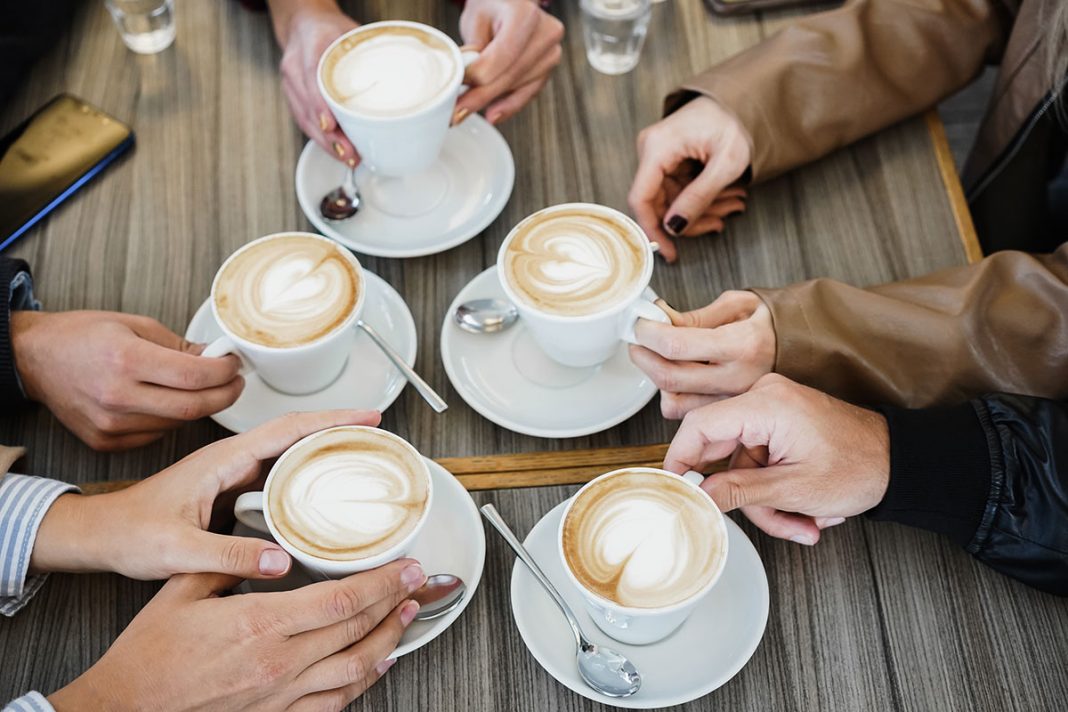
Unlike many Western countries, where coffee is frequently purchased to go on the way to work, school or the gym, the Balkan approach is built around slowing down. Sitting at a café for an hour or even several hours is not considered unusual. Coffee is an opportunity to reconnect with friends, discuss current events, celebrate achievements, solve problems or simply enjoy each other’s company without constantly checking the time.
This tradition shares much in common with the Mediterranean café culture found in countries such as Italy and Greece, where conversation is just as important as the drink itself. Time spent over a cup of coffee is viewed as time well spent rather than time lost. In a world increasingly defined by speed and efficiency, this slower rhythm remains one of the Western Balkans’ most recognizable cultural traits.
The region’s café culture also reflects the importance placed on human connection. Many friendships are maintained over regular coffee meetings, business partnerships often begin at a café table, and even important family discussions are frequently accompanied by coffee. It is common for people to meet someone they have not seen in months and spend an entire afternoon catching up over just one or two cups.
The diversity of coffee traditions further enriches the region’s identity. Serbian, Bosnian and Montenegrin households proudly prepare traditional domaća kafa, Croatia’s Adriatic coast embraces Italian espresso culture, Slovenia has developed a vibrant specialty coffee scene, while North Macedonia combines long-standing Ottoman influences with modern café concepts. Despite these differences, the underlying idea remains remarkably similar across the region: coffee is meant to be shared.
Of course, coffee is not the only drink that brings people together. The region is equally known for its hospitality, homemade juices, mineral waters, local wines and rakija, all of which play an important role in family gatherings and celebrations. Yet coffee occupies a unique place because it belongs equally to everyday life and special occasions.
As work schedules become increasingly demanding and digital communication replaces many face-to-face interactions, the Western Balkans continues to preserve a tradition that values presence over productivity. A cup of coffee is rarely just a beverage, it is an invitation to pause, to listen, to laugh and to spend time with the people who matter.