Politics is often described as one of the few topics on which everyone feels entitled to an opinion, alongside sport. While public debate is an essential part of every democracy, meaningful participation requires more than opinions – it requires understanding. Yet it remains striking how many people, including highly educated individuals outside the fields of law, political science or public administration, have only a limited understanding of how their own political system functions.
Most Western Balkan countries operate under parliamentary systems, where parliament plays a central role in representing citizens, adopting legislation, overseeing the executive and, in many cases, determining whether a government remains in office. Despite this, many citizens are unfamiliar with the basic mechanics of parliamentary democracy – how laws are passed, what constitutes a parliamentary majority, how votes of confidence or no confidence work, or what role the opposition plays in holding the government accountable. This is not simply a political issue – it is an educational one.
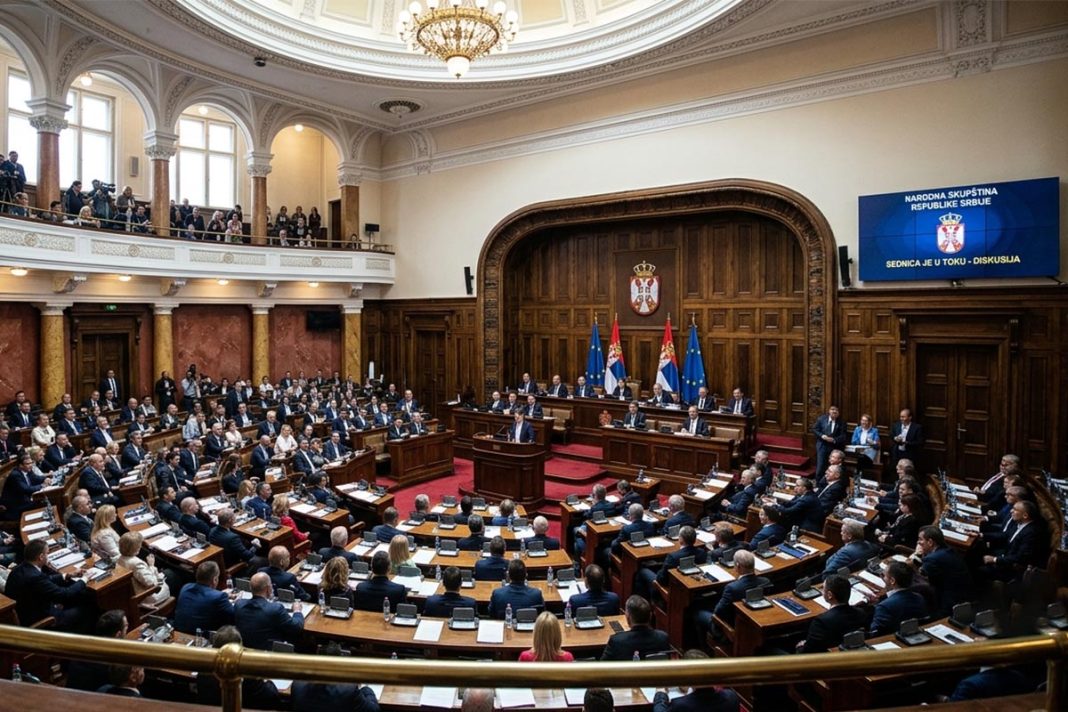
Just as schools increasingly discuss introducing practical life skills, such as financial literacy, taxation, mortgages, personal budgeting or understanding loans, they could also devote more attention to civic literacy. Young people should leave school with a clear understanding of how decisions affecting their daily lives are made and how democratic institutions operate. Watching parliamentary sessions, accompanied by age-appropriate explanations from teachers, could become a practical and engaging way to introduce students to democratic institutions. Rather than memorising constitutional articles or complex political theory, students could observe real debates, learn why parliamentary procedures exist, understand the difference between government and opposition, and see how elected representatives discuss and vote on legislation.
Such an approach would also help explain the significance of elections. Regardless of an individual’s political preferences, every citizen should understand what it means to cast a vote, to abstain, or to choose not to participate at all. Voting is not merely a right, it is participation in a system whose rules every citizen should understand before entering the polling station.
Naturally, no two political systems are identical. While parliamentary democracies share many characteristics, every country has its own constitutional framework, electoral rules and institutional arrangements. Civic education should therefore focus on explaining the political system of each respective country in a practical, accessible manner rather than relying solely on abstract theory.
For the Western Balkans, where political developments have shaped societies for generations and democratic institutions continue to evolve, strengthening civic literacy could prove particularly valuable. Greater public understanding of political institutions encourages informed participation, reduces misinformation and helps citizens distinguish between the constitutional roles of different branches of government.
Schools cannot and should not tell students what to think about politics. They can, however, teach them how politics works. Helping future generations understand parliament, democratic institutions and the responsibilities of citizenship may ultimately be one of the most important investments any education system can make.