
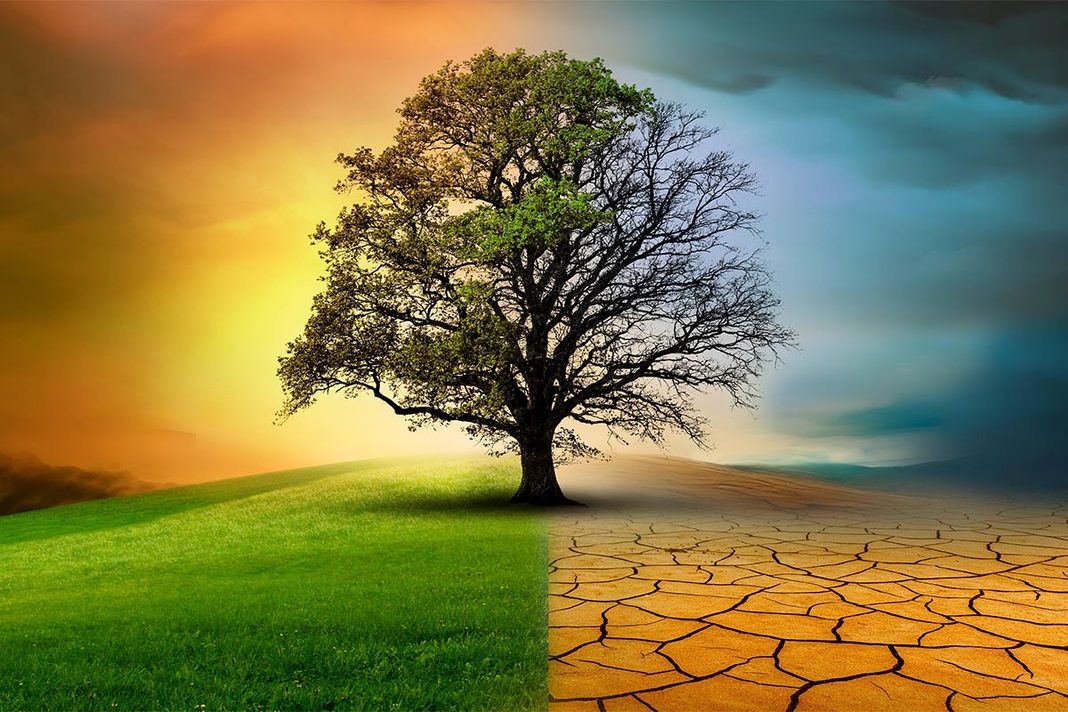
Summers bring prolonged heatwaves and droughts, while sudden storms and extreme rainfall can arrive with little warning. Winters can alternate between unusually mild periods and short bursts of cold, while spring and autumn increasingly feel less like clearly defined seasons and more like a succession of abrupt changes. One day people are wearing flip-flops and shorts; the next, they are reaching for winter jackets.
It is tempting to dismiss these changes as simply “crazy weather”, but scientists say there is a much bigger pattern behind them. The Intergovernmental Panel on Climate Change (IPCC) has concluded that human influence has unequivocally warmed the atmosphere, ocean and land and is already affecting weather extremes around the world. Heatwaves have become more frequent and intense across most land regions since the 1950s, while heavy precipitation has also increased in many areas.
Europe is particularly exposed to this trend. According to the World Meteorological Organization and Copernicus, Europe is the fastest-warming continent, and 2024 was its warmest year on record. The year was also marked by severe storms and widespread flooding, with at least 335 people killed and an estimated 413,000 affected by floods.
The Western Balkans have already experienced some of these extremes. During the summer of 2025, parts of the region recorded extreme heat stress, while southeastern Europe experienced severe to extreme drought and low river flows. Copernicus reported that parts of the Western Balkans, Greece and Türkiye experienced at least one day of “extreme” heat stress, defined as a maximum feels-like temperature of at least 46°C. At the same time, July brought major flooding in parts of the Balkans, including Croatia and eastern Romania.
There is also an important distinction to make. Climate change is sometimes mixed together with the depletion of the ozone layer, but they are not the same phenomenon. NASA says ozone depletion is not the principal cause of global climate change. The dominant driver of today’s warming is the accumulation of greenhouse gases, particularly from human activities. Ozone depletion and climate change are nevertheless connected because some substances involved in ozone depletion are also greenhouse gases.
The causes are therefore much broader than one particular technology or lifestyle. Burning fossil fuels for electricity, heating, industry and transport, land-use changes and other human activities have increased greenhouse-gas concentrations.
That does not mean that an individual choosing a petrol car or failing to recycle is personally responsible for a heatwave; the climate system is shaped primarily by cumulative emissions and large-scale economic and energy systems.
Artificial intelligence adds another modern complication. AI itself is not a primary cause of today’s climate change, but the rapidly expanding infrastructure required to run AI systems has an environmental footprint. Data centres consume large amounts of electricity, and the International Energy Agency estimates that global data-centre electricity consumption could more than double from around 460 TWh in 2024 to more than 1,000 TWh by 2030 in its base case. AI is one of the most important drivers of that growth.
That does not mean that AI development should simply be stopped. It means that the energy used to power it matters. If additional electricity demand is met increasingly by renewable and low-carbon sources, the climate impact can be reduced; if it relies heavily on fossil fuels, the opposite is true. The same principle applies to almost every technological development: the question is not only what humanity invents, but how that technology is powered and used.
This is where the United Nations’ Sustainable Development Goals come into the picture. With 2030 approaching, the world is nowhere near achieving the entire agenda. The UN’s 2025 assessment found that only 18% of assessable targets were on track, while 48% showed insufficient progress and 18% had actually regressed compared with 2015.
The Western Balkans therefore face a particularly visible version of a global dilemma. The region is developing electric mobility, renewable energy, more sustainable cities and new environmental initiatives, while simultaneously dealing with ageing infrastructure, dependence on fossil fuels and the economic pressure of transitioning to a cleaner model.
The strange weather we experience today should not necessarily make us panic every time the temperature changes by 15 degrees overnight. But neither should it become so familiar that we stop asking why it is happening. Calling the weather “bipolar” may be an easy way to describe what we are experiencing; understanding why the climate is changing is considerably more important.
The question is ultimately not whether humanity can return to the exact seasons people remember from decades ago. The climate has already changed. The question is how much further change we allow, how well we prepare for the risks that are already unavoidable, and whether we treat today’s increasingly unusual weather as an inconvenience to which we simply adapt — or as a warning that still leaves room for action.