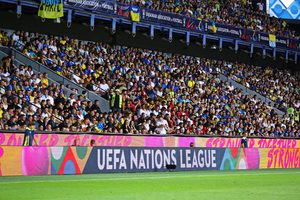

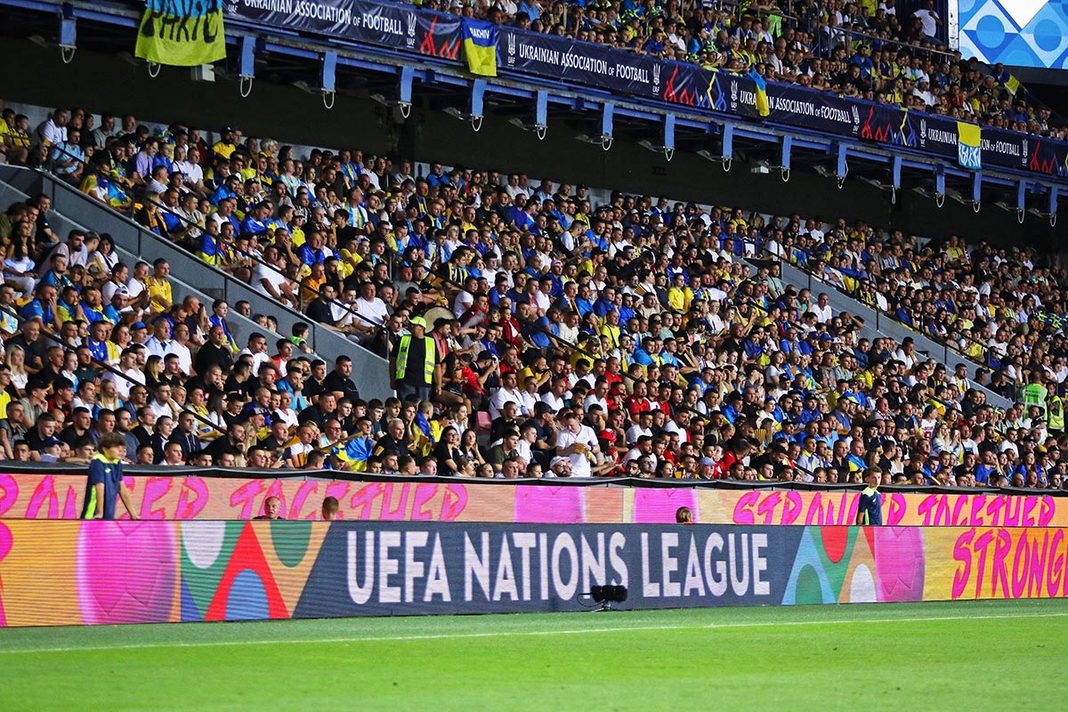
The November international window brought the 2026/27 UEFA Nations League league phase to a close, with national teams playing their final two matches and securing their positions ahead of the upcoming play-offs.
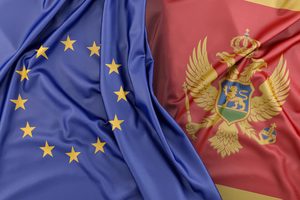
Montenegro was arguably the region’s biggest success story. Mirko Vučinić’s side finished top of League C Group 2 with 16 points, recording five wins and one draw without suffering a single defeat. The team rounded off its campaign with a convincing 4–1 away victory over Cyprus, having already beaten Latvia 2–1 in the previous round. The results secured promotion to League B and reflected a remarkably consistent team performance. Nikola Krstović was among the standout players, making a significant contribution through both goals and assists. Albania also secured promotion, finishing first in Group C1 with 15 points after a 2–0 away win over Belarus.
Croatia, meanwhile, ended its campaign on a positive note by beating Czechia 2–1 on 15 November, with Ivan Perišić and Lovro Majer finding the net. The team finished third in Group A3 with six points, behind England and Spain, the latter two having secured the quarter-final places. Croatia will therefore have to compete in the League A/B play-offs to retain its place in the top division, while Czechia, which finished without a point, will be directly relegated. Slovenia also closed the window with an emphatic result, defeating North Macedonia 3–0 on 16 November. The victory confirmed its second-place finish in League B Group 1 with 11 points, while North Macedonia ended bottom with no points. Slovenia will now enter the play-offs for promotion to League A.
Bosnia and Herzegovina secured an important 2–1 victory over Romania and finished second in League B Group 4 with 11 points. The result earned the team a place in the League A/B play-offs, offering a chance to reach the top tier. Kosovo*, on the other hand, suffered a 3–0 defeat away to the Republic of Ireland.
It finished third in League B Group 3 with six points, meaning it will remain in the same division for the next edition of the competition.
For Serbia, the final round brought little relief. A 1–0 defeat to Greece in Volos confirmed a last-place finish in League A Group 2, with the national team failing to collect a single point across its six matches. Despite the return of experienced players such as Dušan Tadić, Sergej Milinković-Savić and Aleksandar Mitrović, the side continued to struggle with cohesion, precision and the ability to control matches. Its difficulties in maintaining possession also point to a broader structural problem rather than an issue that can be resolved simply by bringing familiar names back into the squad. The result leaves Serbia facing a League A/B play-off, with Slovenia, Hungary, the Republic of Ireland and Bosnia and Herzegovina among the possible opponents. The draw is scheduled for Friday, 20 November.
Serbia’s football struggles are unfolding at a time of significant political developments at home, when the national team is perhaps not the country’s most pressing concern. Nevertheless, football remains one of the most widely followed and deeply rooted passions in Serbia, making the national team’s performances a subject of considerable public interest. The latest results have once again raised questions about the direction of the team and the changes needed to restore its competitiveness.
With the league phase now complete, attention turns back to domestic and European club competitions, while national teams await the play-off draw and the next international fixtures. The November window was a defining moment for some regional sides, an encouraging confirmation of progress for others, and a clear warning for those facing difficult questions. The upcoming European Championship qualifying campaign, expected to begin in the coming months, will provide another opportunity to build on successful foundations or address weaknesses exposed during the Nations League.