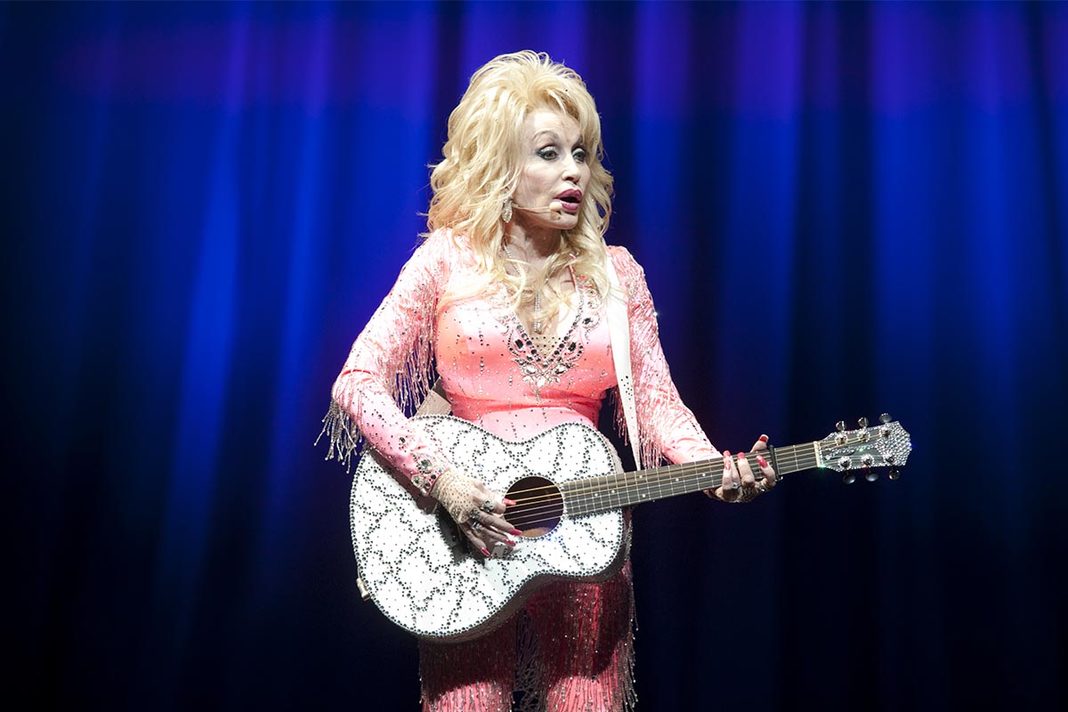
Born on January 19, 1946, in rural Tennessee, Parton grew up in a large and poor family and was one of 12 children. Her family lived in a small cabin in the Great Smoky Mountains, and music became part of her life from an early age. She began performing as a child and moved to Nashville as a teenager, determined to build a career as a songwriter and performer.
Her breakthrough came in the 1960s, and she became widely known through her work with country star Porter Wagoner before establishing herself as a solo artist. Over a career spanning more than six decades, Parton wrote around 3,000 songs and became one of the best-selling female artists in music history, selling more than 100 million records worldwide.
Among her most famous songs are “Jolene,” “9 to 5,” “Coat of Many Colors” and “I Will Always Love You.” The latter became an international phenomenon not only through Parton’s original recording but also through Whitney Houston’s iconic version for The Bodyguard soundtrack. Parton’s songwriting also earned her recognition far beyond country music, helping make her a figure known across generations and genres.
Parton was also a successful actress and businesswoman. She starred in films including 9 to 5, The Best Little Whorehouse in Texas and Steel Magnolias, while her business empire included Dollywood, the theme park in Tennessee that became one of the state’s best-known tourist attractions.
Her achievements were recognised with some of the highest honours in American culture. She won 10 Grammy Awards, received the Grammy Lifetime Achievement Award, two Oscars nominations, the National Medal of Arts and Kennedy Center Honors, and was inducted into both the Country Music Hall of Fame and the Rock & Roll Hall of Fame.
Parton’s influence extended far beyond entertainment. Through the Dolly Parton Imagination Library, established through her foundation, millions of free books have been distributed to children around the world, promoting early childhood literacy. The programme has distributed more than 270 million books.
She also became an unexpected figure in medical and scientific circles after donating $1 million to COVID-19 vaccine research at Vanderbilt University. The funding supported research that contributed to the development of Moderna’s COVID-19 vaccine.
Parton’s personal life was also marked by a remarkably long marriage. She married Carl Dean in 1966, and the couple remained together for almost six decades until his death in March 2025. They did not have children, although Parton became a godmother and mentor to singer Miley Cyrus, whose father Billy Ray Cyrus was a longtime friend and collaborator.
Parton’s death closes the chapter on one of the rare careers that managed to combine music, cinema, business, philanthropy and cultural influence without losing its connection to its roots. She transformed the image of the country star into something much larger, becoming an internationally recognised personality whose songs, humour, distinctive style and generosity made her beloved far beyond the United States.
From a childhood in poverty in the Tennessee mountains to global superstardom, Dolly Parton’s life became almost a modern American success story in itself — but her legacy is likely to be measured not only by the records she sold or the songs she wrote, but by the generations of artists, readers and communities she helped along the way.