
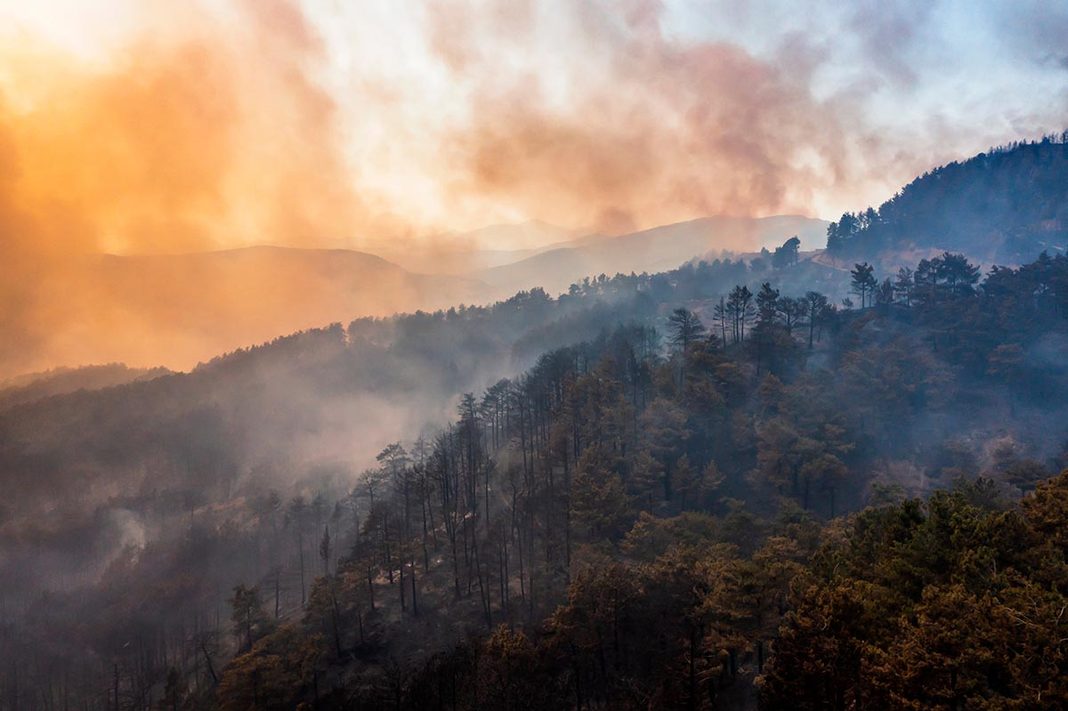
The first fire was detected on 21 July, when surveillance systems operated by Vojvodinašume spotted a ground-level forest fire in the Deliblatski Pesak–Vrela area. Although the blaze was initially brought under control, strong winds repeatedly reignited the fire in the following days.
The situation became significantly more serious in early August. A new activation on 5 August spread rapidly under extreme heat and strong winds, eventually developing into a much larger wildfire. According to Vojvodinašume, continuous firefighting operations have been underway since that date.
By 21 August, the fire had affected more than 3,500 hectares, making Deliblatska Peščara the most serious active wildfire site in Serbia. The flames have spread towards the areas around Kajtasovo and Grebenac, with nearby communities facing an increased risk. The municipality of Bela Crkva also evacuated the Trujino settlement as a precaution.
Hundreds of people have been involved in the response. On 21 August, around 445 people, including 189 members of Serbia’s firefighting and rescue units, were reported to be engaged in fighting the fire in the Peščara. Helicopters have been operating from the air while firefighters, forestry workers and volunteers continue working on the ground.
The scale and duration of the fire have also prompted international assistance. Serbia has activated the EU Civil Protection Mechanism, with helicopters and firefighters from several European countries being deployed to support the response. Romania, Slovakia and the Czech Republic have provided Black Hawk helicopters, while German and Romanian firefighting teams have also joined the effort. A Russian Il-76 firefighting aircraft has additionally been deployed.
The firefighting operation has been particularly difficult because of extreme heat, dry vegetation and strong winds, which can rapidly reignite smouldering areas and change the direction of the flames. Authorities have therefore prioritised protecting nearby settlements and human lives while attempting to contain the fire within the protected area.
Deliblatska Peščara is a Special Nature Reserve and one of Europe’s largest continental sandy areas, known for its distinctive ecosystems, forests and rich biodiversity. A prolonged wildfire of this scale therefore poses a serious environmental threat, with potential consequences for forests, wildlife, soil and the wider ecosystem.
Despite some improvement in the situation, authorities have warned that strong winds and the continuing lack of significant rainfall remain major concerns. As of 22 August, there was still no definitive estimate of when the fire could be fully brought under control.