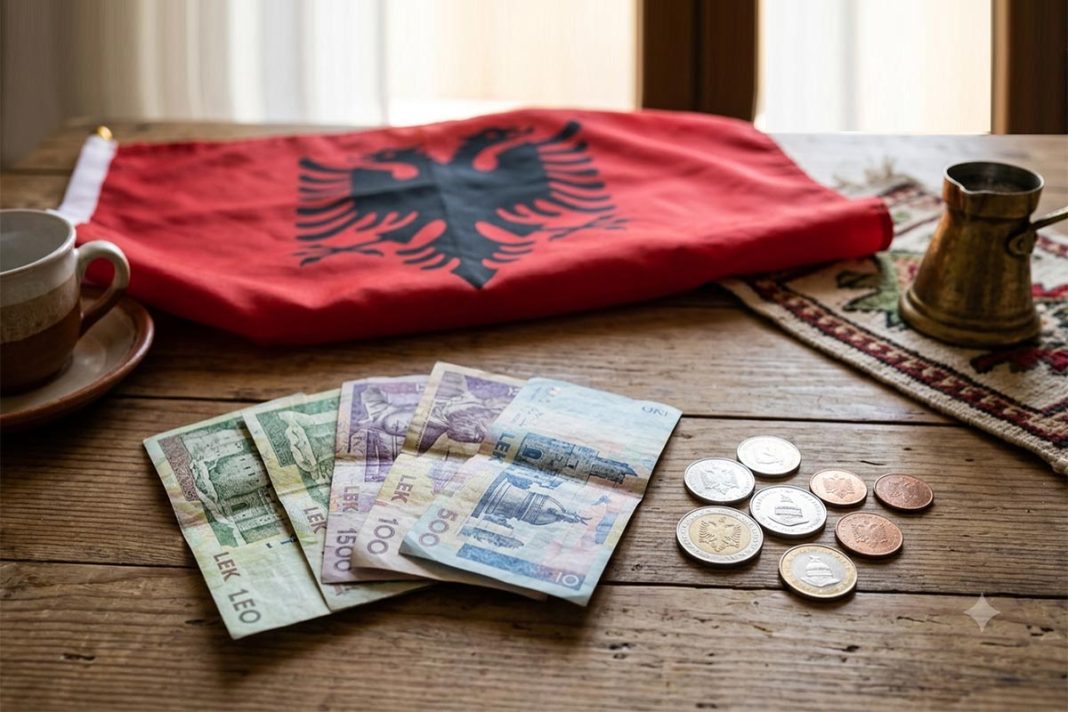
The increase, which took effect on 1 January 2026, lifted Albania’s minimum wage to €517 per month, helped in part by the favourable exchange rate between the Albanian lek and the euro. However, the adjustment has not been enough to improve the country’s position compared to its European neighbours.
According to Eurostat, Bulgaria, which records the lowest minimum wage among European Union member states, now stands at €620 per month, more than €100 higher than Albania. At the opposite end of the scale, Luxembourg has Europe’s highest minimum wage at €2,704 per month.
Albania also ranks last among the Western Balkan countries included in the comparison. Serbia reports a minimum wage of €744, followed by Montenegro (€670), Turkey (€654) and North Macedonia (€586), meaning every neighbouring country now offers a higher statutory minimum wage.
While the Albanian government has gradually increased the minimum wage over recent years, neighbouring countries have generally done so at a faster pace, allowing them to widen the gap. Eurostat notes that nominal wage comparisons do not tell the full story, as living costs and purchasing power differ significantly between countries. Nevertheless, even when purchasing power is taken into account, Albania remains among the European countries with the lowest income levels.
Economists also point out that the appreciation of the Albanian lek against the euro has limited the impact of recent wage increases when viewed in a broader European context. As a result, despite higher nominal salaries, many workers continue to face relatively low purchasing power compared to the rest of Europe.
The figures underscore the broader economic challenge facing Albania as it seeks to raise living standards, retain its workforce and narrow the income gap with both the European Union and neighbouring Western Balkan economies.