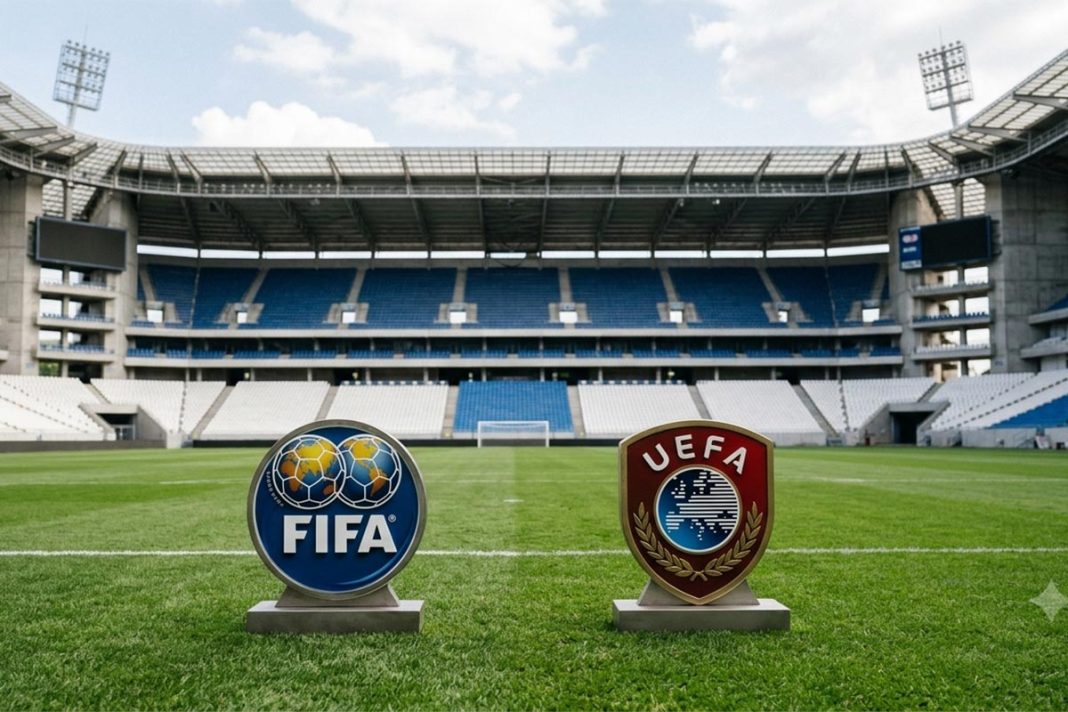
A growing dispute has emerged between UEFA and FIFA after the world governing body proposed creating a new commercial entity, FIFA Forward Enterprise (FFE), which would manage the commercial operations of major FIFA competitions, including the World Cup. Under the proposal, FIFA would sell a minority stake in the new company to private investors while offering its 211 member associations increased financial support if they approve the plan.
Member associations have reportedly been given until 19 September to decide whether to back the proposal, with FIFA offering an immediate USD 20 million payment to each association as part of the initiative. UEFA responded with unusually strong criticism, accusing FIFA of prioritising commercial interests over the future of the game.
In its statement, UEFA said Football is not FIFA’s to sell, and how the proposal crosses a line that football’s governing institutions should never cross. The European governing body also accused FIFA of attempting to enrich themselves and their friends, rather than protecting the interests of football associations, clubs, leagues, players and supporters.
The criticism extends beyond UEFA. National football associations, including those from England, France, Denmark, Sweden, the Netherlands and Romania, along with CONCACAF and other football stakeholders, have also questioned the lack of consultation surrounding the proposal and warned that such a fundamental change should not be made without broad agreement across the sport.
FIFA, however, insists the initiative would generate significantly more funding for football development worldwide. According to the organisation, the new structure would allow billions of additional dollars to be invested in member associations while FIFA would retain full authority over football governance, competition rules and the international match calendar.
The dispute is not related to the number of teams participating in future World Cups. The 2026 tournament already expanded from 32 to 48 national teams, and while occasional discussions about a possible future 64-team tournament have surfaced, the current disagreement centres exclusively on ownership, governance and commercial control of the World Cup’s business operations, not its sporting format. The clash marks one of the most serious public disagreements between FIFA and UEFA in recent years and raises broader questions about the balance between commercial growth and preserving football’s traditional governance model. With European football generating the largest share of global revenues, UEFA’s opposition could become a significant obstacle to FIFA’s plans in the months ahead.