
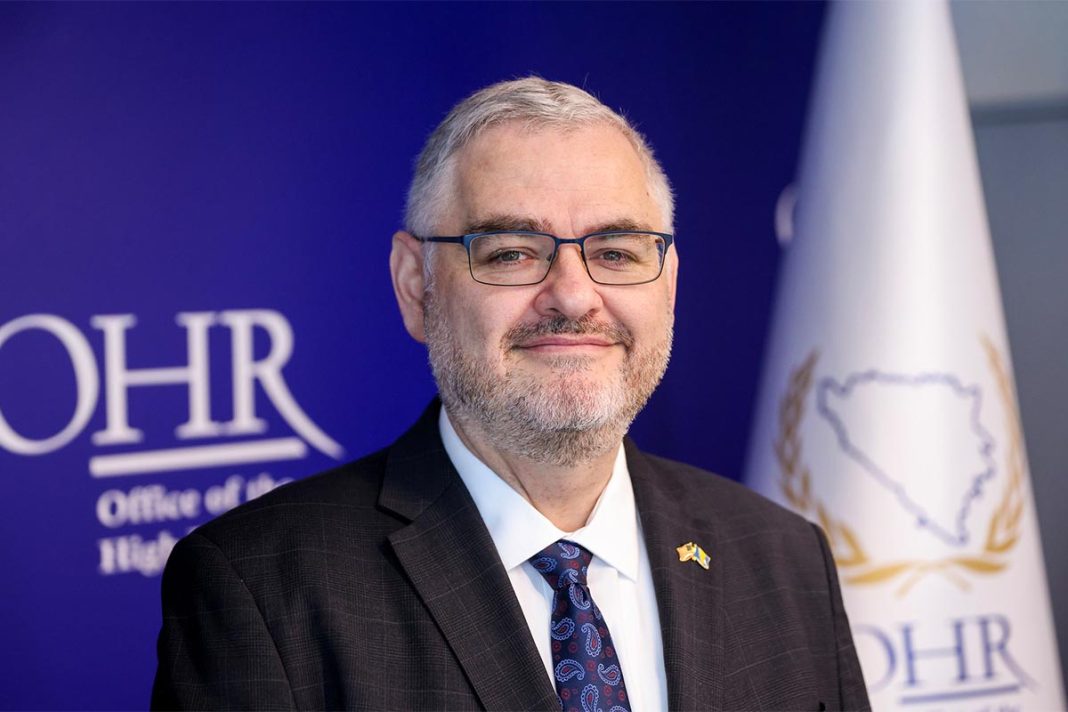
The Peace Implementation Council remains divided over the appointment of the next High Representative, with the United States and European allies backing different candidates.
The Steering Board of the Peace Implementation Council (PIC) has again failed to reach an agreement on a successor to Christian Schmidt as High Representative for Bosnia and Herzegovina. The meeting in Sarajevo ended without consensus, extending uncertainty over one of the country’s most influential international posts.
The deadlock reflects a split between the United States and several European members of the PIC. Washington and Italy support Italian diplomat Antonio Zanardi Landi, while France, Germany and the United Kingdom have backed French diplomat René Troccaz. The disagreement follows Schmidt’s announcement that he would step down after nearly five years in office.
According to reports, Italy circulated a non-paper outlining Landi’s vision for the Office of the High Representative, stating that he would not overturn decisions made by previous High Representatives, would consult the PIC before taking major actions, and would rely on the Bonn Powers only as a last resort. The proposal also envisages a two-year mandate, with the possibility of an extension.
Until a permanent successor is agreed upon, Schmidt’s deputy, American diplomat Louis Crishock, has been appointed acting High Representative. The PIC said it aims to reach agreement on a permanent appointment by 14 July, while reaffirming its commitment to preserving the Office of the High Representative’s role in overseeing implementation of the Dayton Peace Agreement.