Long before highways, airports and digital networks, a narrow ribbon of steel transformed the Western Balkans. The Bosnian Railway did more than move passengers and freight. It changed the direction of trade, accelerated industrialisation and connected remote mountain towns to the economic heart of Europe.
Today, travellers crossing the Western Balkans often complain about slow roads, missing rail links and fragmented transport networks. Yet more than a century ago, one of the region’s most ambitious infrastructure projects achieved something remarkable: it connected some of Europe’s most inaccessible landscapes to one of the continent’s most powerful economic centres.
The story begins not with trains, but with empire.
Following the occupation of Bosnia and Herzegovina in 1878, the Austro-Hungarian Empire faced a challenge. It had acquired a territory rich in forests, minerals and agricultural potential, but separated from its major markets by mountains, rivers and poor roads. Economic development required something more reliable than horse-drawn transport. It required a railway.
What followed was one of the most ambitious engineering efforts ever undertaken in the region.
Over the following decades, engineers carved hundreds of kilometres of narrow-gauge track through some of Europe’s most difficult terrain. Bridges crossed deep valleys.
Tunnels pierced mountain ranges. Railway stations appeared in towns that had previously existed at the edge of economic life.
The network eventually connected Sarajevo, Mostar, Višegrad, Banja Luka and numerous smaller communities to the wider imperial system stretching toward Vienna, Budapest and Central Europe.
For the first time in history, goods produced in Bosnia could reach major European markets quickly and predictably.
Forests became timber exports. Mines became industrial suppliers. Remote agricultural regions became participants in international trade.
The railway altered not only commerce but also perception. Places that had once seemed distant suddenly became accessible. Journeys that previously required days could now be completed in hours. Merchants expanded their networks. Students travelled further. New ideas moved alongside passengers.
The transformation was so profound that many historians consider the railway one of the most important economic development projects in the region’s modern history.
Yet perhaps the most fascinating aspect of the railway was its unexpected beauty.
Unlike modern high-speed lines designed for efficiency, the Bosnian narrow-gauge railway followed the contours of the landscape.
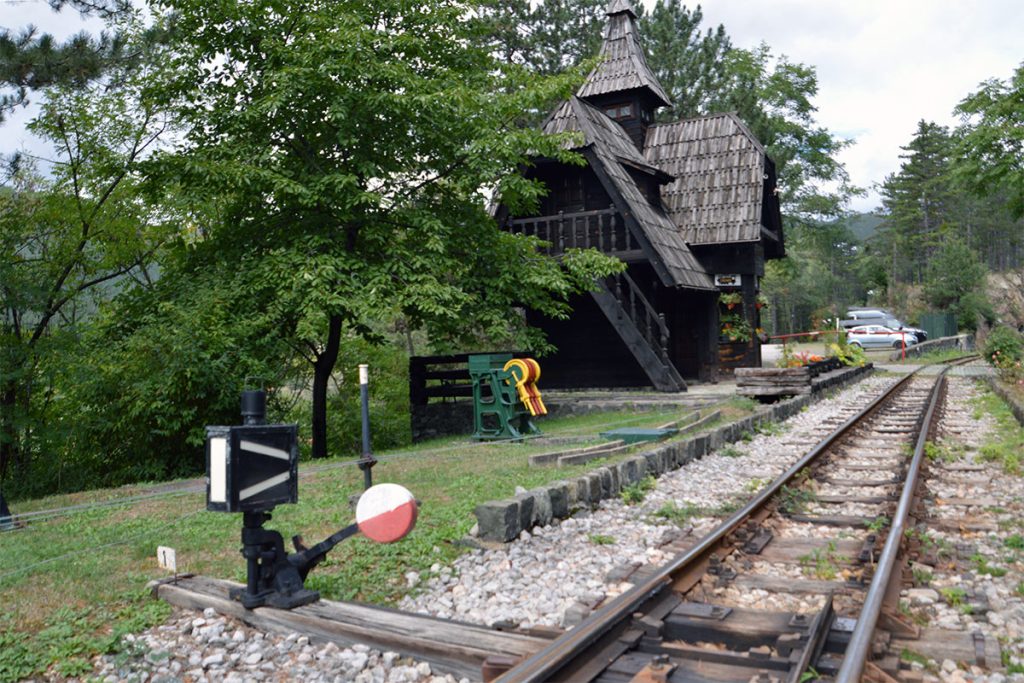
Trains wound through canyons, climbed mountain slopes and crossed dramatic stone viaducts. Passengers were treated to views that today would attract tourists from around the world.
The most famous section became known as the Šargan route, where the railway navigated steep elevations through a series of loops, tunnels and curves so intricate that it became an engineering attraction in its own right.
For decades, the railway served as a lifeline connecting communities across the region.
Then came the age of the automobile.
By the mid-twentieth century, governments increasingly favoured roads over narrow-gauge railways. Trucks offered greater flexibility. Cars symbolised modernity. Maintaining mountain rail infrastructure became expensive. Gradually, sections of the network were closed. Tracks disappeared. Stations fell silent.
An infrastructure system that had once represented the future slowly became part of the past.
Today, only fragments remain. Tourist trains operate on restored sections. Old station buildings survive in some towns.
Railway enthusiasts continue documenting forgotten routes hidden beneath forests and mountain vegetation. In places, stone bridges still stand as monuments to an era when engineering ambition overcame geographical barriers.
Yet the railway’s true legacy extends far beyond surviving tracks.
Modern discussions about regional connectivity, trade corridors and economic integration often sound strikingly contemporary. But the central challenge remains the same as it was nearly 150 years ago: how can a region divided by geography become connected by infrastructure?
The builders of the Bosnian Railway understood something that remains true today. Economic development rarely begins with factories, offices or investment funds. It begins with connections.
Before businesses can grow, people, goods and ideas must be able to move.
The railway that once linked Sarajevo to Vienna may have largely disappeared, but the lesson it left behind remains remarkably relevant.
Infrastructure is never just about transport.
It is about changing the map itself.