Stability brought investors to Croatia. Speed—and diversification—will determine who stays.
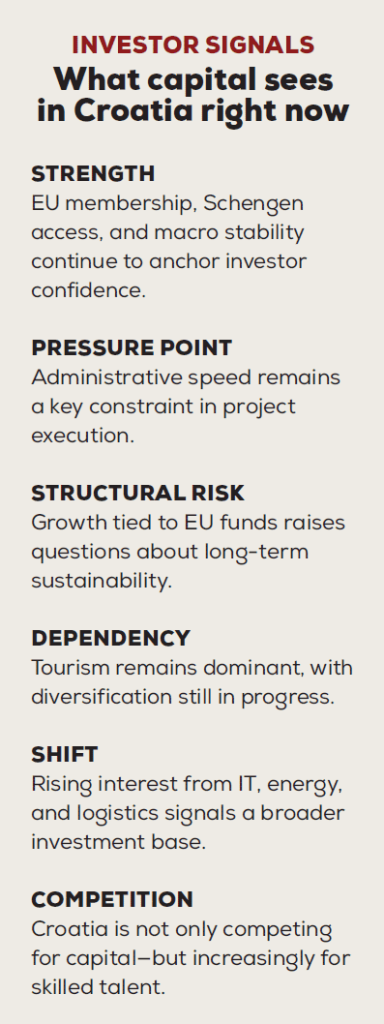
As Croatia strengthens its position within the European investment landscape, the conversation is shifting from access to execution. EU membership, Schengen entry, and steady macro signals have elevated the country’s visibility— but for investors on the ground, the next phase is more demanding.
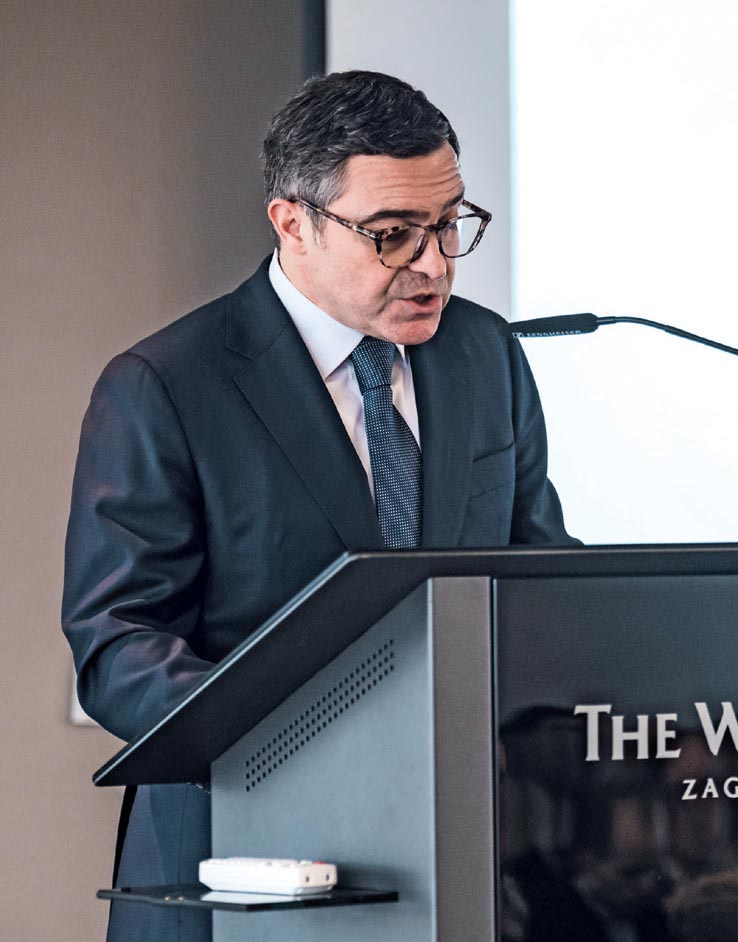
Burak Baykan, President of the Foreign Investors Council Croatia and Regional Director for Southeast Europe at Doğuş Group, operates at the intersection of capital, policy, and delivery. His message is measured, but clear: Croatia is stable, attractive— and still not fast enough.
Croatia has positioned itself as one of the more stable investment environments in the region. What are investors still quietly concerned about?
After Croatia’s entry into the European Union and the Schengen Area, the country has attracted significant attention from investors. The government has implemented a range of reforms to improve the business environment, and fiscal stability— supported by infrastructure investment— has been recognised.
At the same time, concerns remain around the speed and efficiency of administration. For investors, timelines are often as important as conditions.
There is also a broader structural question. Croatia’s economy remains closely tied to tourism and hospitality, while a significant share of growth is driven by European Union funds. This raises concerns about the sustainability of long-term growth if diversification does not accelerate.
From your vantage point at the Foreign Investors Council, where is Croatia outperforming—and where is it falling behind in ways that matter to capital?
Croatia benefits from strong geographic positioning and a reputation as a safe and stable country, which makes it particularly competitive in tourism. There is still room to elevate the quality and structure of that offer further.
However, the more important question is diversification. To remain competitive, Croatia must expand beyond its core sectors and develop industries that generate long-term value.
This is closely linked to workforce dynamics. Attracting capital increasingly means attracting talent—and Croatia is competing not only for investment, but for people.
EU membership has been Croatia’s biggest structural advantage. What’s the next catalyst that could define its investment story?
Croatia’s ongoing accession process to the OECD is an important step, and it has already driven reforms aimed at strengthening the business environment.
Speed of administration remains the real bottleneck. Growth driven by EU funds raises questions about long-term sustainability
Looking ahead, competitiveness will be the defining factor. This is also a priority highlighted by the European Commission. Sustained growth will depend on how effectively Croatia can improve productivity, efficiency, and its overall investment framework.
Many economies in the region are chasing the same investors. Where can Croatia build an edge that isn’t easily replicated?
Croatia’s strongest advantage remains its location and accessibility. Within a sixhour drive, it reaches a market of nearly 200 million people. Combined with its coastline, natural assets, and gastronomy, this creates a powerful tourism proposition.
In real estate, Croatia has already established itself as a preferred destination for second homes. Improvements in infrastructure and connectivity are also strengthening its role in logistics.
In energy, regional connectivity is a key advantage. The opportunity now is not only to attract capital—but to position these advantages more strategically and consistently.
How has the profile of foreign investors changed in recent years?
We are seeing gradual diversification. Investment interest is no longer concentrated solely in tourism.
There is increasing attention from sectors such as IT, energy, and logistics. If this interest translates into realised projects, it could significantly reshape the structure of the Croatian economy.
This would have wider implications— from stronger export performance to more balanced demographic trends.
If you had the government’s full attention for one hour, what would you prioritise immediately?
The priority would be administrative efficiency.
This means not only accelerating processes, but also building stronger institutional support for large-scale investors. Dedicated structures that guide and facilitate complex investments can make a meaningful difference.
Where such mechanisms already exist, they should be further strengthened. In a competitive environment, speed and clarity are often decisive factors.