As Europe returns to rail, Stadler’s Željko Davidović explains why modern railway networks are becoming critical to competitiveness, sustainability and regional growth.
Based in Switzerland for the past 35 years, Željko Davidović has built a career at the forefront of Europe’s railway industry. Today, as Sales Director for Central and Eastern Europe at Stadler Rail, he is helping shape the next generation of rail transport across the region.. Today, as Sales Director Central and Eastern Europe at Stadler Rail, he is helping shape the future of rail transport across the region.
Montenegro recently became the 50th country in which Stadler trains will operate following the signing of a €30 million agreement for three new FLIRT electric trains. Yet for Davidović, the significance of rail extends far beyond rolling stock. In this interview, he discusses why railways are once again at the centre of Europe’s transport strategy, what the Adria region can learn from the Swiss model, and how modern rail networks can drive economic growth, investment and regional integration.
Over the past two decades, rail appeared to lose ground to road and air transport. Today, however, Europe is once again investing heavily in railway infrastructure. What has driven this shift?
In recent years, it has become clear that sustainable economic development and climate goals cannot be achieved without a strong railway system. Rail transport consumes significantly less energy, produces lower CO₂ emissions and uses space more efficiently than road and air transport. At the same time, growing urbanisation, increasing congestion and rising mobility needs require capacities that only modern railways can provide. As a result, Europe is experiencing its largest railway investment cycle in decades. Rail is once again establishing itself as the backbone of a sustainable and competitive transport system.
You have lived and worked in Switzerland for 35 years, in a country often considered a benchmark for public transport. Which lessons from the Swiss model would you most like to see applied across the Adria region?
The most important lesson is not technology, but long-term planning. In Switzerland, rail is not viewed as a cost, but as a strategic investment in economic development, quality of life and regional connectivity. The passenger is always at the centre of the system. That means reliable timetables, seamless integration between different modes of transport and infrastructure planned decades in advance. Switzerland has demonstrated that consistent investment and a clear strategy create public trust in transport systems. The countries of our region have tremendous potential to improve mobility and competitiveness by adopting a similar approach.
Regional economic integration is often discussed, yet physical connectivity remains a challenge. How important are modern railways in creating a truly integrated regional market?
Efficient railways are fundamental to any integrated market. People, goods, knowledge and investment move faster when supported by quality infrastructure. Modern rail corridors reduce travel times, increase productivity and stimulate the development of new business zones. The Western Balkans occupies a strategic position between Central Europe and the Mediterranean, but its full potential will only be realised when rail connections become faster, more reliable and better interconnected. In the era of a common regional market, railways are not merely transport infrastructure; they are a prerequisite for economic integration.
Montenegro has recently become the 50th country in which Stadler trains will operate. What does this investment say about the direction in which railway systems in the region are moving?
We are extremely proud that Montenegro has become the 50th country in the world to operate Stadler trains. It demonstrates that even smaller markets are investing in modern solutions that improve reliability, safety and passenger comfort. For Montenegro’s citizens, this means better public transport, while for the country it represents another step towards European mobility standards.
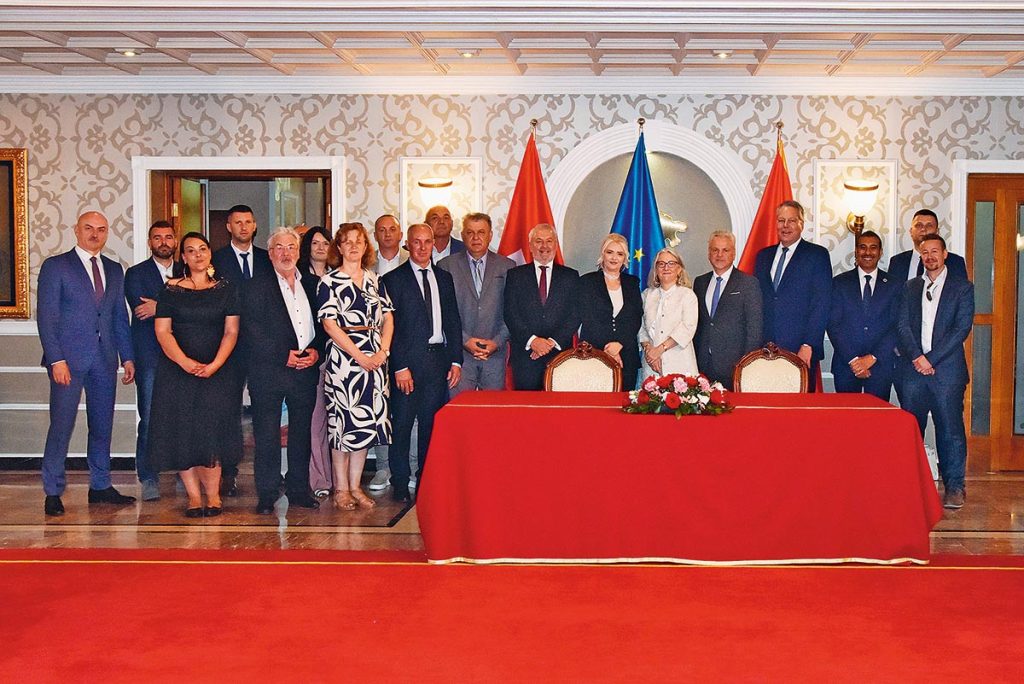
More importantly, investments like this reflect a growing commitment across the region to modernise railway systems and make them more competitive with other modes of transport. I believe this project will encourage further development of the rail sector and reinforce the role of railways in the sustainable economic and social development of Montenegro.
Many of Europe’s most successful cities and industrial centres developed along railway corridors. Should countries in our region view rail investment primarily as a transport project or as an economic strategy?
First and foremost, as an economic strategy. Experience across Europe shows that quality railway infrastructure attracts investment, increases property values, supports industrial development and creates jobs.
A strong example from our region is the high-speed railway between Belgrade and Novi Sad. With journey times reduced to around 30 minutes, Novi Sad has become a significantly more attractive place to live. Demand for property has increased, as have property values. At the same time, business districts in Belgrade, particularly New Belgrade as one of the region’s leading business and technology hubs, have gained access to a much larger pool of skilled professionals who can now commute daily from Novi Sad. Previously, the same journey could take up to three hours.
When modern railways connect cities, they effectively create a single labour market. They increase economic competitiveness and open new development opportunities for entire regions. Rail investment should therefore be viewed as an investment in long-term economic growth, not merely as a transport project.
Technology is transforming almost every industry. How do you think the rail travel experience will look ten years from now?
While certain trends are visible, predicting the future with precision has become increasingly difficult, particularly given the transformative impact of artificial intelligence.
What is already clear is the direction of travel. Rail journeys will become more digital, more personalised and more comfortable. Passengers will expect seamless reliability, punctuality and simplicity. Digital platforms will enable complete door-to-door travel planning across multiple modes of transport through a single application and ticketing system.
Comfort standards will continue to rise. Stable internet connectivity, the ability to work while travelling, quieter cabins and more flexible interior layouts will become standard rather than premium features. Rail travel will increasingly be viewed as productive time rather than time lost in transit.
Artificial intelligence and advanced analytics will also improve traffic management, predictive maintenance and real-time capacity optimisation, increasing efficiency and reducing delays. At the same time, sustainability will remain a key driver as passengers increasingly choose rail because of its lower environmental impact.
Looking ahead to the next decade, what will define success for the railway sector in Central and Eastern Europe?
Success will be measured by the degree to which railway systems become integrated into the wider European transport network and their ability to compete effectively with other forms of transport. This requires modern infrastructure, higher speeds, reliable services and full interoperability between national systems.
One of the most important trends will be the development of pan-European corridors linking the Baltic, Adriatic and Black Seas.
Modernisation, electrification and advanced signalling systems will improve safety, efficiency and capacity throughout the region.

For the business community, this will create significant opportunities through logistics hubs, intermodal terminals and industrial zones located along railway corridors. Companies that recognise these developments early will benefit from faster, more reliable and more sustainable supply chains.
Ultimately, success will come when rail is no longer viewed as an alternative, but as the first choice — for both passenger and freight transport. That would represent a major gain not only for the sector, but for the economy and society as a whole.