Less than two rounds into the tournament, it is already clear that many of the stories capturing global attention are not necessarily about goals, trophies or title contenders. Instead, they are about respect, perseverance, family and community – values that often risk being overshadowed by the pressure of elite competition.
Japan once again provided one of the tournament’s most admired examples. After matches, Japanese supporters have continued their now-famous tradition of cleaning entire sections of the stadium, leaving behind virtually no litter. The players have done the same in their dressing rooms, carefully organizing equipment and often leaving handwritten messages of gratitude for their hosts.
While Japan has been doing this for years at major tournaments, the gesture appears even more significant today, serving as a reminder that sportsmanship extends far beyond the final whistle. Perhaps the most encouraging outcome of Japan’s example has been its ripple effect, with supporters from other countries increasingly adopting the same practice. It is a powerful reminder that positive behavior can be just as contagious as negative trends, inspiring people across cultures to follow suit.
Another remarkable story belongs to Curaçao, the smallest participant at this year’s World Cup. The Caribbean island, a constituent country of the Kingdom of the Netherlands located just north of Venezuela, is home to only around 156,000 people. Yet its historic qualification alone proved that the global stage is not reserved exclusively for traditional football powers. When Curaçao secured its first-ever World Cup point, emotions ran high among players and supporters alike, with many brought to tears by the achievement. The team’s success was celebrated across the Dutch Kingdom, with members of the Dutch royal family among those congratulating the players. Their journey serves as a powerful reminder that dedication and belief can sometimes bridge even the largest gaps in resources and population.
Cape Verde has offered a similarly inspiring example. The island nation has collected two valuable draws, remaining undefeated and demonstrating that it belongs among the world’s best. One of the tournament’s most talked-about figures has been veteran goalkeeper Vozinha, whose real name is Josimar Dias. At 40 years old, he is living proof that determination can outlast expectations. Throughout his career, he never reached Portugal’s top division and often had to take on additional jobs to support himself while pursuing football. Yet he never gave up on the dream of representing his country on the biggest stage.
Perhaps the most emotional moment involving Cape Verde came off the pitch. After the team’s opening match, Vozinha spoke about how much he wished his family could share the experience with him, particularly his mother, who had initially been unable to travel due to visa issues. Following a wave of support and assistance, she was eventually able to attend Cape Verde’s match against Uruguay, creating one of the tournament’s most touching family reunions.
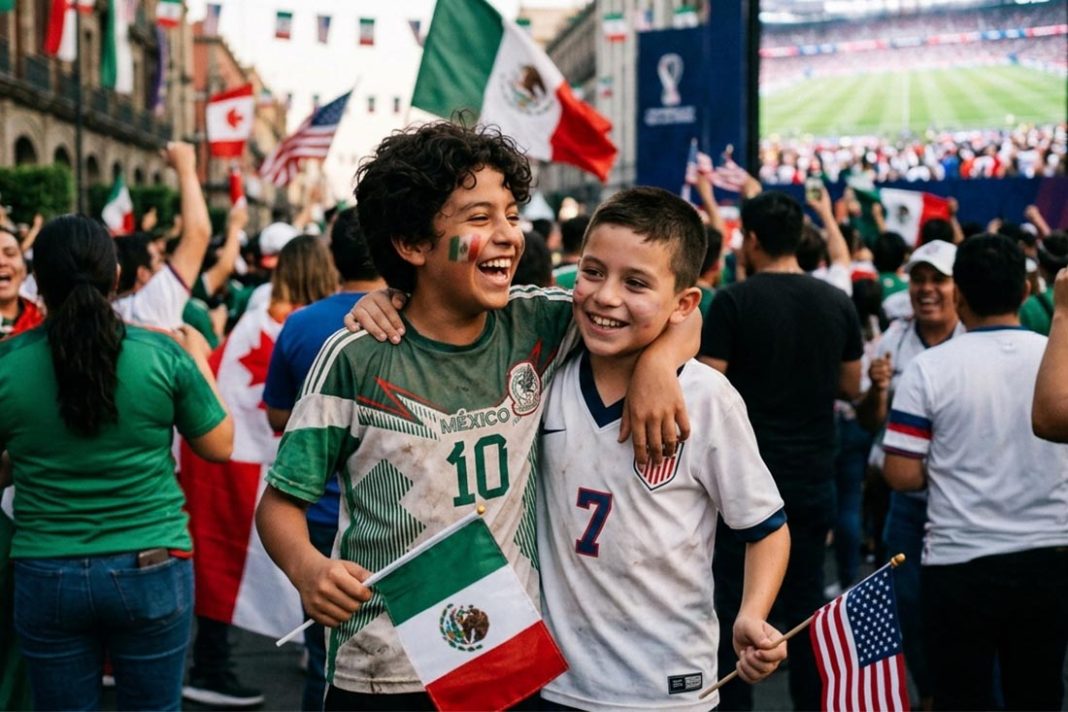
There have been countless other moments that reinforce the same message – players missing matches to be present for the birth of their children, opponents showing compassion beyond rivalry and fans celebrating achievements regardless of nationality. In a competition built around winning and losing, these stories have reminded the world that football remains, above all, a human game.
Results will eventually fade into history. Champions will be crowned and records will be broken. Yet long after the final whistle of the tournament, the memories that may endure the most are those that highlight humanity over rivalry, character over statistics, and people over competition. In that sense, the 2026 World Cup may prove to be much more than just another sports competition. It may be a step in the right direction.