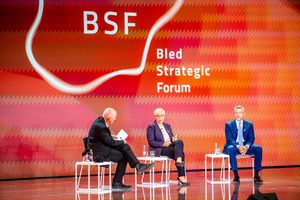
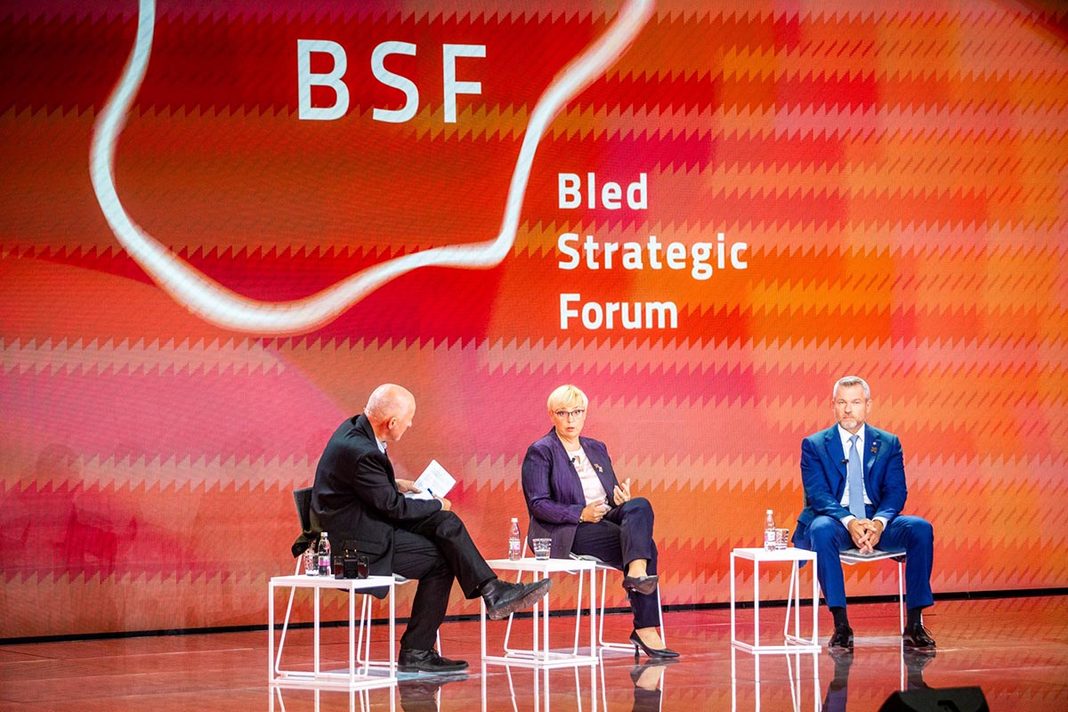
The 21st Bled Strategic Forum (BSF) took place in Bled, Slovenia, on 31 August and 1 September, bringing together political leaders, diplomats, business representatives, experts, innovators and young voices from Europe and beyond.
The 2026 edition comes at a time of significant shifts in global power. The organisers say traditional assumptions underpinning the liberal international order are weakening, while economic realignment, regional conflicts, cyber and hybrid threats, technological development and growing geopolitical competition are creating a more complex international environment. The forum therefore examined not only how countries can respond to these changes, but also who will have the ability to shape the future and through which partnerships, values and forms of influence.
A major focus was the future of Europe and European cooperation, including the role of alliances, regional initiatives, EU enlargement and economic diplomacy in strengthening resilience. Discussions also addressed how small and medium-sized states can preserve their influence in a world increasingly shaped by larger powers, as well as how technology and trusted partnerships can contribute to security, prosperity and sustainable growth.
The forum also placed considerable emphasis on the economy and competitiveness. Panels organised by Slovenia’s Ministry of Economy explored how labour, capital and the state can work together to increase productivity, value added and long-term competitiveness, as well as how Central and Eastern Europe can create the next generation of globally competitive technology companies and innovative businesses. A new Future 100 Slovenia initiative will also highlight 100 Slovenian companies considered to have strong potential for international growth.
Tourism was another important part of the programme, with a dedicated panel examining how mature destinations can manage further growth while protecting residents’ quality of life, the environment and the authenticity of local communities. The discussion reflects a growing shift in tourism policy from simply attracting more visitors towards managing tourism flows and increasing the value generated by tourism.
The high-level political programme included a Presidential Panel featuring Slovenian President Nataša Pirc Musar and Slovak President Peter Pellegrini, while Pirc Musar also held a conversation with Ukrainian human rights defender Oleksandra Matviichuk, whose Center for Civil Liberties was among the recipients of the 2022 Nobel Peace Prize.
The forum featured a panel of Central European prime ministers, with Slovenia’s Janez Janša joined by Czech Prime Minister Andrej Babiš, Hungarian Prime Minister Péter Magyar and Croatian Prime Minister Andrej Plenković. Their discussion focused on current European and geopolitical challenges and the ability of Central European countries to actively shape the wider European and international environment.
The Young Bled Strategic Forum, which preceded the main event in Kranjska Gora from 28 to 30 August, brings a younger generation of leaders into the discussion. Its 2026 theme, “After the Rupture: Agency and Resilience in a Fragmented World,” focuses on how young people, institutions and societies can respond to disruption and build resilience in an increasingly fragmented world.
Since its launch in 2006, the Bled Strategic Forum has grown into one of the leading international conferences in Central and South-Eastern Europe. What began as a platform for discussing European and Euro-Atlantic integration has developed into a broader forum connecting politics, diplomacy, business, academia and civil society.
This year’s gathering ultimately centres on a question that goes beyond Slovenia and the region: in a world defined by uncertainty, shifting alliances and competing centres of power, who will shape the future — and how?