
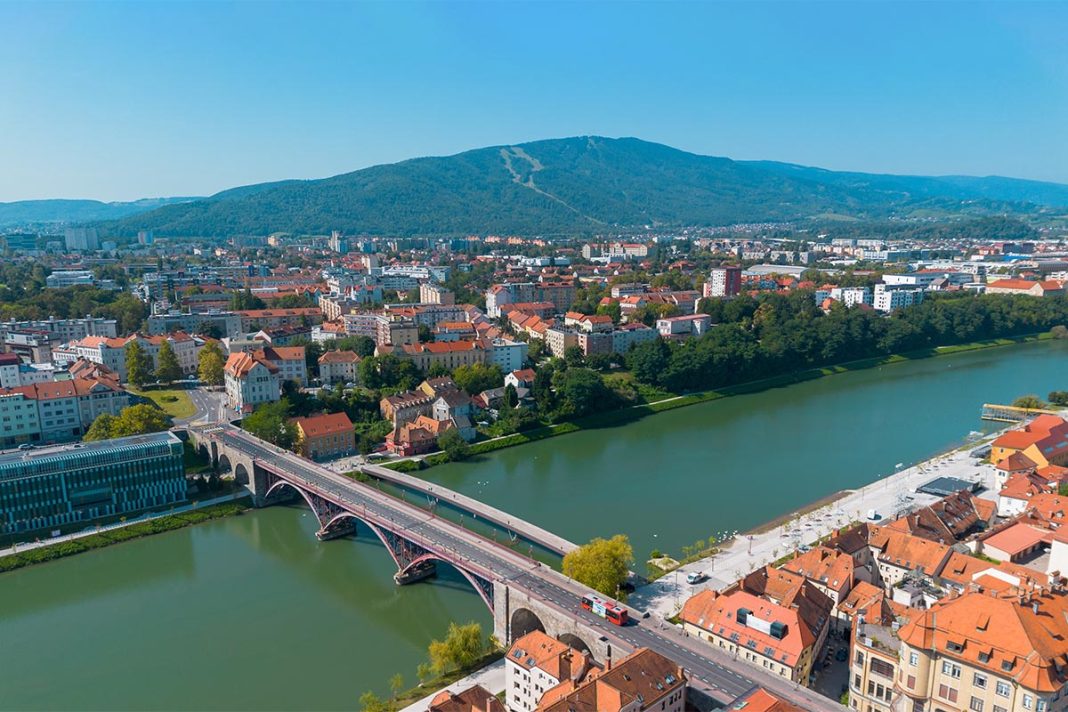
The Slovenian Ministry of Local Self-Government, Cohesion and Regional Development has officially moved its headquarters from Ljubljana to Maribor, becoming the first ministry in the country’s history to be based outside the capital. The relocation is part of Prime Minister Janez Janša’s plan to decentralise public administration and strengthen the role of regional centres across Slovenia.
The government argues that concentrating state institutions and higher-paid public sector jobs in Ljubljana has contributed to regional imbalances for decades. By relocating ministries and other state bodies, officials hope to encourage more balanced economic development, bring decision-making closer to citizens, reduce office rental costs and ease congestion in the capital.
In the first phase of the relocation, around 70 of the ministry’s 253 employees will work from Maribor, while operations will continue temporarily across offices in Maribor, Ljubljana and Štanjel. Authorities say future recruitment will prioritize positions in Maribor, with the transition expected to take place gradually over the coming years.
The government has also announced that this may be only the beginning of a wider decentralisation strategy. Education Minister Borut Rončevič has proposed relocating the Ministry of Education, Science and Youth to Novo Mesto, arguing that decentralisation should involve entire institutions rather than symbolic office moves.
However, the initiative has sparked criticism from public sector unions, which question both the financial and practical implications of the plan. Union representatives warn that Slovenian labour legislation limits the relocation of civil servants without their consent and argue that additional travel, office adaptation and organisational costs could outweigh the expected benefits. Concerns have also been raised about Slovenia’s transport infrastructure, which remains heavily centred around Ljubljana and makes travel between regional cities considerably more complicated.
The debate reflects a broader challenge faced by many European countries: how to achieve more balanced regional development without reducing the efficiency of public administration. While decentralisation has long been discussed as a way to stimulate local economies and reduce pressure on capital cities, its success ultimately depends on adequate infrastructure, careful planning and the willingness of both institutions and employees to adapt to a new model of governance.