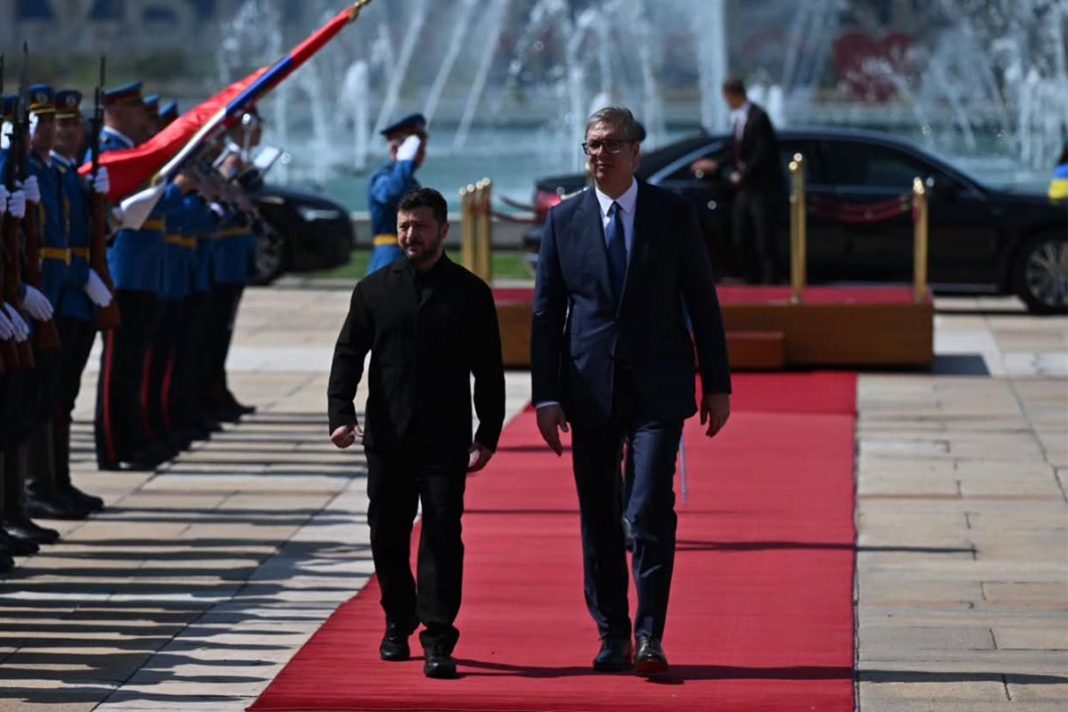
Ukrainian President Volodymyr Zelensky made his first official visit to Serbia, arriving in Belgrade on 7 August and holding meetings with Serbian President Aleksandar Vučić and Prime Minister Đuro Macut. The visit concluded on 8 August and focused primarily on economic cooperation, European integration, infrastructure, energy security and Ukraine’s reconstruction.
During his meeting with Vučić, the two presidents discussed strengthening bilateral economic relations and agreed to work toward completing negotiations on a Serbia–Ukraine free trade agreement by the end of 2026. The agreement would eventually reduce or eliminate tariffs on goods and open additional opportunities for businesses in both countries. Negotiations had already been formally relaunched in May, when the two governments signed a joint declaration and a document outlining the negotiating framework.
Infrastructure was another important topic. Zelensky said the two countries were examining joint projects involving ports and railways, as well as cooperation aimed at strengthening the Danube transport corridor and improving connections between Ukraine, Serbia, the Western Balkans and the EU. The discussions also covered reconstruction projects and potential opportunities for Serbian companies to participate in rebuilding Ukraine.
Energy cooperation was particularly significant ahead of the winter season. Zelensky highlighted the extensive damage caused to Ukraine’s energy infrastructure by Russian attacks and thanked Serbia for a new package of humanitarian assistance, including support in the energy and medical sectors. Serbia also confirmed a €2 million contribution to Ukraine’s energy resilience, with the money intended for critical equipment through a UNDP programme.
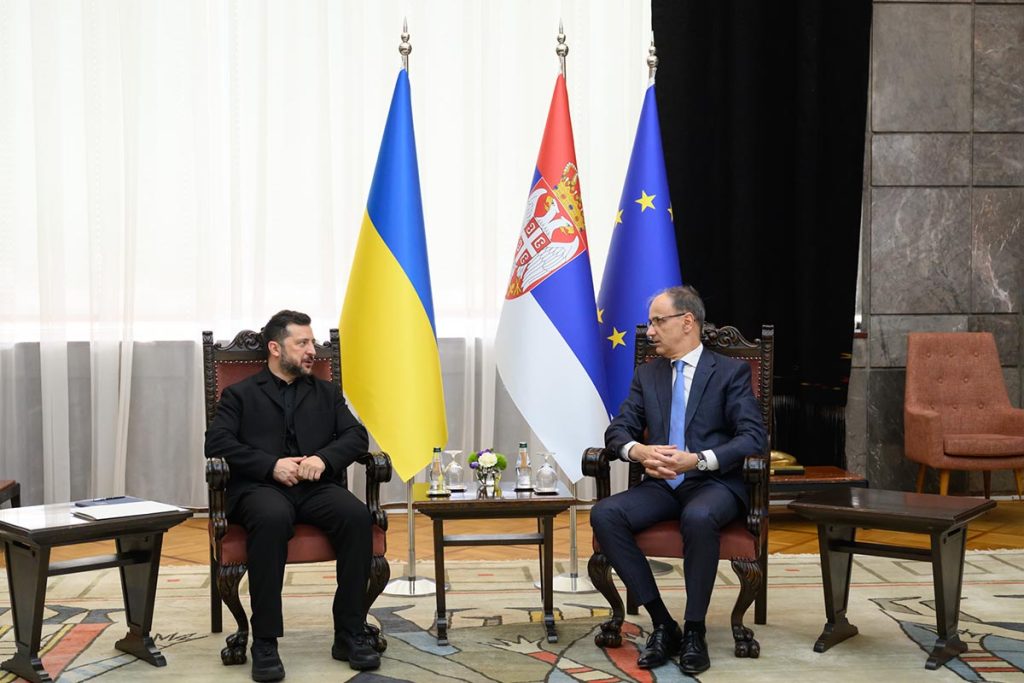
Zelensky also met with Prime Minister Đuro Macut, with the talks focusing on the consequences of Russian attacks, energy security, economic and logistical cooperation, the Danube Corridor and Ukraine’s reconstruction. Macut’s government expressed readiness for Serbia to participate in the reconstruction of at least one Ukrainian city.
The European Union was another major theme. Vučić reaffirmed Serbia’s support for Ukraine’s territorial integrity and sovereignty and said Belgrade would support Ukraine’s EU accession bid, while Zelensky welcomed Serbia’s European aspirations. The two presidents also emphasized the importance of continuing their countries’ paths toward EU membership.
One of the most politically sensitive issues – Serbia’s relationship with Russia – was notably absent from the formal agenda. Serbia continues to refuse to introduce Western sanctions against Moscow, despite condemning Russia’s invasion and supporting Ukraine’s territorial integrity. Vučić also said that military cooperation was not discussed during his talks with Zelensky.
The visit was nevertheless notable because of the broader geopolitical context. Serbia remains militarily neutral and maintains close historical and energy ties with Russia, while simultaneously pursuing EU membership and expanding cooperation with Ukraine. Zelensky’s visit therefore represents an important attempt by Kyiv to strengthen relations with a country that has maintained a more balanced position toward the war.
For Belgrade, the visit also offered an opportunity to demonstrate its growing engagement with Ukraine while preserving its existing foreign-policy position. The emphasis on trade, infrastructure, energy and reconstruction suggests that economic cooperation could become the main practical pillar of the Serbia–Ukraine relationship in the period ahead.
Importantly, the two sides did not sign the final free trade agreement during Zelensky’s visit. Instead, they committed to completing the ongoing negotiations by the end of the year. The most concrete financial commitment announced during the visit was Serbia’s €2 million contribution toward Ukraine’s energy resilience.