
Croatia is advancing a broad investment programme covering railways, roads, ports, inland waterways and aviation, with billions of euros already committed or planned for the coming years. Projects supported through European funding programmes currently total around €5.57 billion, including approximately €3.45 billion in EU grants.
One of the most important projects is the reconstruction and electrification of the Hrvatski Leskovac–Karlovac railway, a 44-kilometre section that is being upgraded with a second track, new bridges, viaducts, stations and electrical infrastructure. The €348.5 million project is expected to be completed by the end of 2029 and will allow trains to reach speeds of up to 160 km/h.
The section forms part of the planned lowland railway between Zagreb and Rijeka, which is expected to create a faster connection to Croatia’s largest port and Central Europe. The future 175-kilometre corridor is planned as a fully electrified, double-track railway, with more than 30 tunnels and viaducts, including a planned 14-kilometre tunnel through Velika Kapela.
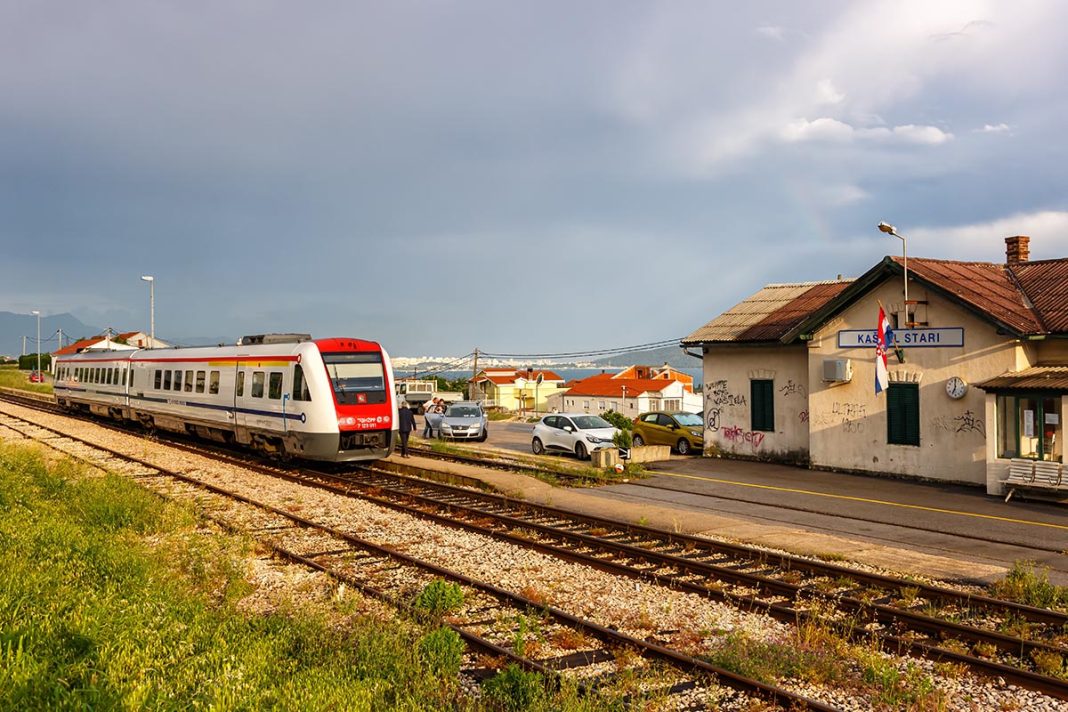
Railway investment is expected to remain a major priority, with more than €1.7 billion already being invested and around €6 billion in additional modernisation projects planned over the next decade. Croatia is also renewing its passenger fleet, with 70 new low-floor trains already in operation and further electric, battery and hybrid trains planned through 2029.
Road infrastructure is undergoing a parallel expansion, including the completion of the Istrian Y motorway, new expressways, bypasses and additional motorway lanes. Preparations are also underway for projects such as the proposed Istrian X connection towards Labin and a new bridge connecting Krk with the mainland.
Croatia is also investing heavily in its ports, with projects underway in Rijeka, Split, Zadar, Krk, Rab and Rovinj, while investment continues in inland waterways and the Port of Osijek. In aviation, Croatia Airlines is replacing its fleet with Airbus A220 aircraft, with 10 of 15 planned aircraft already delivered by the end of July. The government says the long-term goal is to create a safer, faster and better-connected transport network, strengthening links between Croatian regions while improving the country’s position on European transport corridors.