At the Western Balkans 2030 conference in Budva, representatives of international financial institutions, the banking sector, business and government discussed investment quality, access to capital, European integration and the skills that will shape the region’s economic future
Budva, 5 November 2026 – Investment quality, access to finance, stronger business competitiveness and human capital development emerged as key priorities for the Western Balkans’ economic progress towards the end of the decade. At the Western Balkans 2030 conference in Budva, representatives of international financial institutions, banks, businesses and government highlighted the need to channel available capital and the opportunities created by European integration more effectively into productive investment, innovation and quality jobs.
The conference was organised by regional media platform The Region, in institutional partnership with the Montenegrin Foreign Investors Council (MFIC). Three thematic panels explored financing economic development, improving the investment environment and preparing the labour market for technological and economic change.
A Predictable Business Environment and Institutional Cooperation
Opening the conference, Neda Lukić, Director of Communications at The Region magazine, emphasised the importance of regional dialogue on economic priorities, institutional efficiency and the conditions needed for long-term development. She highlighted the need to translate discussions about investment and European integration into tangible improvements in the business environment and citizens’ quality of life.
Branko Mitrović, Chairman of the MFIC Board of Directors and CEO of ONE Montenegro, stressed the importance of continued cooperation between investors and institutions, as well as using European integration to strengthen competitiveness and improve business conditions.
Financing the Future – Capital and Business Readiness for New Investment
The first panel, “Financing the Future of the Adria Region”, focused on opportunities to finance economic development, the role of banks and international financial institutions, and preparing companies to compete in the European market.
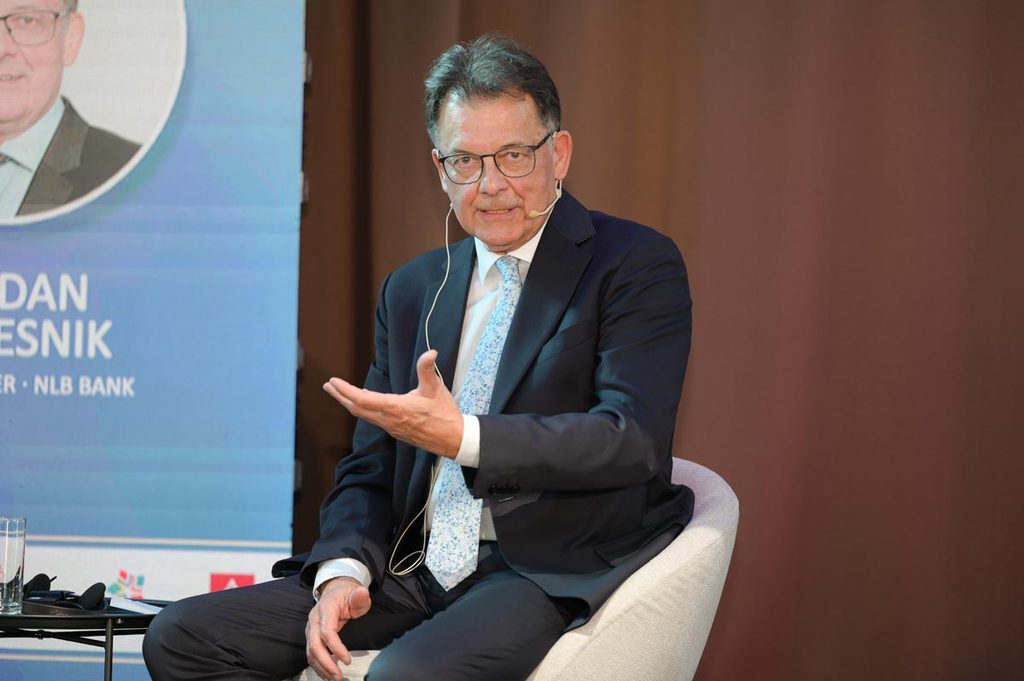
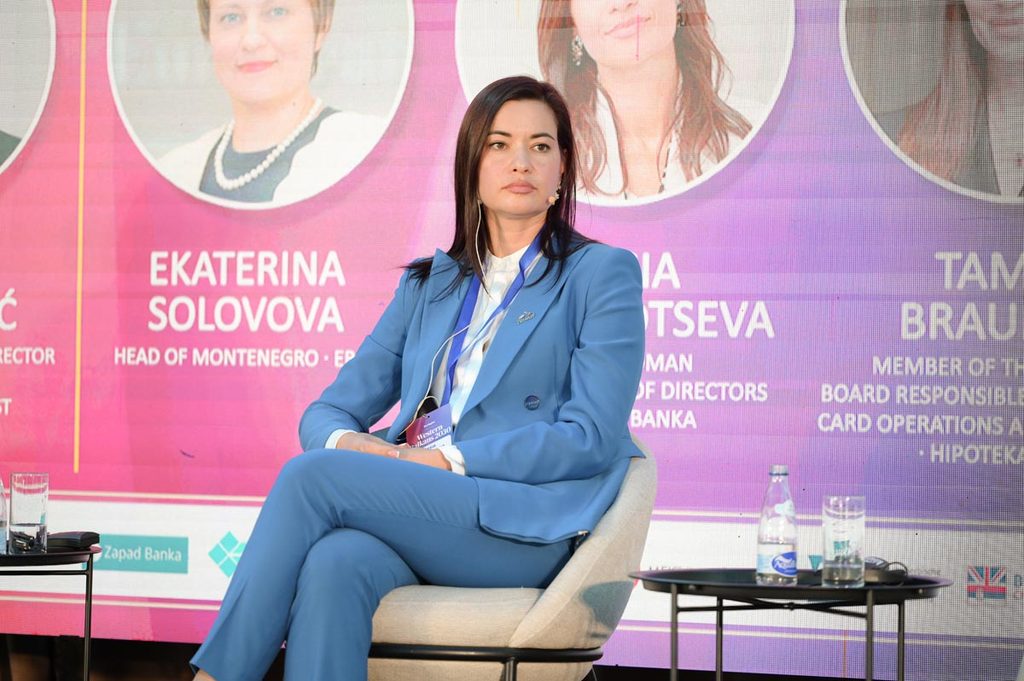
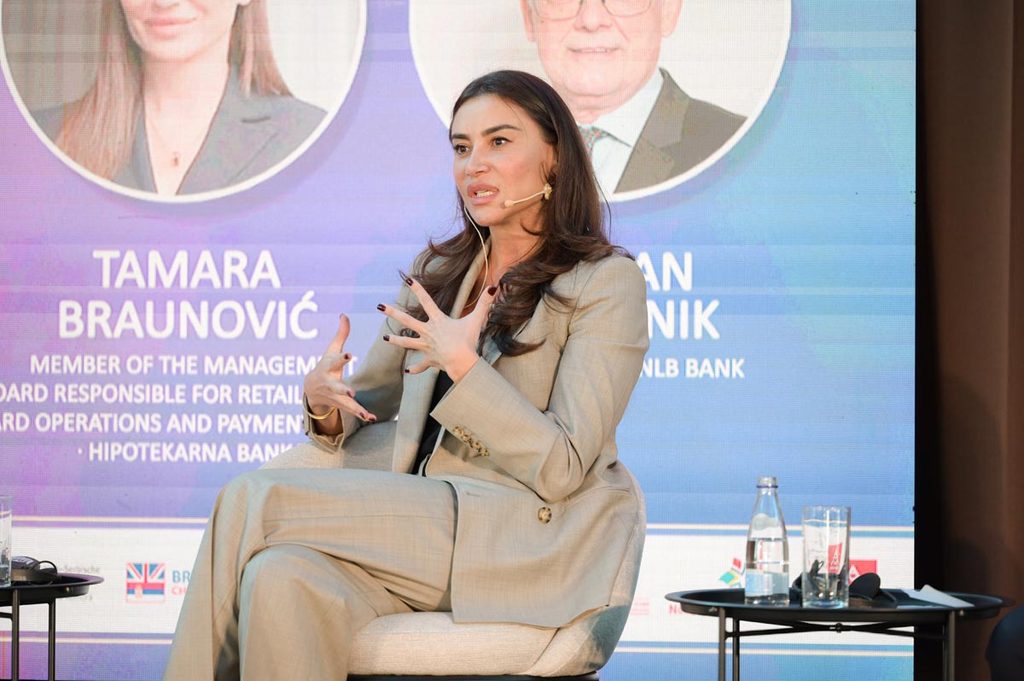
The panellists were Ekaterina Solovova, Head of the European Bank for Reconstruction and Development (EBRD) in Montenegro; Lesia Vykhodtseva, President of the Board of Directors of Zapad Banka; Tamara Braunović, Member of the Management Board of Hipotekarna Banka responsible for Retail Banking, Card Operations and Payment Services; and Bogdan Podlesnik, Board Adviser at NLB Banka Podgorica. The discussion was moderated by Mirza Mulešković, Executive Director of Inteligencija MNE.
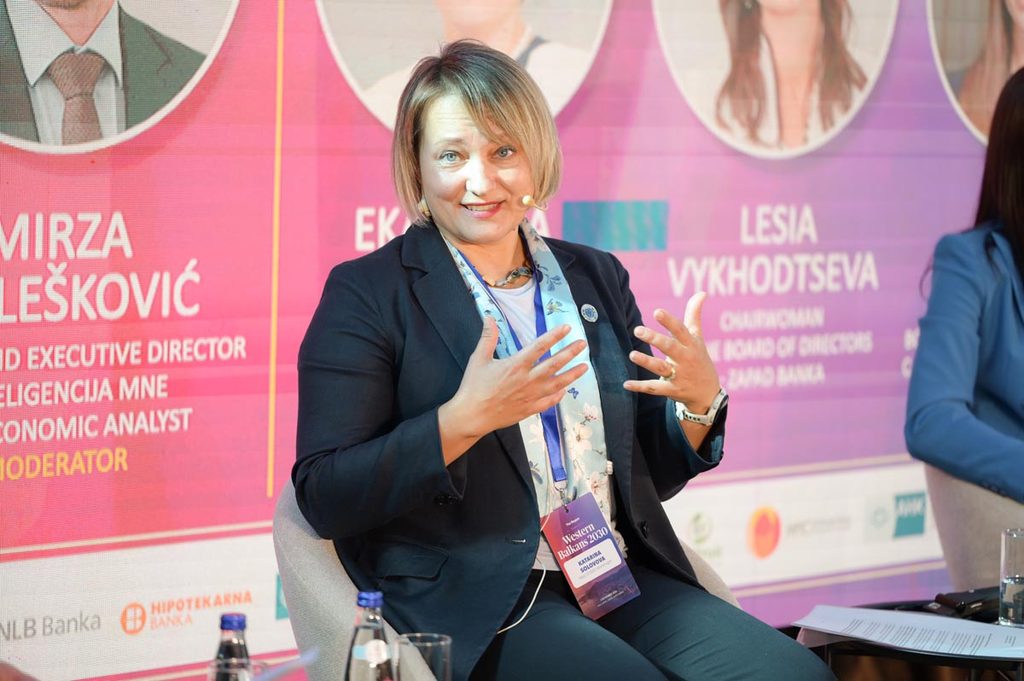
Solovova discussed the EBRD’s role in supporting the private sector, particularly small and medium-sized enterprises, through financing, advisory programmes and strengthening companies’ capacity to compete in the European market. She emphasised the importance of connecting capital with sustainable business projects and improving investment readiness.
Podlesnik highlighted opportunities arising from European funds, referring to approximately €3.5 billion in potential funding, while stressing the need for companies to develop high-quality projects and professional expertise to make effective use of available resources. He placed particular emphasis on investment in productive sectors and long-term planning.
Vykhodtseva addressed the banking sector’s capacity to support economic development and the benefits of integration into the European financial system. She highlighted participation in the SEPA payment system as a concrete example, pointing to estimated savings of approximately €9 million through more efficient international payments.
Braunović emphasised the importance of digital banking services, modernising payment systems and alignment with European standards. She presented Hipotekarna Banka’s experience in developing digital channels and improving access to financial services for individuals and businesses.
The panellists agreed that financing future development requires cooperation between financial institutions, regulators and businesses. Access to capital is an important advantage, but its contribution to economic growth depends on the quality of investment projects, regulatory predictability and companies’ ability to develop competitive products and services.
From Investment Volume to Investment Quality
The second panel, “10 Years of MFIC Guide: Stories That Shape the Future of Investment”, examined Montenegro’s investment performance and the changes needed to ensure that foreign capital contributes more substantially to production, exports and added value.
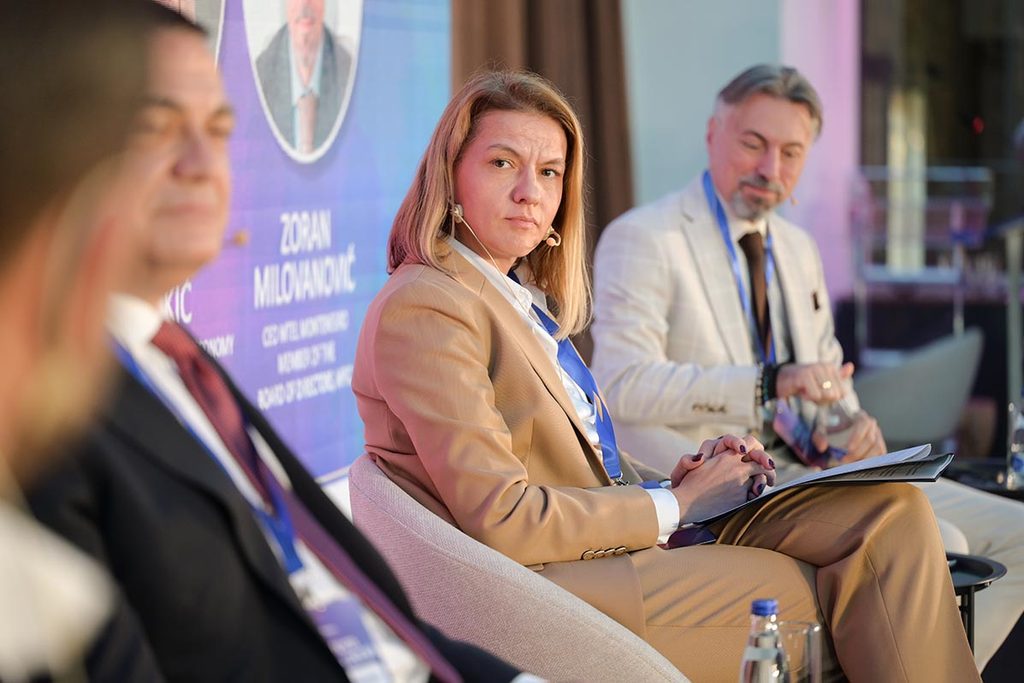
The speakers were Branko Mitrović, Chairman of the MFIC Board of Directors and CEO of ONE Montenegro; Dr Nina Drakić, President of the Chamber of Economy of Montenegro; and Zoran Milovanović, CEO of MTEL Montenegro and a member of the MFIC Board. The discussion was moderated by Nemanja Boljević, Communications and Public Relations Manager.
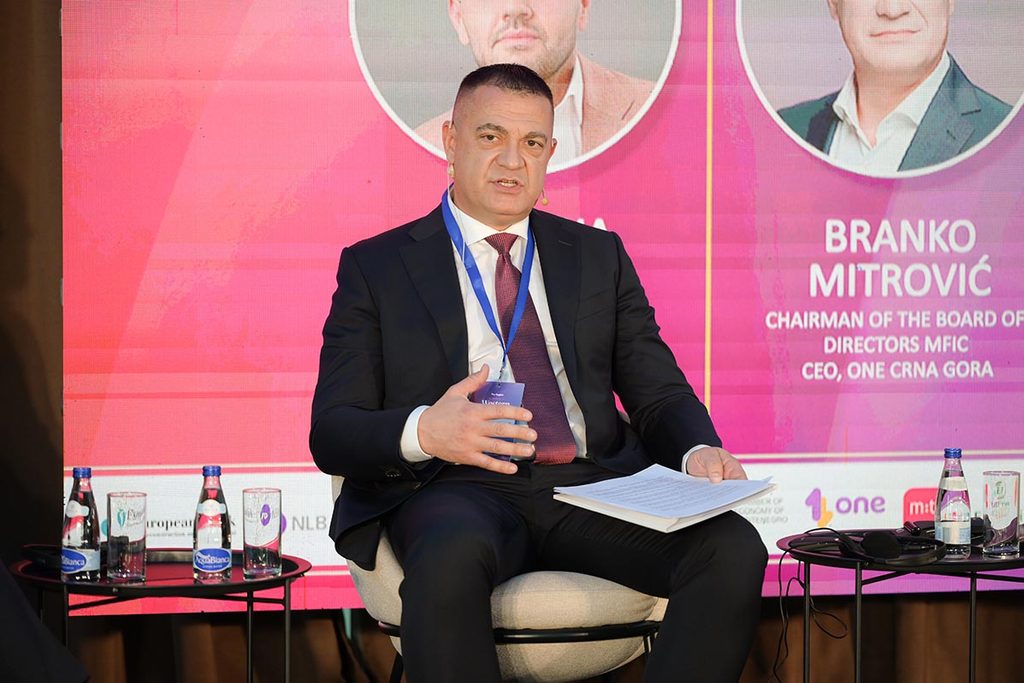
Mitrović presented findings from MFIC research showing that, over the past decade, the share of productive investment in total foreign direct investment had fallen from approximately 49% to 13%, while the share directed towards real estate had increased from 18% to almost 50%.
“Montenegro has undoubtedly attracted a significant amount of foreign direct investment over the past ten years. That is something we should be proud of. However, the question remains whether we could have attracted even more investment. My answer is that we could,” Mitrović said.
He emphasised that Montenegro needs to attract more investment that creates jobs, increases production and strengthens exports, supported by a predictable regulatory environment and more efficient public administration. He also highlighted the importance of encouraging existing investors to reinvest in the country.
Drakić noted that Montenegro had attracted approximately €16 billion in capital from more than 120 countries over the past two decades, but that this inflow had not sufficiently transformed the structure of its economy. Industry’s contribution to GDP declined from 15% in 2006 to 8% in 2024, while the ratio of exports to imports fell from approximately 30% to 12.8%.
She identified domestic food production as a particularly important development opportunity, noting that Montenegro had spent approximately €11 billion on food imports over the previous two decades.
“We cannot compete on scale and quantity, but we can compete on quality and specialisation,” Drakić said, emphasising the importance of supporting small and medium-sized enterprises, improving production standards and preparing domestic companies for the European market.
Milovanović discussed the potential of digital transformation, 5G development, cybersecurity and the application of artificial intelligence in business.
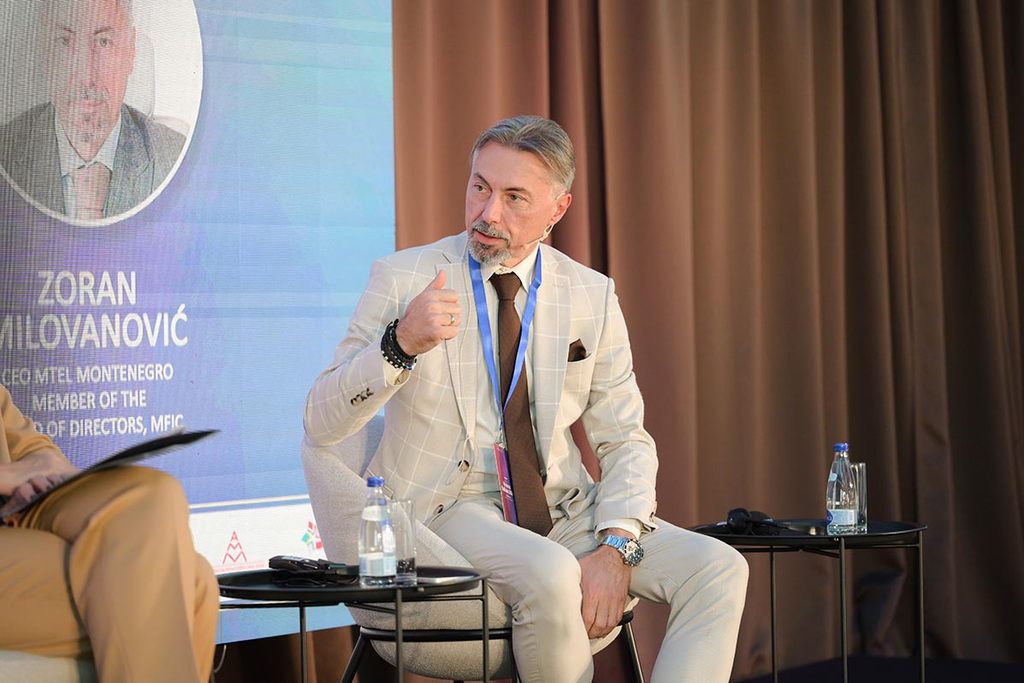
He noted that Montenegro already has high-quality telecommunications infrastructure, but that the next step requires greater use of technology in business processes, production and the development of new services.
“Digital transformation means reorganising processes within a company and adapting them to the technologies available today. It is not something that can be completed quickly, but we all share responsibility and must work together to achieve it,” Milovanović said.
He added that Montenegro has the potential to become a testing ground for innovative technological solutions that could subsequently be introduced to wider international markets.
Investing in People as a Foundation for a Competitive Economy
The third panel, “The New Human Capital”, focused on the future of work, skills development, retraining and adapting to the changes brought by digitalisation and artificial intelligence.
The speakers were Naida Nišić, Montenegro’s Minister of Labour, Employment and Social Dialogue; Nina Krgović, National Coordinator of the International Labour Organization (ILO) for Central and Eastern Europe; and Sara Ivanović Božović, Country Director of General Assembly in Montenegro. The discussion was moderated by Arijana Nikolić Vučinić, Executive Director of MFIC.
Nišić emphasised that formal education alone is no longer sufficient for long-term competitiveness in the labour market and that lifelong learning, retraining and additional qualifications are becoming essential for professional development.
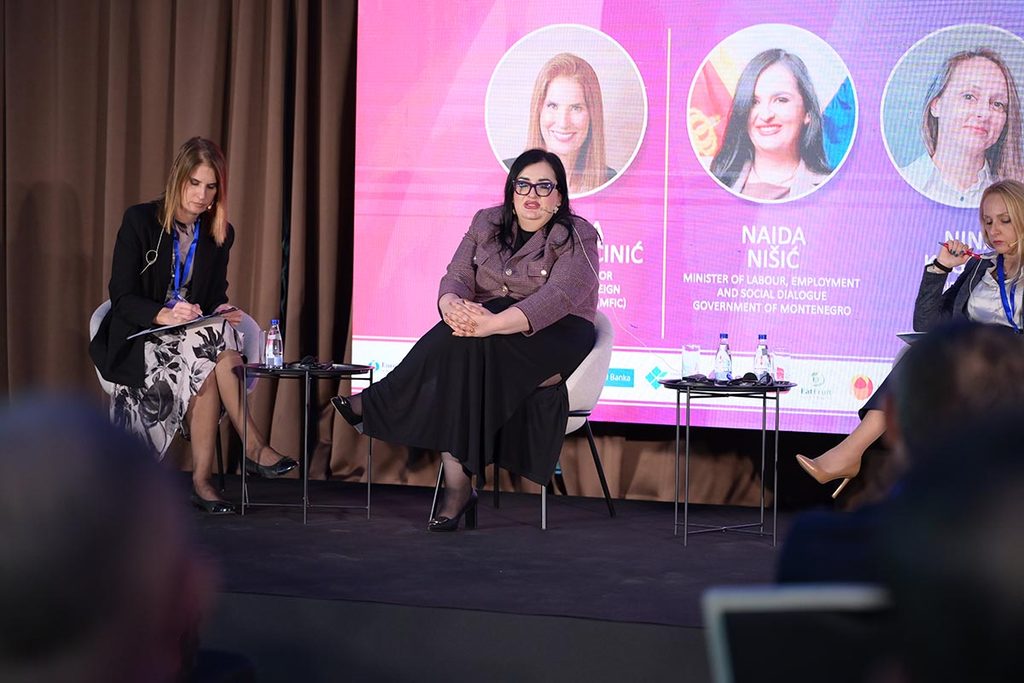
“Formal education alone is no longer enough. A diploma will no longer be a benchmark or a guarantee that someone can enter the world of work without further education, retraining and, ultimately, adapting to global trends that are reaching our doorstep,” Nišić said.
According to figures she presented, Montenegro had approximately 250,000 employed citizens and around 100,000 foreign workers last year, with an unemployment rate of 7.54%. At the same time, employers face shortages of qualified workers in tourism, construction, information technology, healthcare and other sectors.
The minister outlined an initiative developed in cooperation with the European Commission that allows social assistance recipients to participate in training and retraining programmes for one year without losing their primary benefits.
She also discussed the Youth Guarantee programme for people aged 15 to 29 and expectations that Montenegro could join the European Employment Services network, EURES, in 2028.
“Investment in human capital is the most important investment of all,” Nišić emphasised.
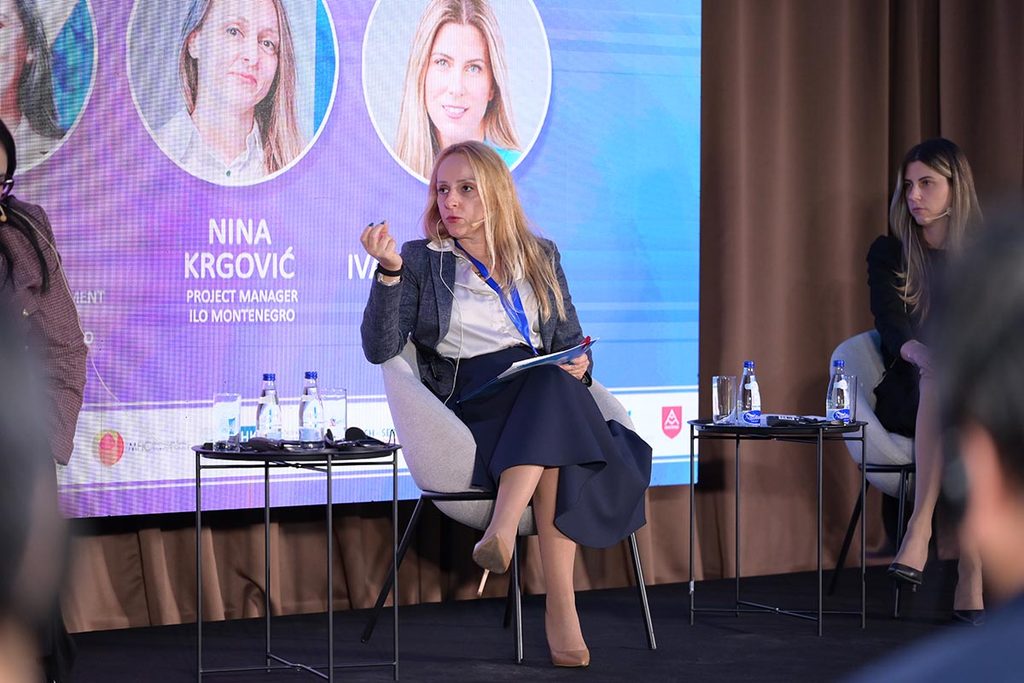
Krgović highlighted that Montenegro has approximately 190,000 economically inactive residents, including young people, women and people over 50. Some could enter the labour market through better-designed training and employment support programmes.
“Before we say we have an absolute labour shortage, let’s look at the resources we already have,” Krgović said.
She stressed the need to align training programmes more closely with employers’ actual requirements and presented examples from Denmark, Germany and Singapore, where different models support joint investment by governments, businesses and employees in skills development.
Discussing artificial intelligence, she referred to ILO research suggesting that approximately a quarter of jobs could be exposed to changes associated with generative AI. She emphasised that, alongside digital competencies, communication, teamwork and problem-solving abilities will become increasingly important.
Ivanović Božović presented General Assembly’s experience in adult education and retraining programmes that enable people to move into new professions.
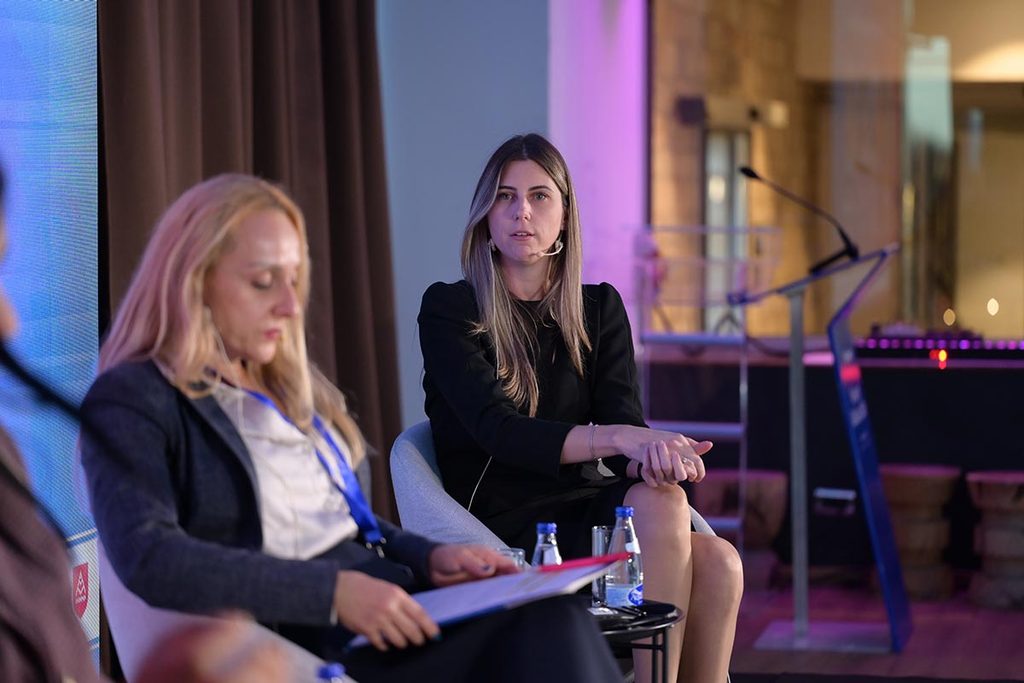
As an example of successful practice, she highlighted an intensive three-month IT training programme delivered last year in cooperation with Montenegro’s Employment Agency, in which General Assembly was one of the training providers. According to Ivanović Božović, most participants subsequently found professional opportunities in companies, freelance work or entrepreneurship, while some established their own start-ups.
“Both approaches – retraining and upskilling within existing sectors – require a willingness to learn, openness to change and continuous personal development. Without that, we cannot move forward,” Ivanović Božović said.
She emphasised that successful digital transformation also requires a workplace culture that encourages innovation, experimentation and the practical application of new knowledge.
Eat Fruit Considers Expansion into Montenegro
The conference also featured a fireside chat, “EAT FRUIT: Planting Capital, Growing Value”, in which Milan Mačvan, former captain of Serbia’s national basketball team and founder of Eat Fruit Invest, presented a model connecting private capital with agricultural production. The conversation was moderated by Ivana Jovanović, Chief Operating Officer of the company.
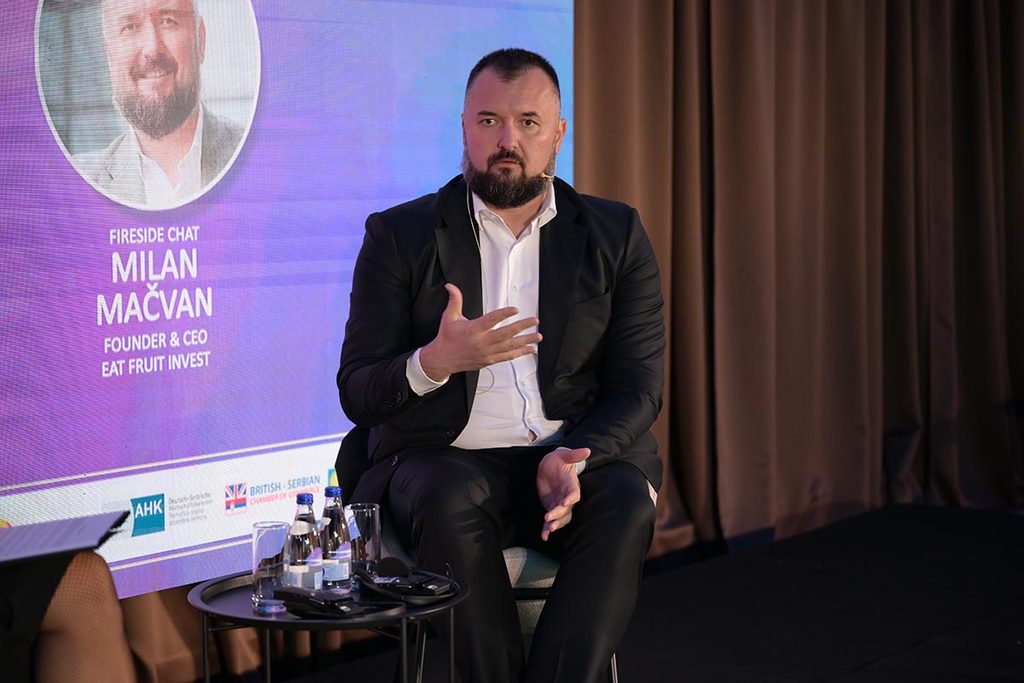
Mačvan said Eat Fruit Invest had attracted more than 200 investors in approximately one year, while the company now operates more than 100 hectares of orchards. He also outlined the possibility of regional expansion, with Montenegro potentially becoming its first market outside Serbia.
“One of the reasons I accepted the invitation to be here is that I see potential for Eat Fruit to expand into other countries in the region. Montenegro would very likely be our first target,” Mačvan said.
He also presented the company’s ambition to become Serbia’s largest fruit producer by 2030, alongside investments in processing and the development of a digital platform connecting agricultural producers with buyers across the region.
From Available Capital to Sustainable Development
The Western Balkans 2030 conference demonstrated that financing, investment quality, technological development and human capital are interconnected elements of the region’s future competitiveness.
Participants highlighted the need to translate opportunities arising from European integration into tangible economic results through better-prepared investment projects, stronger productive sectors, digital transformation and continuous investment in employees’ knowledge and skills.
Particular attention was paid to Montenegro, which has an opportunity in the coming years to make use of European financial instruments, improve its investment environment and strengthen domestic companies’ capacity to compete in the European single market.
The conference’s overarching message was that economic progress towards 2030 will depend on the ability of institutions, financial organisations and businesses to turn available resources into greater productivity, more competitive products and better-quality jobs.
