

From motorways and hydropower plants to wind farms and hospitals, Chinese companies are becoming major players in Bosnia and Herzegovina’s development. But the scale of their ambitions is raising questions about financing, transparency and long-term economic benefits
A NEW MOTORWAY, A HYDROELECTRIC plant or a wind farm may seem like an ordinary infrastructure project. In Bosnia and Herzegovina, however, an increasing number of these developments have something in common: Chinese companies are building them, financing them or both.
China‘s economic presence in the country has expanded considerably over the past decade, moving from trade into some of its most ambitious infrastructure and energy projects. The attraction is understandable. Bosnia and Herzegovina needs better transport connections, modern energy facilities and substantial investment, while Chinese companies offer construction expertise, financing arrangements and the capacity to deliver large projects.
One of the latest examples is the Bijeljina–Brčko motorway, where construction began in June 2026. The 17-kilometre section, valued at approximately BAM 274 million before VAT, is being developed by Chinese contractors with financial support from Chinese banks. It forms part of a planned transport connection linking Belgrade, Bijeljina, Brčko, Banja Luka and Sarajevo.
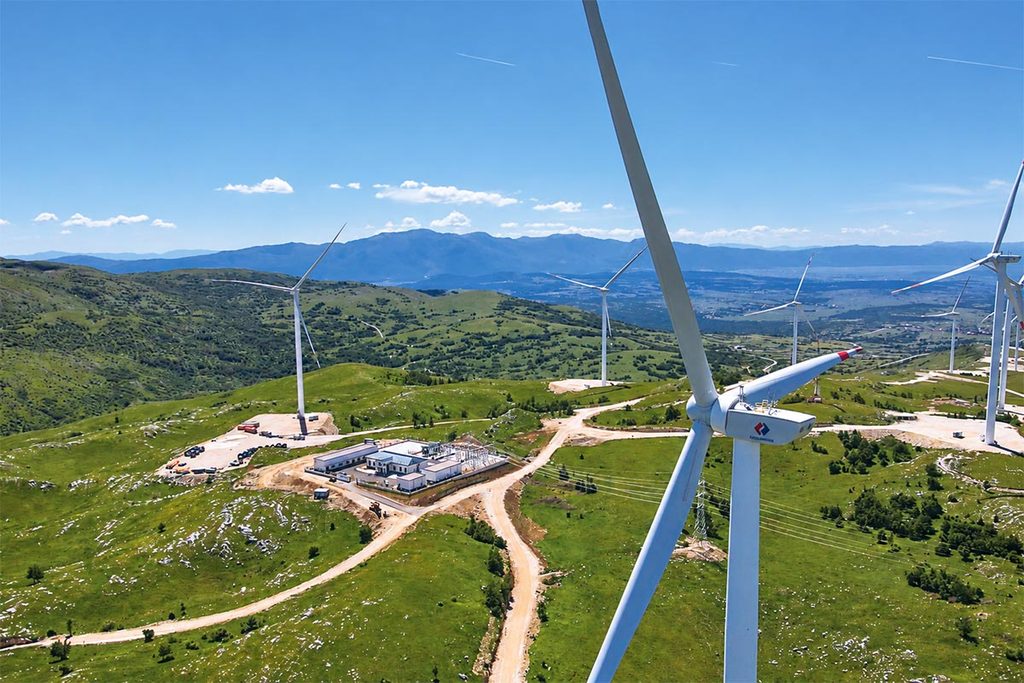
Chinese companies are also involved in the Banja Luka–Prijedor motorway, the Bistrica hydroelectric project near Foča and the Dabar hydropower development near Trebinje. Meanwhile, the Ivovik wind farm demonstrates that Chinese participation is extending into renewable energy, rather than remaining confined to conventional infrastructure.
The relationship is expanding beyond construction. In September, Bosnia and Herzegovina welcomed a delegation of more than 100 Chinese business representatives, with investment forums organised in Sarajevo and Banja Luka. The meetings reflected growing interest in establishing commercial partnerships across different sectors.
Yet the expanding relationship has also exposed a fundamental question: how much does the public know about the financial arrangements behind these projects?
An investigation published in September by Bosnian investigative outlet Detektor found that several public institutions had refused to disclose information about subcontractors working on major Chinese-backed infrastructure and energy projects. Authorities cited commercial confidentiality and contractual restrictions, while Transparency International Bosnia and Herzegovina questioned the legal justification for withholding such information.
The distinction between foreign investment and foreign-financed construction is equally important. A project built by a Chinese company using loans ultimately repaid by Bosnian institutions is not necessarily equivalent to direct investment in which the foreign partner assumes commercial risk. Both can contribute to economic development, but their consequences for public finances are very different.
The issue is particularly relevant for a country whose infrastructure needs remain substantial and whose administrative complexity can make large investments difficult to implement.
Chinese participation offers opportunities to accelerate development, improve connectivity and diversify sources of capital. But the lasting value of these partnerships will depend on competitive contracting, financial sustainability, environmental standards and the extent to which local businesses and workers benefit.
For Bosnia and Herzegovina, the question is therefore not simply how much Chinese capital and expertise it can attract, but what kind of economic legacy these projects will leave. Roads, bridges and power stations may transform the landscape. Transparent agreements and sustainable financing will determine whether they also transform the economy.