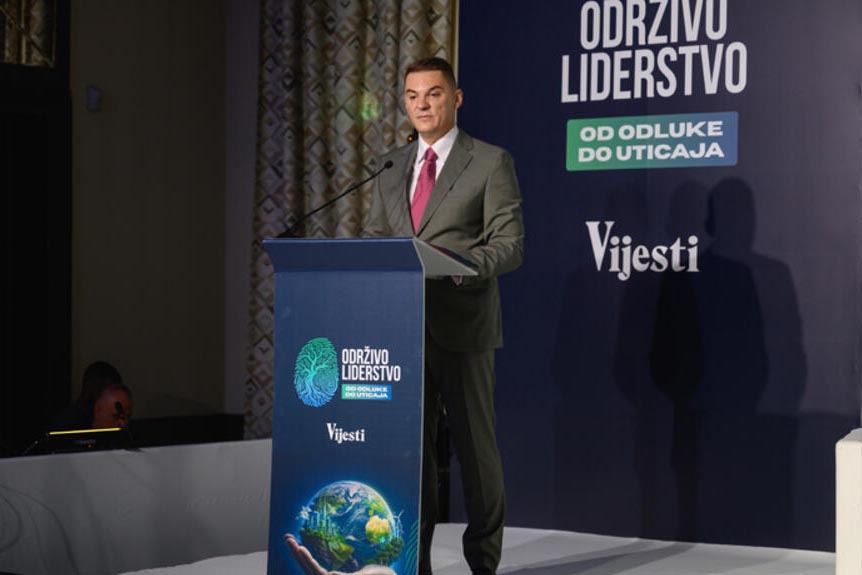
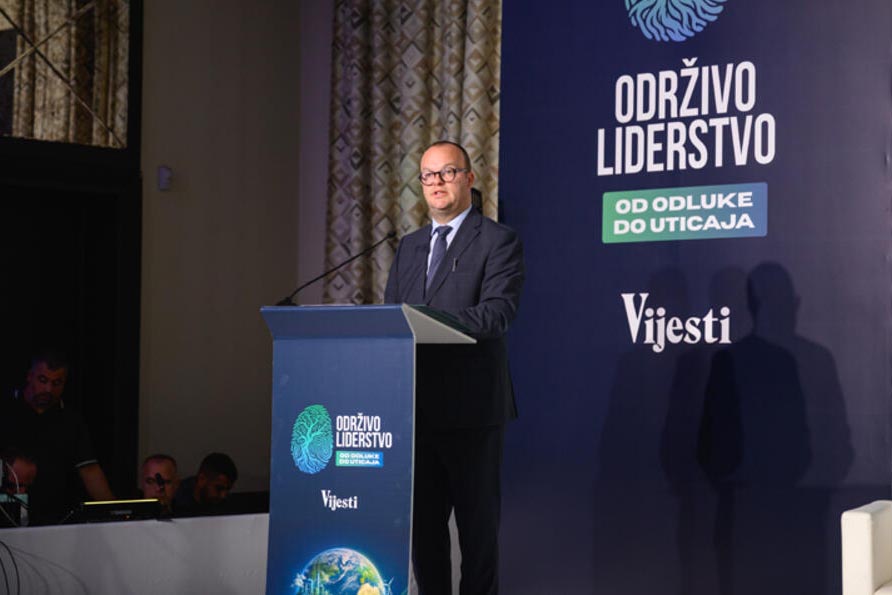
The conference “Sustainable Leadership: From Decision to Impact”, organised by Vijesti on 24 September at the Hilton Hotel in Podgorica, brought together more than 200 representatives of government institutions, businesses, international organisations and civil society to explore how sustainability commitments can translate into concrete action.
Through five panel discussions and a series of keynote addresses, participants examined energy transition, environmental protection, sustainable investment, responsible business practices and the role of communities in building a more resilient future.
Montenegro’s Minister of Energy and Mining, Admir Šahmanović, emphasised that sustainability begins with responsible everyday decisions but requires coordinated institutional action to deliver lasting results.

He highlighted the ministry’s efforts to align legislation with environmental protection objectives, promote renewable energy and ensure the responsible use of natural resources. Šahmanović also stressed the importance of cooperation between government institutions and international financial organisations in financing sustainable development projects.
Minister of Ecology, Sustainable Development and Northern Region Development, Damjan Ćulafić, described sustainability as a discipline that should guide both personal and professional decisions.
He pointed to the establishment of the Natura 2000 network, which, according to the minister, covers more than 44% of Montenegro’s territory, as an example of translating environmental commitments into practical measures.
Renewable energy investment featured prominently in the discussions. Ivan Mrvaljević, Executive Director of the Development and Investment Directorate at Elektroprivreda Crne Gore, highlighted the Gvozd wind farm project as a significant step towards a cleaner energy system.
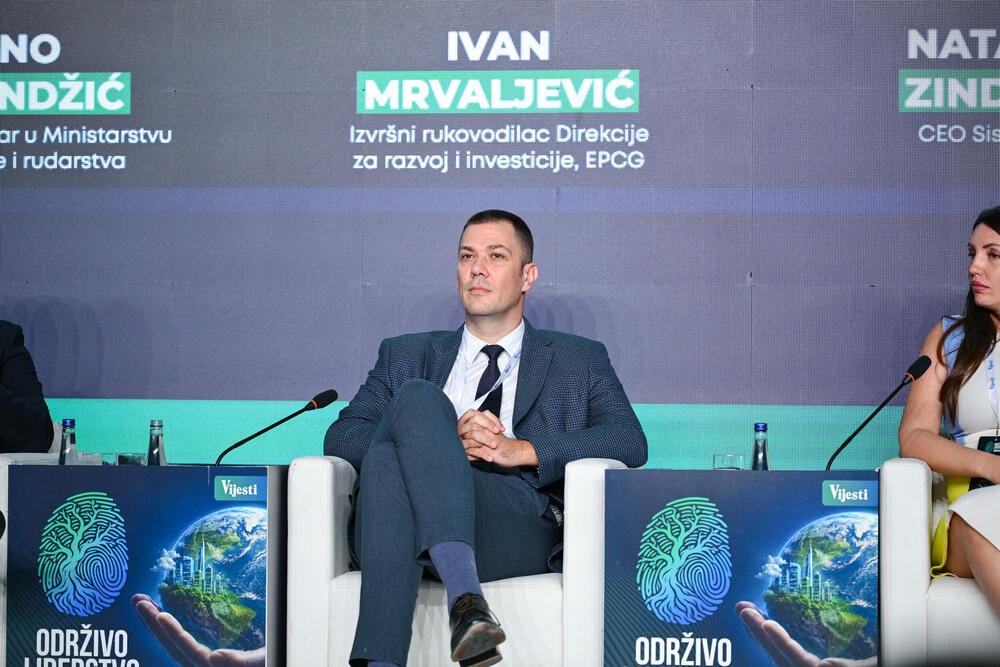
The 75 MW facility is expected to generate approximately 200 GWh of electricity annually, enough to supply more than 35,000 households, according to Mrvaljević.
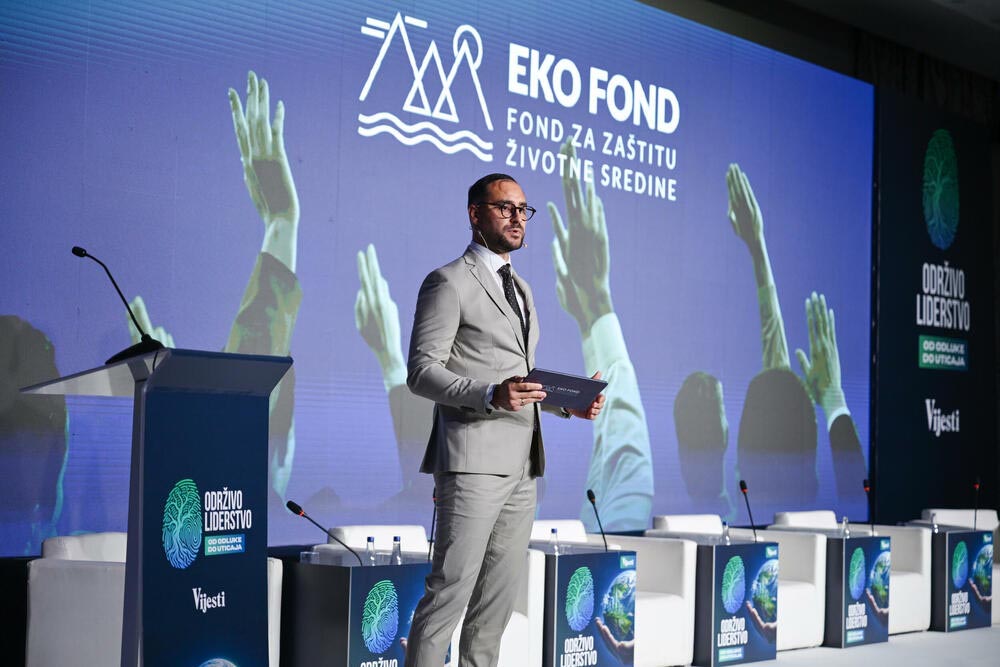
Nemanja Peković, Assistant Director of Montenegro’s Eco Fund, underlined the importance of making sustainable practices part of everyday life, from waste separation to cleaner mobility. He described the establishment of the Eco Fund as a key institutional step towards financing green initiatives and announced that ideas emerging from the conference would help shape future funding programmes.
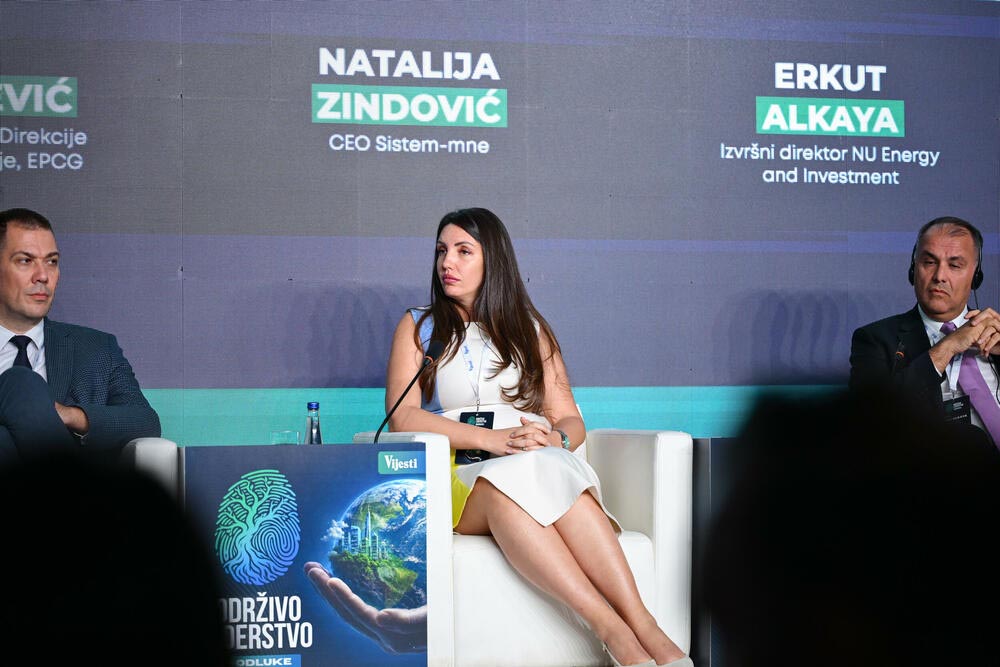
The private sector also highlighted the need to move beyond declarations. Natalija Zindović, Executive Director of Sistem MNE, called for major renewable energy projects to progress from planning to implementation, while emphasising investors’ responsibilities towards local communities and the environment.
Meanwhile, Maja Laušević Odalović, Executive Director of ICT Cortex, presented cooperation within Montenegro’s technology sector as an example of sustainable development extending beyond environmental concerns. She highlighted the Cortex Village project, designed to provide more affordable housing for ICT professionals and encourage skilled workers to remain in Montenegro.
The conference also addressed women’s economic empowerment, the attitudes of younger generations towards sustainability and the role of cities and citizens in creating more sustainable communities.
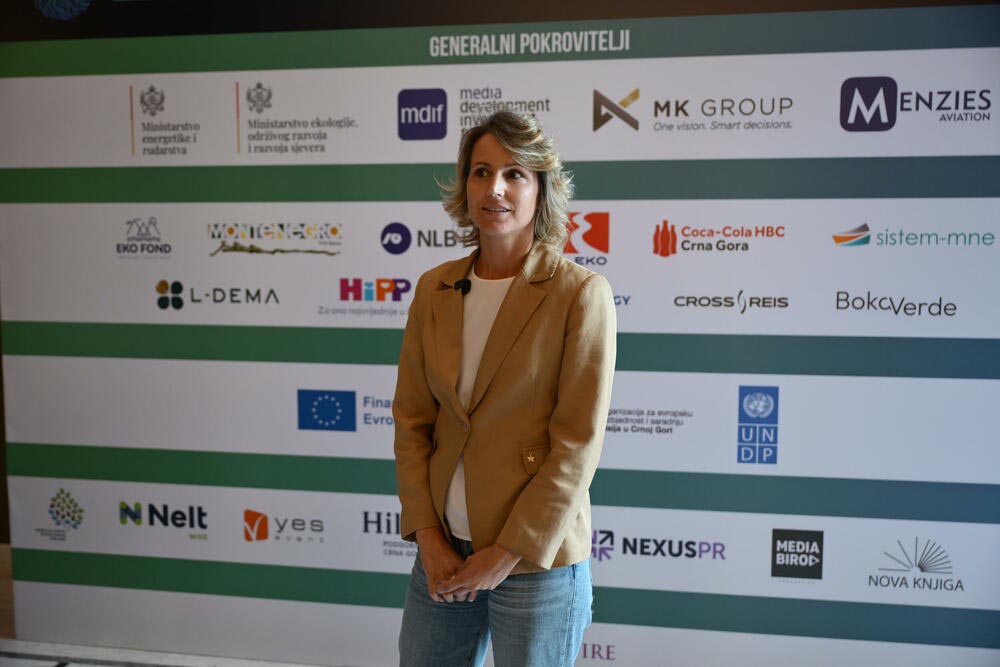
Organised by Vijesti with support from government institutions, international organisations and business partners, the event reinforced a central message: sustainability can deliver meaningful results only when responsible decisions are followed by investment, cooperation and implementation.