
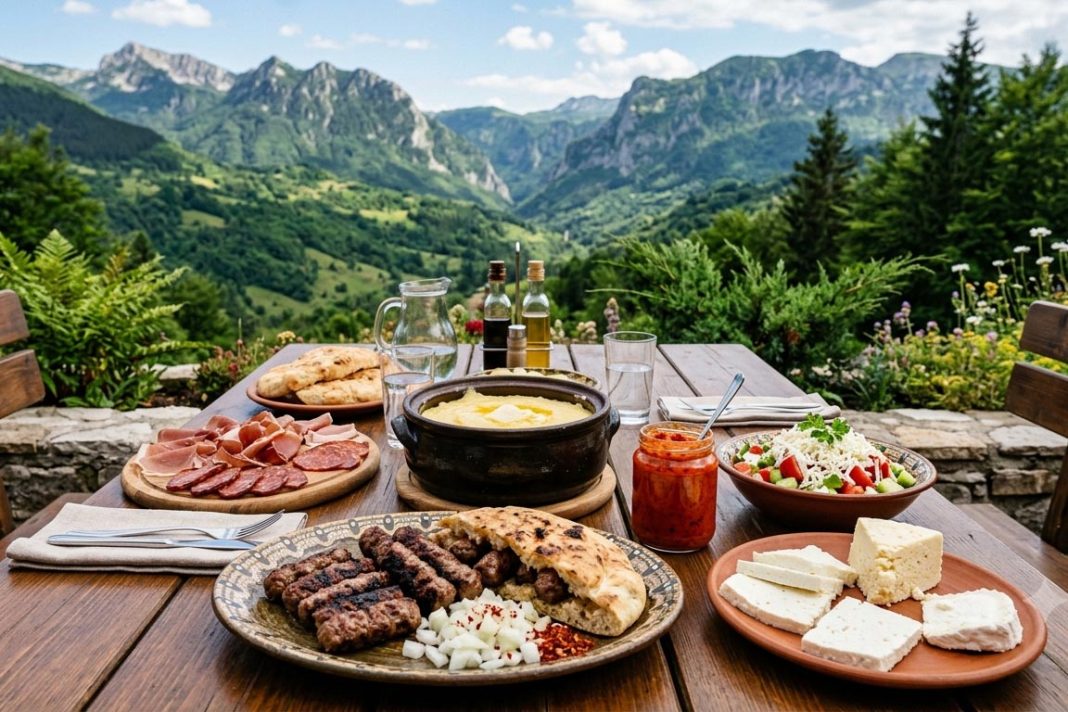
For many international visitors, the first lasting impression of the Western Balkans is not a famous landmark or a sporting event – it is the food. Whether arriving from Western Europe, North America or Asia, travellers are often surprised by the freshness of local ingredients, generous hospitality and the importance of homemade meals in everyday life. In many ways, food has become one of the region’s most effective forms of cultural diplomacy, introducing visitors to local traditions long before they learn the language or history.
In Serbia, visitors almost inevitably encounter ćevapi, pljeskavica, karađorđeva šnicla, ajvar, kajmak and a rich tradition of grilled meat. Regional specialties such as Sjenički cheese, Pirot kachkavalj, Futoški cabbage and products from the Fruška Gora vineyards further showcase the country’s culinary diversity.
Montenegro combines mountain and Mediterranean influences. The country’s best-known delicacies include Njeguši prosciutto, Njeguši cheese, fresh seafood from the Adriatic coast, kačamak and dishes prepared under the traditional sač. Olive oil and local wines have also become increasingly recognised internationally.
In Croatia, cuisine changes dramatically from one region to another. Along the coast, seafood, olive oil and black risotto dominate, while inland Croatia is known for specialties such as kulen, štrukli, Paški cheese, Istrian truffles and premium olive oils that regularly win international awards.
Slovenia has built a reputation around high-quality local ingredients and sustainable gastronomy. Traditional dishes such as kranjska klobasa, potica, Prekmurje layer cake (Prekmurska gibanica) and cheeses from the Alpine regions reflect influences from Central Europe while maintaining a distinct Slovenian identity. The country has also become one of Europe’s fastest-growing gastronomic destinations, with several Michelin-starred restaurants.
In North Macedonia, food is characterised by rich vegetable dishes and grilled specialties. Tavče gravče, ajvar, pastrmajlija, shopska salad, peppers and wines from the Tikveš region have become symbols of Macedonian cuisine, alongside a strong tradition of locally produced fruit and vegetables.
Albania offers a blend of Mediterranean and Balkan flavours. Visitors often praise byrek, tavë kosi, fresh seafood, mountain cheeses, locally produced olive oil and traditional desserts. The country’s rapidly developing agritourism sector has further highlighted the quality of its local produce and family-run farms.
In a region often viewed through the lens of politics or history, food tells a different story. It reflects shared traditions, regional diversity and a way of life that values fresh ingredients, home cooking and time spent together. While every country proudly promotes its own culinary identity, the cuisine of the Western Balkans collectively serves as one of its strongest international calling cards – proving that sometimes the best way to understand a culture is simply to sit down and share a meal.