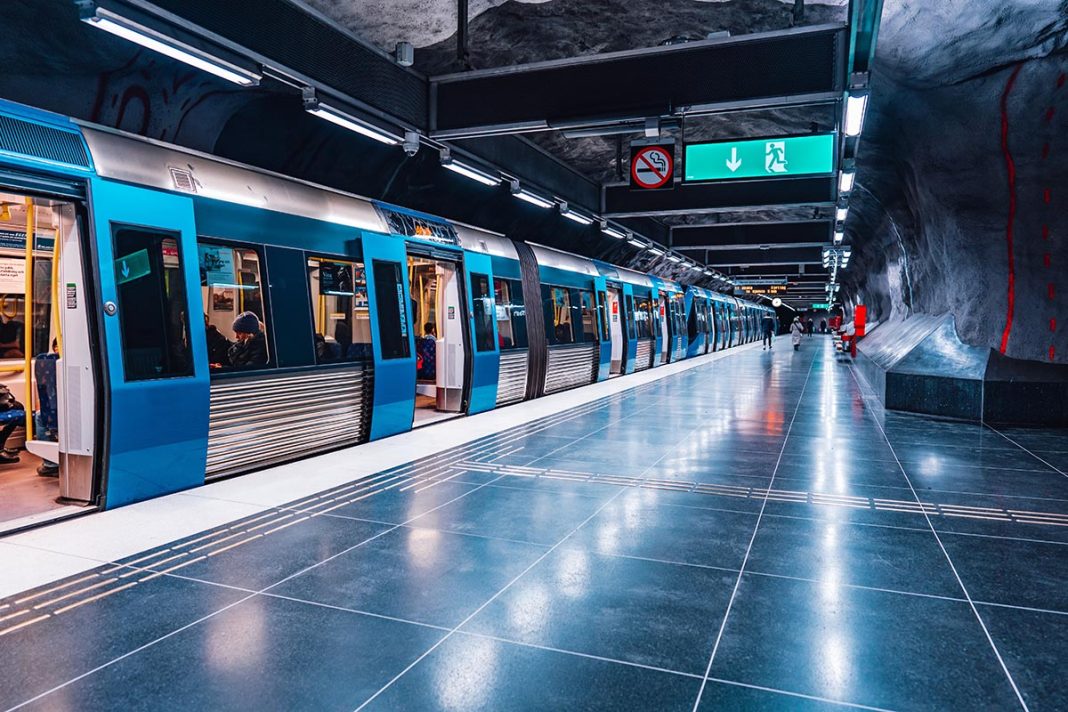
Ljubljana, Zagreb, Belgrade, Podgorica, Sarajevo, Skopje and Tirana all face very different population, geographic and infrastructure challenges. None of the Western Balkan capitals currently has an operational conventional metro system. Zagreb, for example, relies primarily on trams, buses and suburban rail, while Ljubljana’s public transport is dominated by buses.
Among the region’s capitals, Belgrade probably has the strongest case for a metro. Its population, rapid suburban expansion, heavy traffic and geographical position have created enormous pressure on its existing public transport network. The city already has an extensive bus and tram system, as well as BG Voz suburban rail, but these services still have to share much of the city’s surface infrastructure. BG Voz currently connects parts of the wider city, including Batajnica, Ovča, Resnik and Mladenovac.
Belgrade’s metro project is no longer simply an idea on paper. The first line is being developed as a fully automated system, with the initial section connecting Makiško Polje and Karaburma. The first phase is planned to cover around 15 kilometres with 15 stations, while the wider Line 1 project is planned at 21.3 kilometres and 21 stations. Alstom’s contract for the metro system is valued at €915 million.
The project is expected to take years to complete, but that is hardly unusual for infrastructure of this scale. A metro cannot be created overnight. The more important question is whether Belgrade will use the construction of the metro as an opportunity to create an integrated public transport system, rather than simply another isolated form of transport.
For smaller capitals, however, building an underground railway simply because the world’s largest cities have one may not make economic or practical sense.
Ljubljana is a particularly obvious example. Its relatively compact urban area and population mean that an expensive underground network could potentially cost far more than the benefits it would provide. The same question applies to Podgorica, while Zagreb has repeatedly considered metro or rapid-transit proposals without ultimately deciding that a conventional underground system is the best solution.
In these cities, the priority could instead be to make the existing public transport system genuinely competitive with the private car.
That means modern, comfortable and accessible buses and trams, more frequent services, reliable timetables, air conditioning and heating, low-floor vehicles for passengers with disabilities, better stations and real-time information. It also means giving public transport priority on the road, including dedicated bus and tram lanes that cannot simply be blocked by private vehicles.
A modern bus or tram travelling reliably through a dedicated lane can be far more useful than an expensive new railway system that takes decades to build. Western Balkan cities could therefore benefit from investing heavily in their existing fleets while simultaneously developing rapid-transit solutions where passenger numbers justify them.
Croatia and Slovenia are already moving in this direction, with both countries increasingly investing in electric buses and cleaner public transport fleets. The transition is important not only for reducing emissions but also for making public transport more attractive to younger generations and people who would otherwise choose a car.
A passenger should not have to choose between sitting in traffic in a car or waiting 20 minutes for an overcrowded bus. Public transport needs to arrive frequently, run on time, provide enough space for passengers and offer a comfortable journey regardless of the weather.
Perhaps the better question is not “Does every Western Balkan capital need a metro?” but “What kind of public transport does each city actually need?”
For Belgrade, a metro could genuinely become transformative, given the city’s size and congestion. For Ljubljana, Podgorica or other smaller capitals, a modernised network of buses, trams, cycling infrastructure and potentially light rail may provide a better return on investment.
What the region unquestionably needs, however, is better public transport. Whether that means a brand-new underground network, modern electric buses, faster trains or dedicated tram corridors should depend on the needs and size of each individual city — not simply on whether having a metro looks like a requirement for being a modern European capital.