
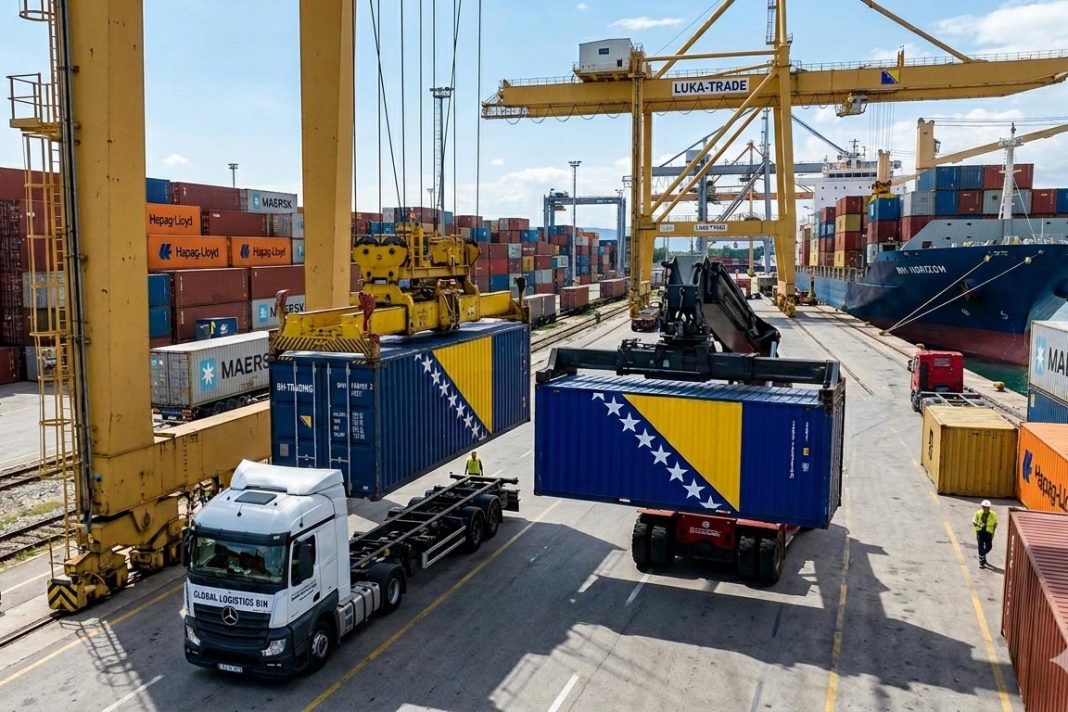
According to official data, exports in the January–March period amounted to BAM 4.21 billion, while imports reached BAM 7.20 billion. As a result, the country posted a trade deficit of approximately BAM 2.99 billion, highlighting the persistent gap between the value of goods sold abroad and those imported into the domestic market.
The European Union remained Bosnia and Herzegovina’s most important trading partner, accounting for the majority of both exports and imports. Trade with neighboring countries and other regional partners also continued to play a significant role, particularly in sectors such as manufacturing, energy, agriculture and raw materials.
Despite the trade deficit, exports continued to represent a substantial share of economic activity, supported by demand from key European markets. Analysts note that maintaining export growth will be crucial for strengthening economic resilience, attracting investment and improving the country’s long-term competitiveness.
The latest figures underline both the opportunities and challenges facing Bosnia and Herzegovina’s economy. While international trade remains a major driver of growth, economists have repeatedly stressed the importance of increasing domestic production, diversifying exports and reducing dependence on imported goods in order to achieve a more balanced trade position.