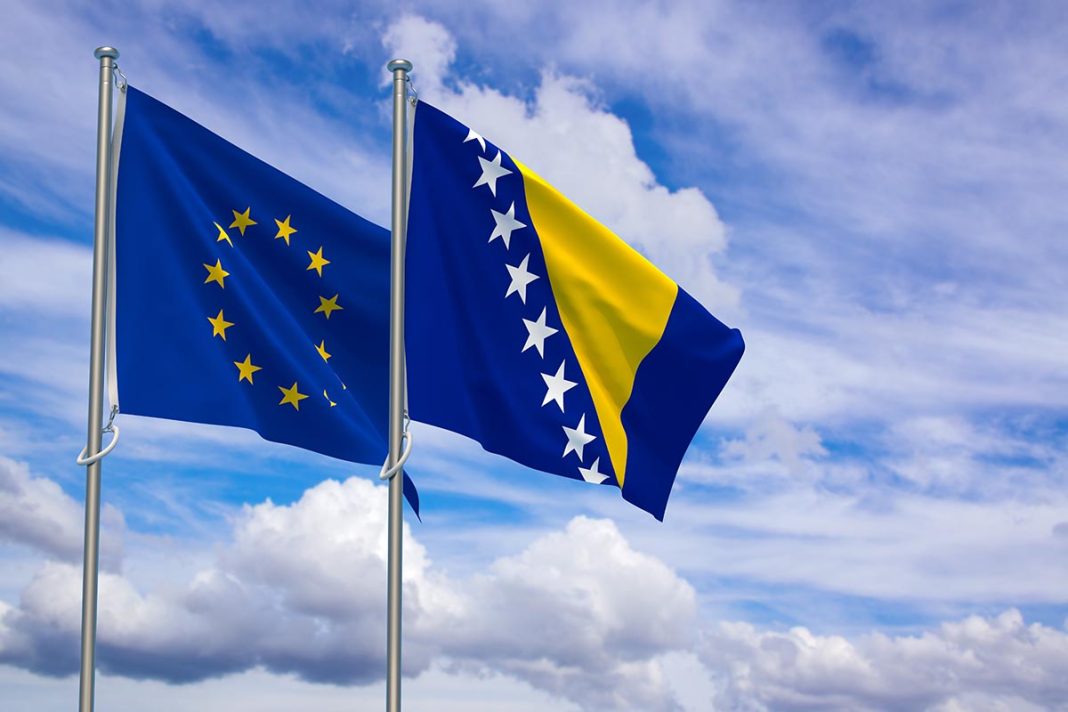
Debate continues in Bosnia and Herzegovina over the importance of funding available through the European Union’s Growth Plan for the Western Balkans, after warnings that the country could lose an additional €373.9 million on top of €108 million already forfeited. Critics of dismissive political narratives argue that portraying the programme as insignificant or describing the funds merely as loans ignores the scale of financial support attached to the reform agenda.
According to available figures, Bosnia and Herzegovina has been allocated a total of €976.6 million in exchange for implementing 113 reform measures, of which €280.3 million consists of non-repayable grants.
Observers note that the grant portion alone equals more than one-third of the country’s annual state budget draft adopted in May 2026, underlining the potential economic significance of the programme.
Supporters of the Growth Plan also stress that the loan component is offered under exceptionally favourable financial conditions and is intended to support infrastructure, development and reform projects capable of generating long-term economic growth. They argue that Bosnia and Herzegovina possesses significant untapped economic potential and that the EU-backed initiative could become an important mechanism for improving prosperity, stability and competitiveness across the country.