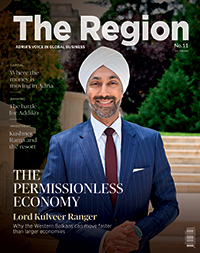

Regional economic cooperation in the Western Balkans has long been praised and prepared — but less often practiced.
Politicians routinely endorse it as a key to growth and EU integration, yet connectivity remains poor, markets fragmented, and trust fragile.
The numbers don’t lie. The World Bank projects GDP growth of 3.2% in 2025, with exports making up 21–22% of GDP. Yet, the merchandise trade deficit is widening to 27.6%. The OECD finds intra-regional trade stuck at a modest 11% for nearly a decade — meaning the region trades more with the world than with itself. Intra-regional FDI? Negligible. Meanwhile, industrial performance remains uneven, with low productivity, limited value-added output, and only partial convergence with EU standards.
This is not just underperformance — it’s a missed strategic opportunity. And increasingly, it looks like self-sabotage.
Brussels Isn’t Enough
Macroeconomic stability is no longer enough. If the region continues to integrate with Brussels but not with itself, the dream of a Single Market will remain just that — a dream. Despite growing momentum from the EU, the Western Balkans is leaving value on the table. Productivity lingers at just 30–40% of the EU average. Innovation is elusive. Youth, women, and professionals still face structural barriers to full participation.
It’s time to act as a region with a shared economic destiny. Tools exist. The Common Regional Market (CRM) under the Berlin Process offers a roadmap. The EU Growth Plan brings €6 billion in support. But frameworks alone won’t deliver. What’s needed now is political will, real implementation, and full engagement from businesses and citizens.
From Roadmaps to Realities
First, CRM must evolve from a checklist into a shared commitment. Governments should adopt binding, time-bound, and measurable actions across all four pillars: mobility, trade, investment, and digital integration — underpinned by joint investment in innovation and skills.
Second, what’s been agreed must be applied. Mobility agreements on work permits and recognition of qualifications exist, but remain underused. National administrations need to digitise procedures, align laws, and enable real-time data exchange.
Third, regional cooperation must be led not only by ministries but also by businesses. Companies should help design and implement CRM. Sectors like green energy, ICT, and smart manufacturing require cross-border investment and bold partnerships.
Think Like a Bloc
Strategic alignment with the EU must evolve. Brussels is shifting its focus from integration to competitiveness and security. The Western Balkans must become indispensable to Europe’s economic architecture — as a nearshoring hub, a digitally skilled labour pool, and a bridge for sustainable supply chains.
This calls for co-financed incentives, cross-border infrastructure, shared innovation hubs, startup ecosystems, and interoperable digital networks.
In a region where talk of cooperation is endless, the true deficit isn’t funding — it’s courage. The courage to act, to lead, and to deliver.
The Western Balkans must stop negotiating as fragmented markets and start thinking like a bloc. A region of over 16 million people governed by shared rules is far more attractive than six small and divided economies.
The Future Is Regional — If We Choose It
Europe is watching. The region’s future is being recalibrated — in Brussels, but also in boardrooms across the continent. In today’s volatile world, investors seek scale, coherence, and predictability.
The Western Balkans can offer all of this if it finally starts acting as one.