The renovation marks the first complete and systematic restoration of the park in 128 years. While parts of Gradac were renovated at various points during the 20th century, including a major intervention in 1929, previous works never covered the entire park. The latest project was designed to protect its cultural and historical value while maintaining its distinctive green character.
A major focus was placed on preserving and expanding the park’s greenery. A total of 439 existing trees were retained, while another 401 trees representing more than 30 species were planted. More than 13,000 additional plants and perennials were also introduced throughout the park.
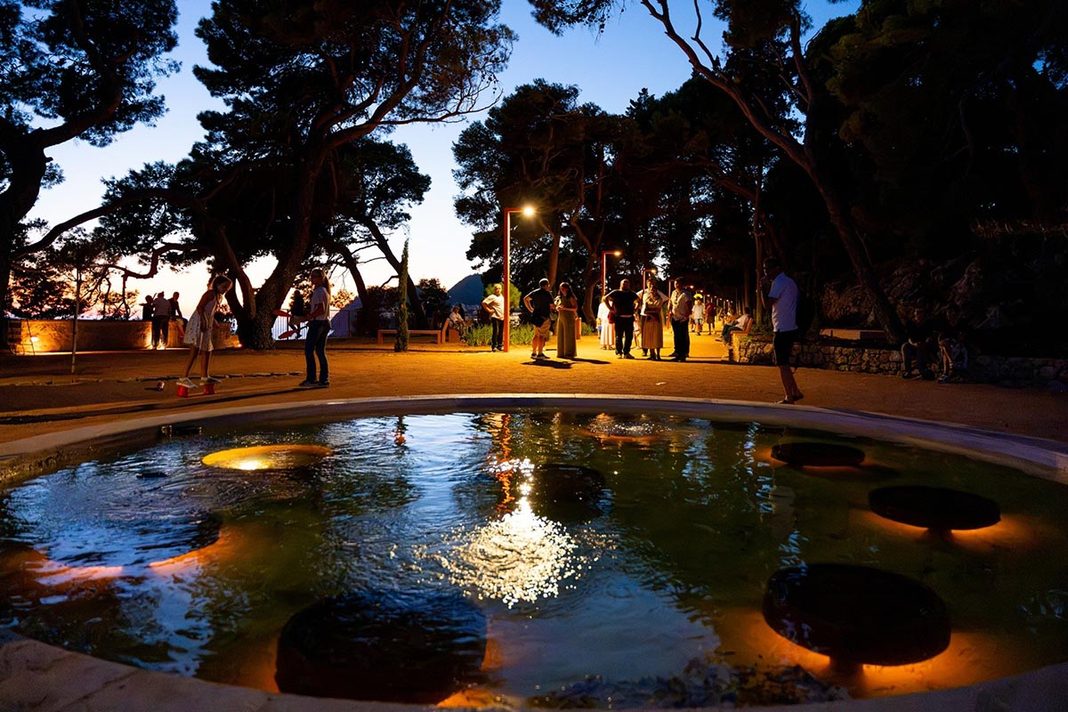
The project also brought a number of improvements to the park’s public facilities. Walking paths, the existing fountain and lighting were restored, while new urban furniture was installed. The children’s playground was refurbished and a small outdoor auditorium was created in the northern section, providing a new space for gatherings and cultural and community activities.
Visitors can now also access new viewpoints, an accessible public toilet, an upgraded hydrant network and an irrigation system. A new pedestrian path extends into a previously unused part of Gradac, opening more of the park to the public and creating additional space for recreation and everyday use.
Gradac has an important place in Dubrovnik’s cultural heritage. The park was created through the work of the citizens’ association “Dub”, which contributed to the development of several of the city’s parks in the late 19th and early 20th centuries. In 1966, the entire park was declared a cultural monument.
The restoration had a contracted value of €3.72 million excluding VAT, or €4.65 million including VAT, and forms part of Dubrovnik’s wider Green Infrastructure Network initiative. With the work now complete, Gradac has reopened as a space for recreation, socialising, play and community life while retaining the historic identity and greenery that have defined the park for generations.