At Western Balkans 2030 in Budva, investors and business leaders warned that productive investment’s share of foreign capital inflows has fallen from 49% to approximately 13%, while property investment now accounts for almost half. The challenge for the next decade is to turn capital inflows into a more competitive, productive economy
Budva, 5 November 2026 – Montenegro has attracted approximately €16 billion in foreign capital over the past two decades, yet that investment has done relatively little to transform its economic structure, raise productivity or strengthen exports. Figures presented by the Montenegrin Foreign Investors Council (MFIC) at the Western Balkans 2030 conference reveal an increasingly striking imbalance: the share of productive investment in total foreign investment has fallen from around 49% to just 13% over the past decade, while the proportion directed towards real estate has risen from 18% to almost 50%.
These figures provided a central theme for the panel “10 Years of MFIC Guide: Stories That Shape the Future of Investment”, held during Western Balkans 2030 in Budva, organised by regional media platform The Region in institutional partnership with MFIC.
The discussion raised a question of growing importance as Montenegro approaches European Union membership: can a country that has proved successful in attracting capital begin directing more of it towards industries that generate added value, create jobs and strengthen export competitiveness?
More Capital Does Not Necessarily Mean Better Investment
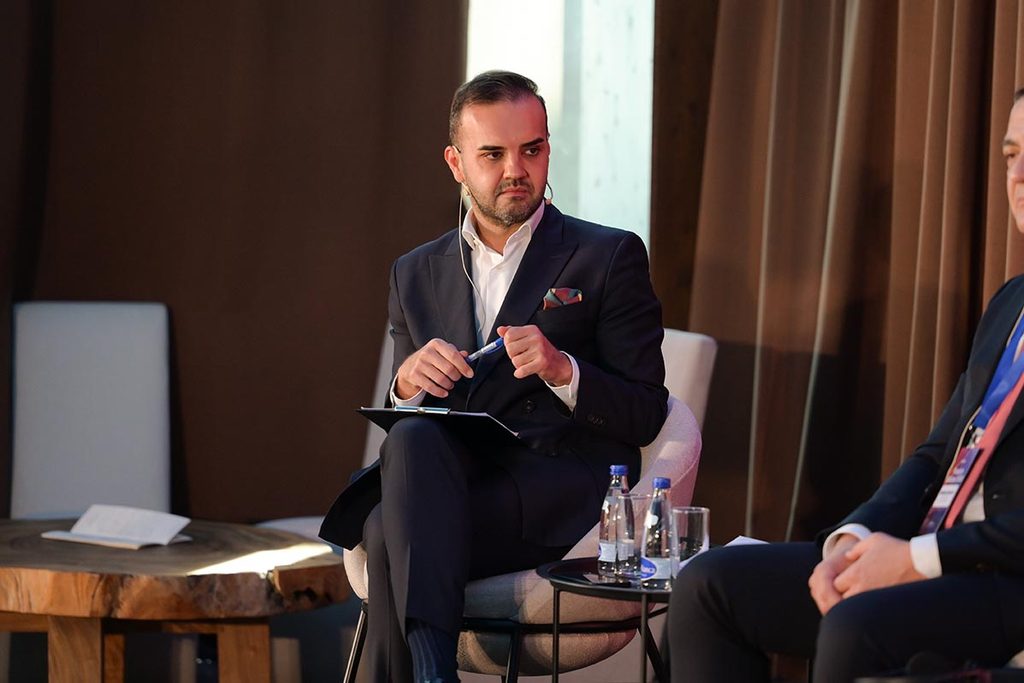
Branko Mitrović, Chairman of the MFIC Board of Directors and CEO of ONE Montenegro, acknowledged Montenegro’s achievements in attracting foreign direct investment but argued that the composition of those inflows deserves far greater attention.
“Montenegro has undoubtedly attracted a significant amount of foreign direct investment over the past ten years. That is something we should be proud of. However, the question remains whether we could have attracted more. My answer is yes,” Mitrović said.
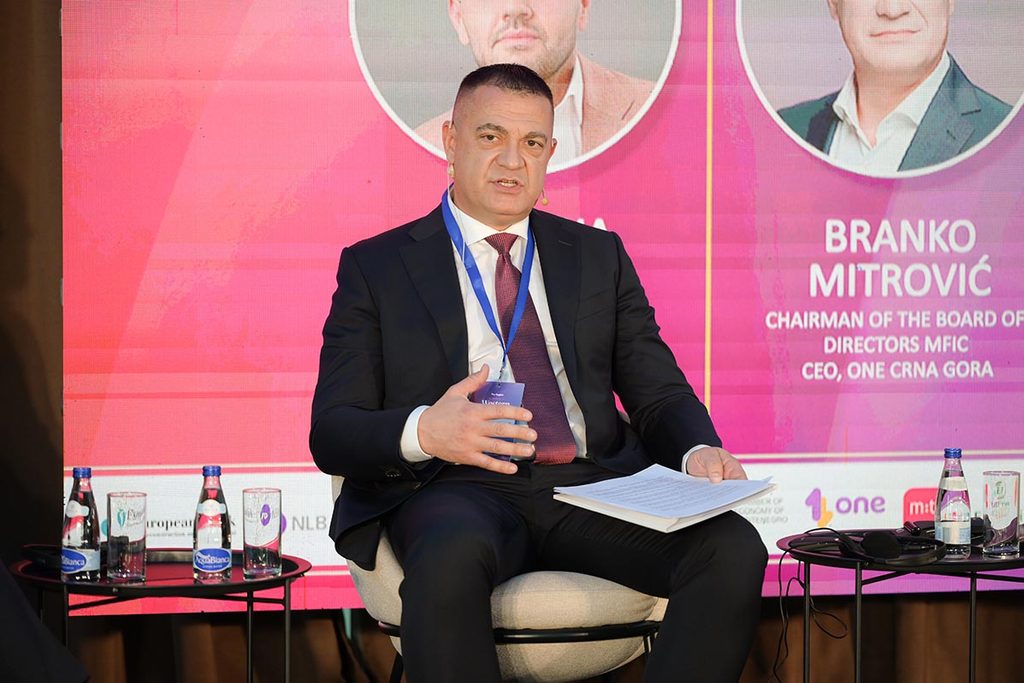
According to MFIC research presented during the panel, productive investment now represents a substantially smaller share of total foreign inflows than it did a decade ago.
While property investment is not inherently undesirable, Mitrović argued that an economy cannot rely predominantly on real estate if it wants to develop stronger production capabilities, generate higher-value employment and expand exports.
He also warned that Montenegro’s traditional advantages – its coastline and mountains, use of the euro and relatively favourable tax rates – are no longer sufficient to secure high-quality international investment.
“Every foreign investor wants the rule of law, a certain level of security in the country where they intend to operate, and a predictable business environment. Efficient administration is also extremely important, so that investments can be implemented within a reasonable timeframe,” he said.
Mitrović pointed to the persistence of business obstacles that have featured in discussions for ten to fifteen years, despite repeated recommendations made by MFIC through its White Book and dialogue with the authorities.
He stressed that retaining existing investors and encouraging them to reinvest profits should be treated as seriously as attracting new companies.
A business that is sufficiently confident in Montenegro to reinvest its earnings, he argued, provides one of the strongest possible endorsements of the country’s investment environment.
€16 Billion Has Not Transformed the Economy
Nina Drakić, President of the Chamber of Economy of Montenegro, placed the investment figures within the country’s broader economic development since 2006.
Montenegro has made substantial progress over that period. GDP per capita has increased from 36% to 54% of the EU average, its banking sector has developed and tourism has become its strongest export industry.
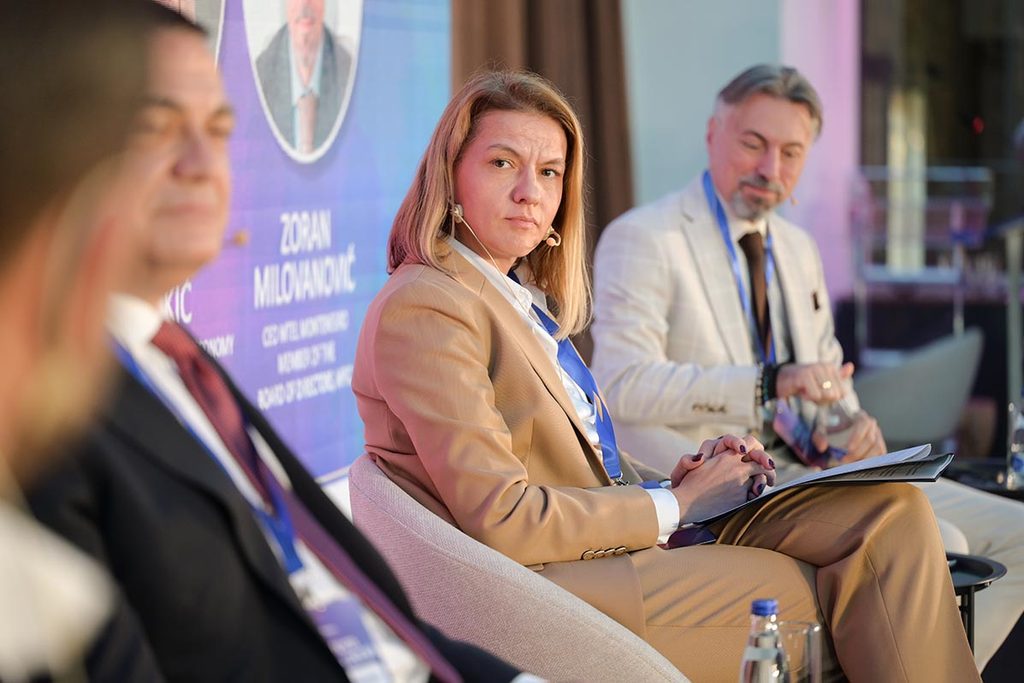
“Tourism has established itself as our strongest export sector. The surplus in services trade increased from €166 million in 2006 to €1.6 billion in 2025,” Drakić said.
Yet these achievements have been accompanied by persistent structural weaknesses, particularly an economic model heavily dependent on tourism and consumption.
Drakić noted that Montenegro had attracted approximately €16 billion in capital from more than 120 countries over the past twenty years. During that period, industry’s share of GDP fell from 15% in 2006 to 8% in 2024, while the ratio of exports to imports declined from approximately 30% to 12.8%.
“When we look at the amount of capital we have attracted, the changes in the structure of the economy suggest that these inflows have not been accompanied by an adequate transformation of the economy itself,” she said.
One particularly revealing figure concerned food imports.
According to Drakić, Montenegro spent approximately €11 billion importing food over the past two decades, despite considerable potential to expand domestic agricultural and food production.
She argued that future investment policies should place greater emphasis on employment, technology transfer, productivity, domestic supply chains and export capacity rather than simply the volume of capital attracted.
“We cannot compete on scale and quantity, but we can compete on quality and specialisation,” Drakić said.
She identified energy, information and communications technology, food production, tourism and logistics as sectors offering significant opportunities.
Better links between tourism and domestic agriculture, investment in renewable energy, and improved transport connections to the Port of Bar could all help create a more diversified economy.
EU Membership Will Not Automatically Fix Structural Weaknesses
European integration featured prominently in the discussion, but speakers cautioned against assuming that accession alone would resolve Montenegro’s economic challenges.
“Joining the European Union is not an end in itself. The goal is a better life for our citizens and economic development. The economy drives everything, and that is where our focus must be,” Mitrović said.
Preparing micro, small and medium-sized enterprises for competition within the EU single market will be particularly important.
Drakić noted that these businesses account for between 98% and 99% of all enterprises in Montenegro, yet many lack the financial resources, specialist staff and administrative capacity needed to meet European standards or apply for EU funding.
She warned that aligning legislation with EU rules would achieve little unless public institutions were capable of implementing those rules effectively.
“It is not enough for a company to know which standard it must meet. It also needs an institution that can issue a certificate or permit, or a laboratory capable of testing its product,” Drakić explained.
The Chamber of Economy is already implementing programmes to help businesses prepare for EU membership, including sectoral analysis, digitalisation, green standards and training in accessing European funds.
Digital Transformation Offers a Different Growth Model
Zoran Milovanović, CEO of MTEL Montenegro and a member of the MFIC Board, highlighted the potential for technology to support a more productive and internationally competitive economy.
He said Montenegro had developed a strong telecommunications infrastructure, supported by sustained investment from all three mobile operators. The next challenge, however, is to make much greater economic use of that infrastructure.
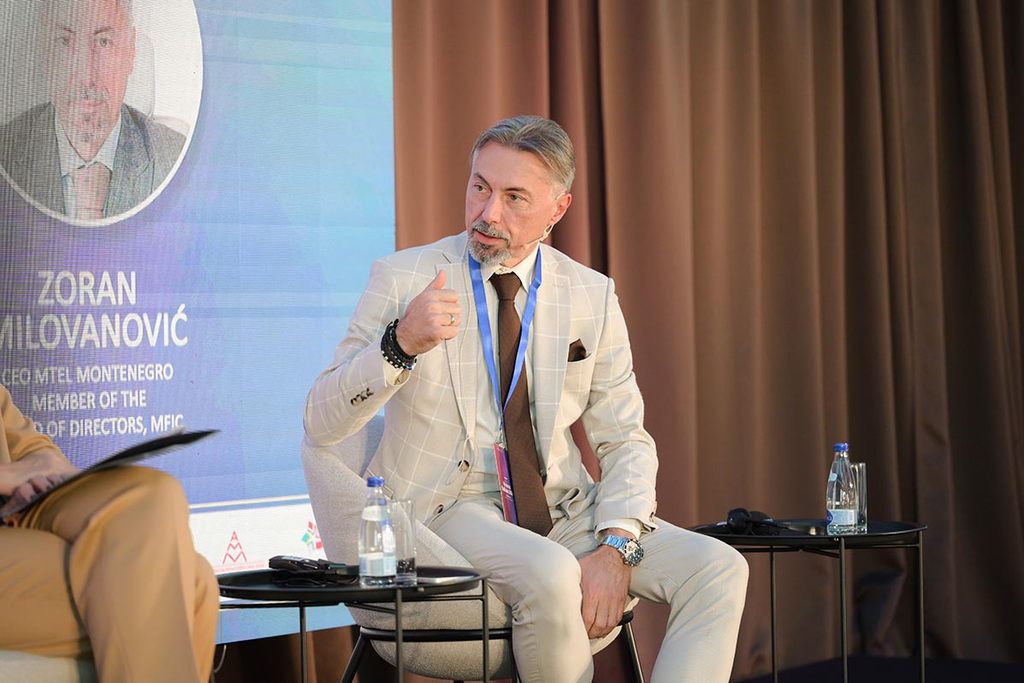
“Digital transformation means reorganising processes within a company and adapting them to the technologies available today. It is not something that can be completed quickly, but we all share responsibility for making it happen,” Milovanović said.
He highlighted 5G, automation, robotics, cybersecurity and artificial intelligence as areas likely to shape business development towards 2030.
Although 5G networks are already operating in Montenegro, he explained that moving towards more advanced standalone architecture would unlock additional capabilities, including lower latency and the ability to connect large numbers of devices.
Such developments could support industrial automation, smart infrastructure and new digital business services.
Milovanović also argued that Montenegro’s small size could become a competitive advantage, allowing innovative products and services to be developed and tested locally before entering larger European markets.
“Montenegro has outstanding people who can create and improve a great deal. This is a fantastic environment in which innovations can be tested and demonstrate their value before reaching the global market,” he said.
The Next Decade Must Deliver Different Results
The panel highlighted a shared challenge: Montenegro must improve the quality of investment and create conditions that encourage more capital to flow into productive economic activities.
Business and investment representatives stressed that achieving this shift will require a predictable regulatory environment, more efficient institutions, better preparation of domestic companies for European competition and greater investment in knowledge and technology.
For a country approaching European Union membership, the coming decade offers an opportunity to demonstrate whether its success in attracting foreign capital can translate into stronger domestic industries, more competitive exports and sustained improvements in living standards.
