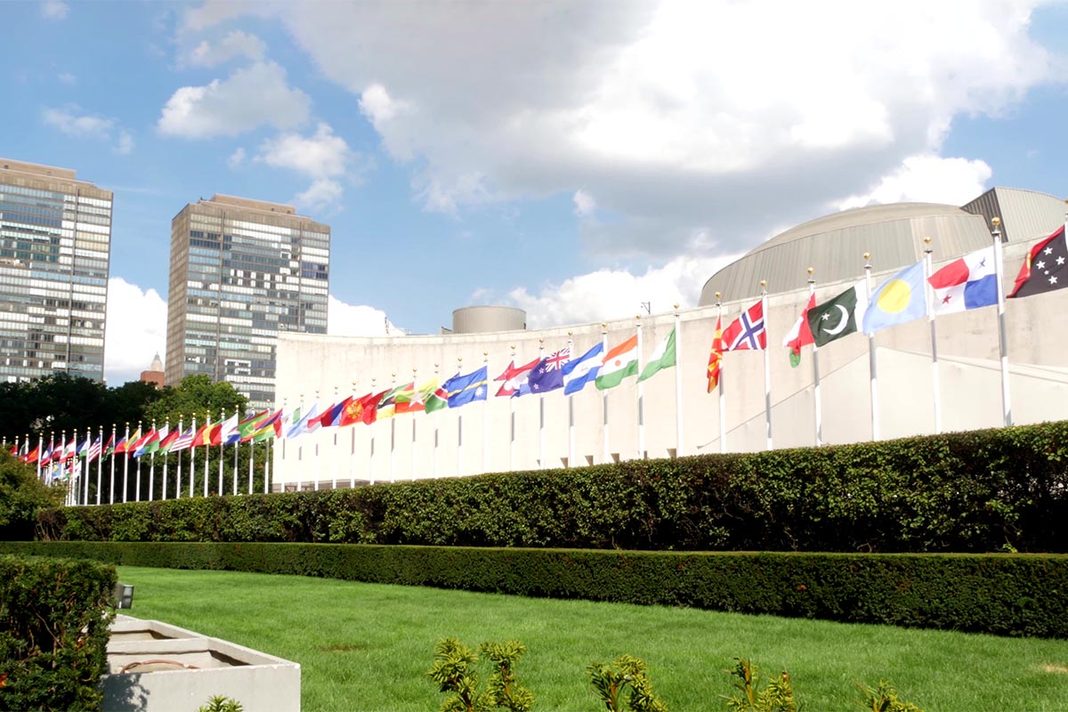
World leaders have gathered in New York for the 81st session of the United Nations General Assembly, with the annual high-level week beginning on September 22 against the backdrop of wars in Ukraine and the Middle East, growing geopolitical tensions and renewed discussions about the future of multilateral cooperation.
The Western Balkans will also have a significant presence in New York. Serbian President Aleksandar Vučić is attending the session and is scheduled to address the General Assembly on September 23, with Kosovo and Metohija expected to remain an important part of Serbia’s diplomatic agenda. Serbian Foreign Minister Marko Đurić is also in New York, where he has already held bilateral meetings with foreign officials.
Croatia is represented by Prime Minister Andrej Plenković, who will address the General Debate and meet UN Secretary-General António Guterres. During his visit, Plenković is also scheduled to participate in the Summit of Partners for Multilateralism, a meeting of the Crimea Platform, the International Ocean Observing System summit and the Europe-Gulf Forum, alongside a series of bilateral and economic meetings. Foreign Minister Gordan Grlić Radman is accompanying him.
Montenegro is represented by Deputy Prime Minister and Foreign Minister Ervin Ibrahimović, who will remain in New York from September 21 to 25. According to the Montenegrin Foreign Ministry, his programme is focused on promoting the country’s foreign-policy priorities, strengthening its position within multilateral institutions and discussing global issues related to peace and sustainable development, alongside a number of bilateral meetings. Bosnia and Herzegovina is also represented, with Presidency Chairman Denis Bećirović scheduled to address the General Debate on September 22.
For the region, however, the UN gathering is taking place at a particularly sensitive moment in European security. Ukraine remains one of the central international issues, with the war continuing to shape discussions about sovereignty, territorial integrity, international law, security and the role of the UN. Italy, for example, has announced that its Foreign Minister Antonio Tajani will address a UN Security Council meeting on Ukraine on September 23, focusing on civilian protection, the possibility of a ceasefire and support for Ukraine’s energy resilience and reconstruction.
The Crimea Platform will also feature in the programme, particularly through Croatia’s participation. The platform was established to maintain international attention on Crimea and Ukraine’s territorial integrity, making its presence in New York especially relevant as discussions about the future of the war and a possible diplomatic settlement continue.
For Serbia and the wider Western Balkans, the language surrounding sovereignty and territorial integrity carries an additional regional dimension. Belgrade has consistently linked its position on Ukraine to its broader insistence on respect for the UN Charter and territorial integrity, while also maintaining its position on Kosovo. At previous UN General Assembly sessions, Vučić has argued that the same principles should be applied consistently to all states.
Beyond individual conflicts, this year’s Assembly is also expected to focus on the future of multilateralism itself. The official theme of the 81st session is “Restoring trust, managing transformation: a United Nations that delivers for all.” The UN says the high-level week is intended to strengthen global cooperation at a time of overlapping geopolitical, economic and humanitarian challenges. Nearly 130 heads of state and government are expected to attend in person.
The high-level week will continue through September 29, with the General Debate concluding on September 28. Alongside the political speeches and bilateral meetings, the programme includes high-level discussions on climate action, the right to development, sea-level rise, pandemic preparedness and the fight against racism, reflecting the broad range of issues that the UN continues to address beyond immediate security crises.
For the Western Balkans, the New York meetings provide an opportunity not only to discuss global crises but also to strengthen bilateral relations, present national priorities and raise regional issues on the world’s largest diplomatic stage. With Serbia, Croatia, Montenegro and Bosnia and Herzegovina among the countries represented at the highest level, the region is expected to remain part of wider conversations on European security, international law, EU integration and stability.