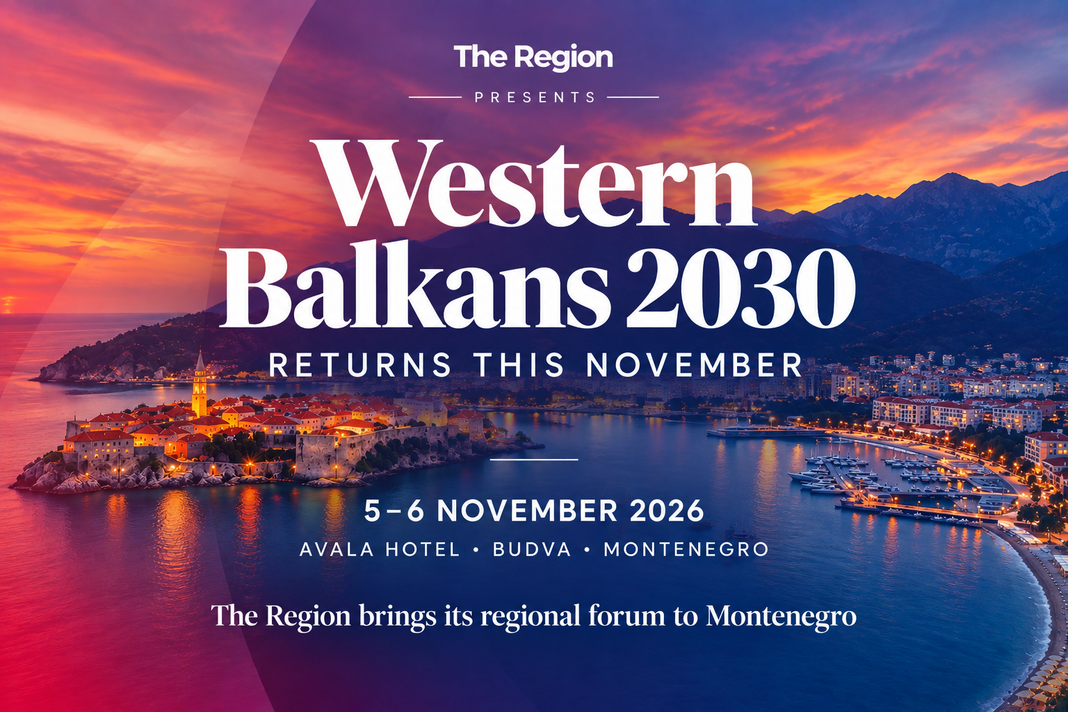
The Region will host the second edition of Western Balkans 2030 on 5–6 November at Hotel Avala in Budva, Montenegro. The regional business forum will focus on investment, economic transformation and the forces that will shape the competitiveness of the Western Balkans through to 2030.
Following its inaugural edition in Belgrade, which brought together representatives of governments, international organisations, financial institutions, investment funds and leading companies, Western Balkans 2030 moves to Montenegro this year.
The choice of Montenegro comes at a pivotal moment, as the country enters a crucial phase of its European integration while continuing to attract new investment and accelerate development across energy, infrastructure, tourism, real estate and the digital economy. For two days, Budva will become a meeting point for people making decisions about the region’s next phase of development.
This year’s Western Balkans 2030 will address long-term investment, the green and digital transitions, infrastructure, energy, new technologies, the future of work and the economic models needed to strengthen the competitiveness of the Western Balkans. Beyond discussions on the main conference stage, particular emphasis will be placed on direct connections between participants, business meetings and new partnerships among companies, institutions, investors and international organisations. The aim is not simply to discuss what the region could look like in 2030, but to connect the people who can influence what that future will actually become.
The forum will bring together business leaders, representatives of institutions and international organisations, the financial and investment community, and a new generation of regional decision-makers.
By bringing the second edition of Western Balkans 2030 to Montenegro, The Region continues to develop a platform connecting the business community, institutions and international partners across the region — with a focus on the ideas, capital and partnerships that can shape the Western Balkans through to 2030.