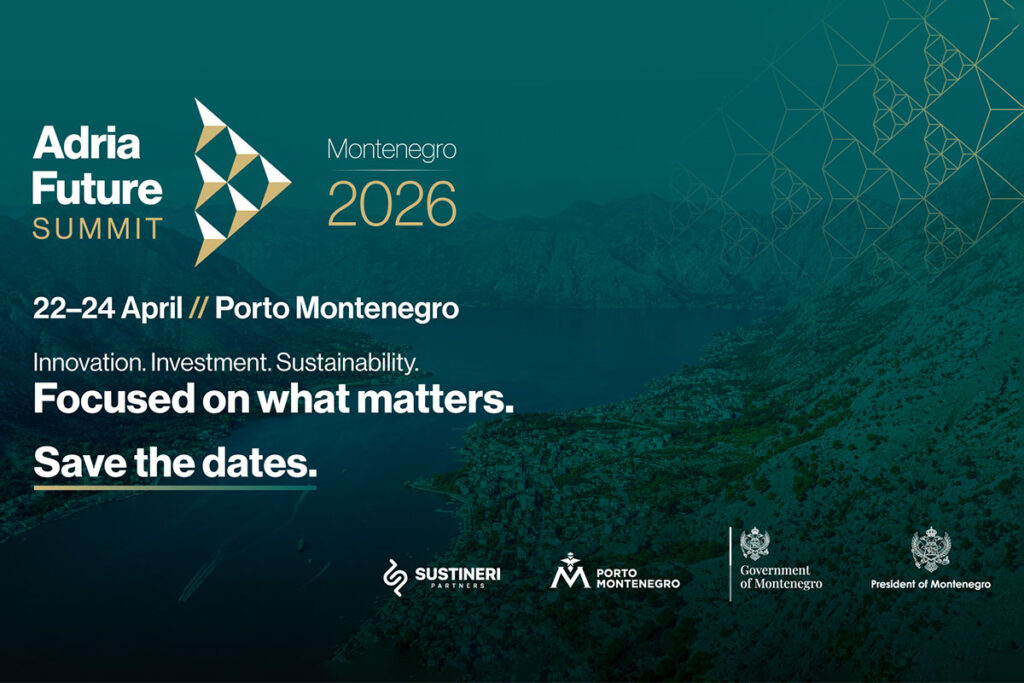
From 22 to 24 April, Porto Montenegro will host the Adria Future Summit 2026 — and one of its defining moments will be a high-level panel titled “The Future of Money in Digital Europe: Perspectives of Central Bank Governors.”
At a time when Europe’s financial system is being reshaped by digitalisation, geopolitical shifts and evolving regulatory standards, the panel brings together three key voices from the region and beyond: Irena Radović, Governor of the Centralna banka Crne Gore; Primož Dolenc, Governor of the Banka Slovenije; and Madis Müller, Governor of the Banka Estonije.
Digital Euro, Sovereignty and Systemic Resilience
The discussion will address some of the most consequential questions facing European economies: the development of the digital euro, the preservation of monetary sovereignty in an interconnected world, financial stability in a volatile global environment, and the strengthening of payment infrastructure resilience.
For Montenegro, the timing is strategic.
This year marks the 25th anniversary of the Central Bank of Montenegro — a milestone that underscores the institution’s transformation from a young central bank in a small open economy into a regulator increasingly aligned with European standards and systems.
Governor Radović has emphasised that the Summit provides an important platform for substantive dialogue on Europe’s financial future. In an era when money is evolving at the intersection of technology, regulation and public trust, she points to Estonia and Slovenia as examples of how strategic clarity and speed of adaptation determine success.
The digital euro and next-generation payment systems, she argues, are not merely technical upgrades. They represent a redefinition of Europe’s financial architecture — reinforcing strategic autonomy, competitiveness and systemic resilience.
Integration as Strategy
Montenegro’s recent full integration into SEPA and the TIPS Clone system signals that the country is not observing these transformations from the sidelines. It is actively embedding itself within the European payments ecosystem — a move that strengthens both financial credibility and institutional alignment with the EU framework.
According to Biljana Braithwaite, Founder and Director of the Adria Future Summit, the governors’ panel represents one of the core pillars of this year’s programme.
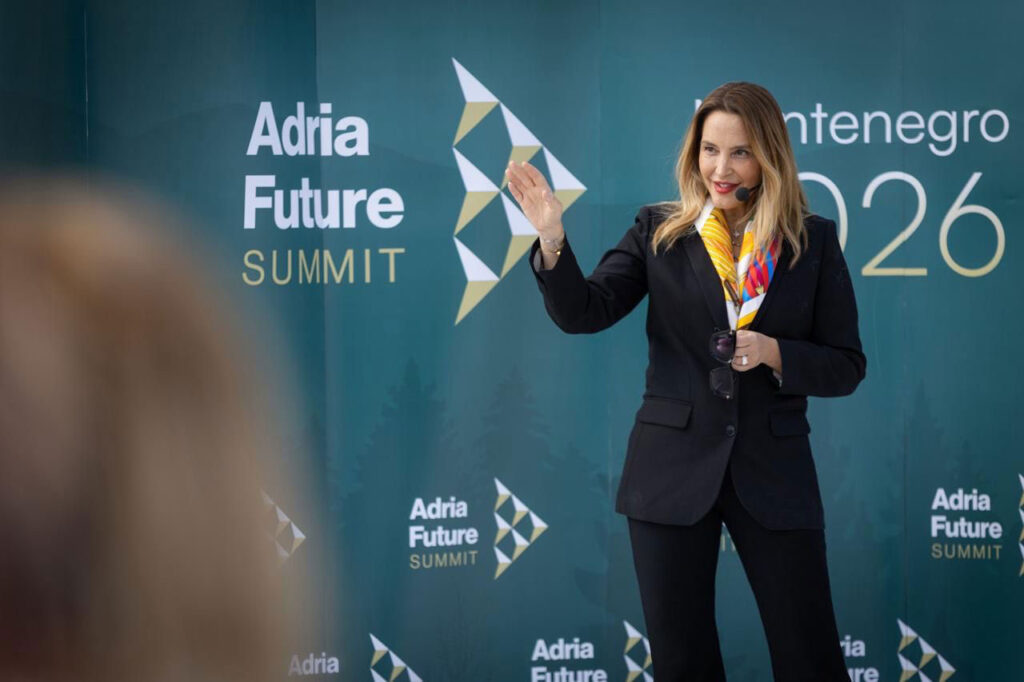
She describes the Summit as a strategic platform connecting decision-makers around issues that define the long-term economic and institutional architecture of the Adria region and Europe.
In a global environment marked by rapid shifts in capital flows and technological models, the debate over the future of money is no longer abstract. It is directly linked to competitiveness, credibility and integration.
The governors’ panel therefore stands as more than a technical conversation about digital currency. It is a signal — that the Adria region is positioning itself within Europe’s evolving financial architecture, and that Montenegro, in its anniversary year, is aligning ambition with execution.